
Asking Better Questions with Rev. Dr. Mark Lewis
What does faithful ministry look like in the middle of an opioid, housing, and poverty crisis? In our conversation with Rev. Dr. Mark Lewis, we hear the remarkable story of St. Paul’s Presbyterian Church in Hamilton—a congregation that expected to close but instead chose radical hospitality. Mark shares how the church opened its doors to a safe injection site, partnered with community agencies, faced daily heartbreak, and rediscovered its mission through compassion. He reflects honestly on fear, resilience, burnout, and the surprising ways God reshapes a church when it asks, Who needs our help, and how can we use what we have for good?
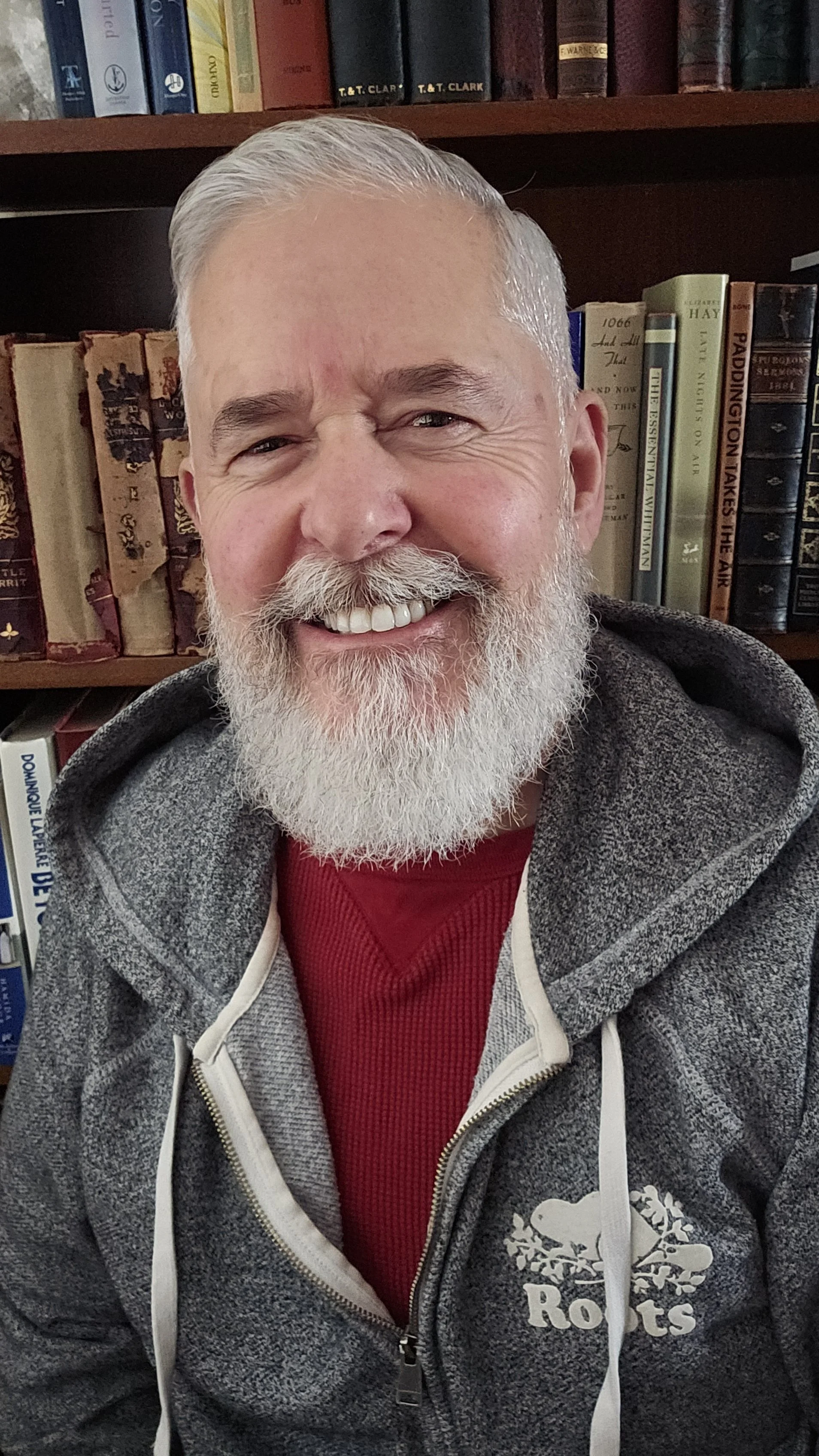
About Rev. Dr. Mark Lewis
Mark has served in Presbyterian congregations since 1980…or 1960, if you count Christmas pageants. Mark has ministered with congregations in Nova Scotia and Ontario, served as convenor of several national committees, and was the Moderator of the 2003 General Assembly. Mark retired from St. Andrew’s, Kitchener in 2018. Since 2019, Mark has been an Assessor and Coach for Hope Partnership for Missional Transformation, which works with Canada Ministries, helping congregations that are “stuck” to move forward in new ways. Since 2020, Mark has been the Interim-Moderator and Stated Supply at St. Paul’s, Hamilton.
Transcript
John Borthwick
Welcome to the Ministry Forum Podcast where we believe that you are not alone in your ministry journey. I'm the Reverend John Borthwick, your host coming to you from the Center for Lifelong Learning at Knox College here, we connect, encourage and resource ministry leaders all across Canada in the joys, the struggles and everything in between. I love that I get to do this work, and most of all that, I get to share it with each and every one of you. So thanks for giving us a listen today. Whether you're a seasoned leader or just starting out, this podcast is made with you in mind.
So our next, our next part of our day is to have a conversation. This is kind of like a live podcast. So if you don't know ministry forum that well, we do have the Ministry Forum Podcast available at all of your wherever you do podcasting. We hope you'll we are our third season already, and so this is kind of a live podcast. Eventually this will be a podcast episode. So be appropriate, Mr. Lewis, I've known Mark for many, many years, and when I knew we were coming to Hamilton, I knew we want to talk to Mark Lewis, partly, sorry, folks who aren't Presbyterian but, but just to give a dash of Presbyterian in the mix, and there's nothing more Presbyterian than the Reverend, Dr Mark Lewis, in my mind, you're welcome. So I'm going to a little introduction, and then we're going to get into some questions. Into some questions. And Mark's also brought some pictures to show us along the way. So it is my great pleasure to introduce the Reverend, Dr Mark Lewis, as I say, we've known each other for many years. We even served in the same presbytery for a season, and occasionally we might be found sharing a fizzy beverage over a lunch with some colleagues, some of my earliest pulpit supply when I was a mere slip of a lad at Knox College, was at Knox Dunville, I think you actually let me into your pulpit, the greatest preacher in Canada. You would let me sit there and say words out loud. You can say something if you want.
Mark Lewis
Yeah, we've regretted that ever since John and I had to leave shortly thereafter.
John Borthwick
I think that was one of your poorer choices. Mark has served in press three and congregations since 1980 or 1960 apparently, if you count Christmas pageants, he's been a part of. He's ministered in congregations with Nova Scotia and Ontario. He served as a convener of many national committees and was the Moderator of the 2003 General Assembly. He retired from St Andrews Kitchener in 2018 and since 2019 Mark has been an assessor and coach for Hope Partnership for Missional Transformation, which works with Canadian ministries, or Canada ministries of the Presbyterian Church in Canada, helping congregations that are stuck to move forward in new ways. Since 2020, Mark has been the interim moderator and stated supply at St Paul's Presbyterian Church in Hamilton, downtown.
And it's his connection with St Paul's and Hamilton that brings him before us today. And again, as I've said this maybe many times, our vision for creative ways is to shape the conference not only around topics that are relevant for ministry leaders and congregations today, but also to highlight the creativity found in the host community itself. You've seen that in the space and place that is St C's. You've seen that through Theresa and Indwell and following my conversation with Mark, we're going to hear from the Greater Ontario House of Prayer. The Hammer is as it's lovingly called by its residents, has certainly been a hub for innovation for decades. And truly, we would have, could have invited a multitude to speak with us, but they all declined. And so Mark said yes, and so we were happy for that. Totally kidding. Of course, I knew I wanted mark to tell the story of St Paul's and Hamilton when we designed this event. And not only because it would give us a bit of Team Presbyterian, but also would feature a congregation that, to my mind, and Mark will certainly fill us in, is situated in the epicenter of what Theresa was talking about, as well the opioid houselessness, poverty, crisis in a city like many across Canada today, and how this almost two century old congregations leadership has sought to cast a faithful vision of the call of Christ and to use their words repurpose themselves as a vital community asset. And so welcome Mark. Thanks for joining us today.
Mark Lewis
Thank you, John. I'm very thankful to be here with you, and look forward to telling you a bit about St Paul's.
John Borthwick
Excellent Are there any errors or omissions in my introduction that you'd like to bring to my attention in true Presbyterian
Mark Lewis
I hate to make myself even older, but I was moderated. Of assembly in 2002
John Borthwick
is that right? Not three, not three. I just it, just
Mark Lewis
you just say, at the turn of the century
John Borthwick
you just lingered there. I thought many
Mark Lewis
of you weren't even born at that time. I suppose so.
John Borthwick
Wow, yes to our audience. That's music to our ears. I wonder if you could begin by telling us a little bit about your ministry at St. Paul's. Did you enter their life? If you go on their website, you can hear a bit of their story. But did you enter their life in the midst of their repurposing activities? Did they come about as a part of your ministry with them? Just, or just tell us a little bit about Saint Paul's and how you describe them as a people and a congregation.
Mark Lewis
All right, I will a couple of things that I want to say right up front. Are these? The first is that I am here today in great humility and trepidation, and I say that because even though St Paul's has done some really amazing things, I don't know if we have done the right thing, and you may have a comment about that, I may have led this congregation down a pathway to destruction, and so I'm very insecure, and I'm also humble, because an awful lot of ministers these days will tell you all their secrets about church growth, and yet, for the most part, our churches are not growing so there's a some kind of a disconnect there, that we really don't know how to make a church healthy, and I don't know how to make a church healthy. I'm struggling along. The other thing that I want to say is this, two ideas that are really important to me, and they might get lost in the conversation. And the two ideas come out of the question that I always ask people, when I go out to do an assessment for the New Beginnings program, I will always say, What do you want me to do for your church? And typically, Presbyterians will say, Well, how can you get us more people and more money? And right up front, I say to them, those are not the questions to ask, and the questions that I encourage them to ask are these two, number one who needs our help that no one else is helping, because that's the question that Jesus is always asking. And the other question is, are we using our resources in a way that is pleasing to God? And for the most part, the resources that Presbyterian Churches have these days are buildings and space, and we, to a large extent, are wasting our buildings and wasting our spaces, and they could be used in better ways. So keep those two questions in mind. And if you take anything back to your own congregation, take those questions back. Who needs our help, and are we using our buildings in a way that gives glory to God?
So when I got to St Paul's, I was appointed interim moderator, and my first day was March the 15th, 2020, and I had seen their annual reports for the previous five years. And for those five years, the session that told the congregation, we will have to close this congregation in 2022 the money was running out very quickly. They were winding down. So I became interim moderator in 2020 with the thought this would be a two year assignment, and I would find a way to graciously dissolve the congregation and let them die with dignity. However, if you remember the date that I just told you, March the 15th 2020 was the first day of the first pandemic shut down in Ontario. So here we had a church. They were on the brink of death, and now they couldn't come to their sanctuary anymore, and I felt that they're going to die more quickly at this point. However, I also thought it's not fair to shut this church down and not let the people come and say goodbye to it so we can't close during covid. And then I decided that I would do a live stream of the worship by myself, which would be a pain in the head. I did it for one Sunday, and on the Monday, a young guy sent me an email and said, Do you want me to come and do the live stream? And I didn't really, because I sort of hoped that we could die more quickly, and I also I didn't know who this guy was. Is because all the people that I knew of from that congregation were quite elderly, and this guy was maybe 26 or 27, but he was a member, and he was just a young person who really loved traditional worship, and he also was really good at technical stuff. So I said, Yeah, sure, you come in and you do the live stream. So, you know, for what was it, almost two years, I preached to an empty sanctuary. The only people there was the guy doing the live stream, and we would have the organist and one soloist, and yet, somehow the church stayed together, the people, they kept on giving, they kept on supporting, the offerings, stayed strong. And I thought that was really weird. And in the middle of that, we were approached by an organization called Hamilton Urban Core. And Hamilton Urban Core is a health care organization significantly funded with Ontario government funds, and they work in downtown Hamilton for the most part, with persons struggling with opioid addiction, untreated mental health and homelessness. And they said, we are going to lose our facility on Cannon Street. Could we come and open our safe injection site in your building? And of course, we said no, because that would be a real pain in the head for us. And I called up every other church that I knew in Hamilton and asked if they would take the safe injection site. They all said no. And so then they came back to us and said, Look, we're really, really stuck. So they asked, and I went to the session, and I assumed the session would say no, because they wanted to use our library, our nursery and the ladies parlor for a safe injection site. And I still laugh at the thought that if you went to most Presbyterian churches and said, Can we have people come in and smoke crack in your ladies parlor, please, the answer would be no, but I was shocked by the session. They came to the meeting. They considered the request, and they said, you know, Mark, there are people every day on our lawn who have overdosed. There are people dying in the streets. And in Hamilton, between 140 and 170 people die of opioid overdoses every year, and this session of people in a church 190 years old, they said, We will do it. We will open our facility. They can have this space, and we will welcome in Hamilton Urban Core and the safe injection site. And I was deeply moved by that. And somewhere in my mind, the thought that I was going to close this church down, it reversed. And I said, these people have responded to the call of Christ. What they are doing is truly compassionate. It's going to change lives and save lives. And they are giving up something that is precious to them, and they're doing it with love and with grace. So we did, we signed contracts with them. We had to have an architect and a construction company come in to renovate those spaces, because a safe injection site. oh, look, I think there's pictures of the renovation here. If we can flip through some of those and, yeah, flip, we flip that anyway. There's, yeah, there's, well, there's, we'll come down to this in a second. We host an annual Overdose Awareness Day. At this time, we did the renovation, we welcomed them in, and since that time, about 10,000 visits per year are hosted at St Paul's Presbyterian Church. And those people are receiving medical care, nursing care, wound care, drug and alcohol addiction counseling, career counseling, every sort of guidance that is imaginable. And the people within the congregation also are providing food. Clothing and toiletries for the people that come to the safe injection site. So most of you probably know that on March the 31st we had to close the safe injection site. Provincial legislation closed all of the CTS sites that were within 200 meters of a school. However, we have continued to be a satellite site for Hamilton Urban Core, continuing to provide the medical and nursing care and guidance that is needed. We just do not have the supervised injection site at this time, and we grieve that that's gone, but we are thankful that we are still able to serve around 10,000 people per year.
So I'm tremendously proud of the congregation. Somehow, their sense of doing something significant for the kingdom of God has rejuvenated them. They don't want to close anymore, because they've realized that their site is a place right in the middle of all these problems, and that God has placed us geographically in a space that we can do a tremendous amount of good. So we're doing that.
John Borthwick
That's truly amazing, truly amazing Mark. I would sense that the reality you're describing creates a number of unique challenges for ministry leaders, perhaps ones that are similar for others in the similar context. Can you help us picture what one might encounter in the parking lot, church hall or church lawn, front steps from time to time, maybe even as regularly as every single Sunday morning. And maybe for the sake of folks who are encountering similar kind of situations, would you be willing to share personally how you face these situations, I'd imagine, in some cases, they've been moments of profound meaning, making maybe frustration and quite possibly some despair as well.
Mark Lewis
Yeah, a significant amount of despair and sadness. And upfront, I said, you know, I'm not sure if I've led this congregation in the right direction, because there are things we see every day and every week that are heartbreaking. We have had, from time to time, significant encampments on the grounds of St Paul's. We know that there is significant drug use outside the building. It's a very strange phenomenon that if one person comes to use the safe injection site, they will often bring with them two or three friends who are also going to inject or use but they don't want to go in to the site, so they're out on one of the side lawns of St Paul's. And you know, last year, the staff at Hamilton Urban Core reversed 46 overdoses, and that wasn't from people inside the safe injection site. That was from people coming and banging on the door saying, My friend is OD’d Can you please help them? So that's a little bit difficult. You know, we the session, and most of the committee conveners and office holders receive regular training and how to recognize an overdose and how to treat it with naloxone. Our last session meeting was, was this week, we opened with a one-hour session on managing overdoses, which is a strange thing for a Presbyterian congregation. And of course, as one of the speakers said before, the use of naloxone is becoming complicated because the strength of the drugs available now it is so much higher that they cling to the receptors more stubbornly. The Naloxone knocks them off the receptors, but it's becoming very difficult. And of course, naloxone is only a temporary measure. If you treat someone with Naloxone and they revive, you do have to call 911, the Naloxone generally buys about 15 to 20 minutes of consciousness, but you have to treat the person at a deeper level before that wears out.
So, so what it looks like is it depends from season to season and week to week, often there are encampments. There have been periods of time at St Paul's when we have had to hire a security guard in order to clear a path for our members to come to church on Sunday morning. But we've lost some membership and you know, that's the place where I say, I don't know if I've done the right thing. Here there are some people who are afraid to come to St Paul's, and when those people tell me, I have to say to them, I don't blame you. It can be frightening and quite intimidating to walk through an encampment. In the last couple of years, we've had two significant police raids on the grounds of St Paul's, and on both of those occasions, there were multiple arrests for people with outstanding warrants, people who were carrying weapons and people who were selling illicit drugs on our site. So, so that's very distressing and very difficult and again, for the people who have stuck with St Paul's and who are okay coming through the encampments, I'm very touched by their level of compassion.
Another indication of the people's goodness is, that I get my dates right, I think it was on Christmas Eve of 2023 a young man died of an overdose on our site. And in I think it was in the summer following that his mom and dad came to see me, and they wanted to know if they could erect a memorial stone for their son on our site. We actually have a graveyard on our site with graves dating back to the 1840s, and I said, Well, I'll have to go and ask the session about that. You know, it's a significant thing. And I went to the session and I said, can we do this for this family? And I thought there'd be a mixed reaction, you know, putting up the grave stone of a kid who died from a drug overdose, right beside the gravestones of the founders of this church back from the 1840s, but every one of the elders said, yeah, go ahead, and again, just very touched by the compassion and the grace of a congregation that is so traditional and so old. But they have this genuine tenderness, and they truly care, and they have wonderful love.
So that's when you ask, what do we see in the yard? Like this Sunday, it was pretty clear. It was, you know, there was one fellow was passed out on our sidewalk, and I, and I said to him, or shook him, as are you okay? And he says, Oh yeah, I'm just having a nap. And I said, you know, could you, could you move over a bit so that we can walk? Oh yeah. He said, I'm sorry about that. He said, I didn't realize I was on your sidewalk, so, but that's, yeah, it was a good day today, not too much in terms of the physical presence of persons in a in a difficult state. So that was good.
John Borthwick
I just want to acknowledge Mark, just the reality that yourself as a ministry leader and many others in your congregation face on a regular basis, the kinds of traumatic incidents and realities of life that you're facing that's a lot to bear for folks and very different. I don't mean this in a judgmental way, but in the church, we often will be praying for people that are going through difficult times. We may even pray for people suffering with addictions and houselessness and all these things, but to actually meet the people, speak with the people, and even come alongside families who are grieving. The loss of loved ones is a very different reality that you and your congregation are carrying on a regular basis. I just want to acknowledge that.
Mark Lewis
Thank you. It is very strange. I mean, couple of things that have been difficult for us is the amount of vandalism that we experience is quite significant. In the wintertime, anything that's outside of our church that is made of wood will be smashed to pieces and burned as firewood, and we have had two significant arson attempts on the church in the one person broke one of the rare basement windows and had a bundle of papers and wood that they set on fire and threw through the broken window, it caused localized fire damage in that room, but it filled the entire church with smoke. That was a difficulty. On another occasion, somebody poured a liquid accelerant under a basement kitchen door, lit it on fire, and of course, that it went under the door, again it caused localized damage. In both of those cases, we were fortunate that Hamilton Urban Core staff were present for one and our caretaker was present for another, so the fires were extinguished. But the hardest part for us was the police coming to us and asking us to press criminal charges, which we did, and you don't like to do that as a church, but the police felt that in both cases, the persons who had done that would have advanced their aggression to the point that they eventually would have killed or harmed someone. So we did that. On another occasion, I got a call at six o'clock on a Sunday morning from the police saying, can you come and open your church for us? And I said, why? And they said, well, we need to retrieve a bullet that went through a person and through your front door, and we think has landed in the vestibule of your church. So that was kind of difficult too, but there you go. It's life in the Hammer.
John Borthwick
Only people from the Hammer can get that for sure. So just to switch gears a bit, St Paul's, as I understand it, is also building their building in their parking lot. Maybe putting up a parking lot to provide paradise. Is that where we're going?
Mark Lewis
It's very good.
John Borthwick
Thank you. Yeah, I'm here every week, so tell us maybe a bit more. I understand you're working with a partner. It's not in dwell, but that's okay, you know, and it's an abundance space to be a part of Collecdev Markee. Is it because it has mark in the name?
Mark Lewis
Exactly Collecdev Markee? Well, that's me, and.
John Borthwick
you're also collaborating with not the W or the YWCA, but the YMCA, again, because you like the song. I assume this is it? Yes, I knew it. So how did, how did that all come to be?
Mark Lewis
Well, when we were doing, you have pictures when? Oh, yeah, oh, look, there's the artists rendering an artist. And can you see the St Paul's spire outside there? And if you go back to the last one, you can see St Paul's spire in the background there. So now this isn't, this isn't definite, but when we were doing the renovations for the consumption and treatment site, I went and talked to the architect and the builder and said, If you ever are working with a developer who wants to build something in Hamilton, tell them about our space and and tell them that we'd be open to development and and then I forgot that I'd ever said that to them. But about a year later, Jennifer Keesmaat called me and said, can I come and look at your building? And he said, Yeah, sure, so. So she came over and she looked and she said, Yeah, we would like to develop here. So we have been three years in conversation and negotiation with Collecdev Markee. They made some initial offers that we felt were not sufficiently beneficial to us. But finally, we worked out an offer whereby they would purchase the space of St Andrews Hall and this little building that we call the cottage, and they would also purchase two parking lots to our west and our north. And they have the intention of building two towers that would be 30 stories each with a total of about 700 housing units and five levels of parking and 55,000 square feet for the new headquarters for the YMCA. So just about 10 days ago, we finally received permission of the presbytery to sign that agreement of purchase and sale. So we have done that. So now we anticipate there will be about a year that it will take. Collective marquee. To obtain the various licenses, they need, geological surveys, environmental surveys, permissions from all levels of government, and permissions from all of the heritage societies as well. But if they obtain all of those things, we would proceed with that construction. So it'll benefit St Paul's in many ways, the initial purchase price will be helpful to us. But also, we worked out an arrangement whereby the developer would come over and restore our secondary church hall, which is underneath the sanctuary, to replace the church hall that we are losing, and also to make that church hall accessible. St Paul's has never been accessible. It's all stairways and high climbs everywhere. So if that gets done and the church hall becomes accessible, we would then, at our own expense, make the sanctuary accessible, and the whole building would be accessible. So we're excited about that. We're excited about the housing and more. So we are excited about the presence of the YMCA, because they offer a full range of social services, helping people with every kind of counseling and with housing and employment. So for our space to be used for that would be great. So just going back to the original thing I said those questions, who needs our help that nobody else is helping, and that was the unhomed persons struggling with untreated mental health concerns and opioid addiction. So we responded to that question, these are the people that no one else will help, and we will and the second question, are we using our resources and our spaces well? And we were not, but by giving it over to the CTS, we are, by giving it over for this housing development and the YMCA, we are making better use of our space, and we think that's a good response to the call of God.
John Borthwick
So it kind of feels like, I guess you passed, you passed the deadline where you were hoping to close it, and now it's like the little little church that just wouldn't close. Like what's going to happen now?
Mark Lewis
it's a very strange thing. I don't fully understand why, the why the offerings remain so strong. When I asked the session, they say it's because, well, we're doing something, and we're willing to support the church as long as it's doing this mission that we think is really important. And we just we feel that we're serving God, so we will continue to support.
John Borthwick
Last question for you, Mark, do you have any advice specifically for ministry leaders, perhaps specifically clergy who are finding themselves in the world that you've been planted in for a while now? You've talked about it's taken years to get to decisions about buildings. You've talked about your day, daily, weekly, kind of interactions, the kind of partnerships and collaborations. I'm assuming that the fine theological training that you received from Knox College in the late 1970s didn't necessarily prepare you for what you've spent all these years doing, or maybe it did? Maybe your theological training, your spiritual life has been a part, I actually think it has, of what has sustained you and the congregation on this journey. I'd just love to hear your closing thoughts on that.
Mark Lewis
I would like to say for the benefit of Ernest Van Eck that I am deeply thankful for my education and my ministry formation at Knox College. I would also like to say I think that theological formation today is almost impossible. Like, what are you training people for? I don't know. I mean, you have you, you, you have to teach people Old Testament and New Testament and systematic theology. You got to have those things, but, but you also have to teach how to exist and how to be of use in the world at this time, and that's just incredibly difficult, and I can't imagine a course that you would have to prepare people for ministry. I'm going back to my questions. You know, who needs our help that no one else is helping? I think that's a question that Jesus would ask. And are we using our resources in a way that that serves God? And if, and if anybody here is in ministry, I hope that you would ask those questions of yourself and of your congregation, and that's one way to move forward.
John Borthwick
The other question that I like to ask the church as well is, what is completely unique that the church does, that we as a church do in the world, that no one else is doing, and what are the things that people, good organizations, good humans, are doing that we could either come alongside or we could get out of the way and let those people do those things. I think that's a question we often need to be asking. What is the absolute, unique thing that makes the church the church? I'd argue things like talking about an ancient book called the Bible, praying, these seem to be important things that we do that no one else does. And then just, how can we collaborate, come alongside, support, get out of the way. And I feel a bit of the story of St Paul's is a bit of that. Your church could have said, we're going to continue with the traditional things that we do, that many churches do to support and help people experiencing poverty. We could have a clothing cupboard. We could have a food bank kind of thing. We could offer certain little helping things. We could give donations. And I'm sure they do that in many ways already. But then you open the door to organizations that are doing some amazing work, collaboratively and in a bigger picture and a wider picture, and have, they've made their home in in your in that space. And I think that's a beautiful thing that St Paul's has done, and leadership of St Paul's has done. And as you say, it's not all you're doing. As I can't imagine a Gen and some agenda items that you've had on your set in your sessions where, yeah, what are these people like? And I feel like it's almost like the acts church. I when I read the book of Acts, it's kind of like, surely not, surely not this. Now, God, this can't be possible. And I'm sure for some of your session members, and for you, as you walk into those rooms, it's kind of like, okay, I mean, we've pushed it pretty far, and people have been really generous, but surely not this, and yet they surprise you, and that's a beautiful thing. Yeah, any closing words you'd like to offer?
Mark Lewis
No just if anybody here is a minister, I want to say ministry is really hard today. God bless you, and God give you strength, because it's it's really tough and really challenging.
John Borthwick
Thanks for being with me, Mark. Really appreciate you keep doing what you can. And yeah, we'll see how. We'll keep watching and see how long you keep hanging out with the good people of St Paul's. Let's see what happens.
Thanks for joining us on the Ministry Forum Podcast. We hope today's episode encouraged you and reminded you that you are not alone in ministry. If this episode resonated, tell someone, please don't give us a secret. And if you can subscribe, rate or leave a review wherever you listen. It helps us reach more ministry leaders just like you. And honestly, it reminds us that we're not alone either. Find more resources and ways to connect@ministryforum.ca and follow us on social media at Ministry Forum. Until next time, may God's strength and courage be yours. May you be fearless, not reckless. May you be well in body, mind and spirit, and may you be at peace.