
Rev. Julielee Stitt on Rural Ministry
Rev. Julielee Stitt reflects on her unexpected path into ministry, the role of curiosity in building community, and the gift of serving in places where people truly know one another. She shares about calling, risk, and the decision to step away from a stable career into something less certain but more meaningful.
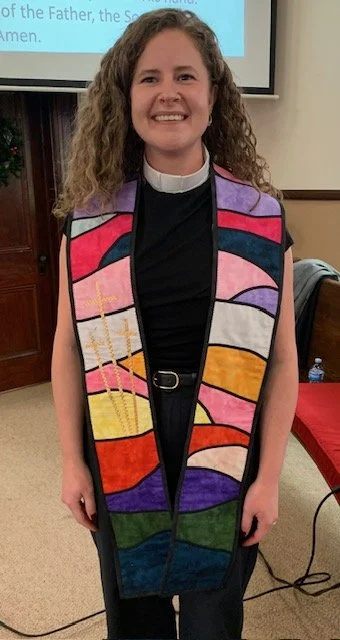
About Rev. Julielee Stitt
Julielee is a recently ordained minister with a passion for the rural church. She is a graduate of Presbyterian College and currently serves the congregations of Sand Hill and St. John's Presbyterian Church in Kingston, Ont.
Show Notes
Living Theology[ies] in Rural Settings from Faith+ Lead - If you are in rural ministry or discerning a call to such a ministry, perhaps you'd be interested in learning more through this course.
Follow us on Social:
Transcript
[John Borthwick]
Welcome to the Ministry Forum Podcast, where we believe that you are not alone in your ministry journey. I'm the Reverend John Borthwick, your host coming to you from the Centre for Lifelong Learning at Knox College. Here, we connect, encourage and resource ministry leaders all across Canada, in the joys, the struggles, and everything in between. I love that I get to do this work, and most of all, that I get to share it with each and every one of you. So, thanks for giving us a listen today. Whether you're a seasoned leader or just starting out, this podcast is made with you in mind.
This week on the Ministry Forum Podcast, we are going a little bit country, or should I say, rural. We are delighted to be talking with Reverend Julielee Stitt, a recently, or fairly recently, grad from Presbyterian College in Montreal, who serves as the Minister of the two-point charge of Sand Hill and St. John's Presbyterian Churches, east of Kingston, Ontario. We encountered Julielee through our Instagram feed where, initially, where, in her words, she was attempting to invite herself onto the Ministry Forum Podcast. I love that. That's awesome way to go, and she was successful. Look at her. She's already here.
I so appreciated something she said about ministry in her email follow up to me, that was this, “Ministry makes you very comfortable inviting yourself into spaces you might not have otherwise had a chance or reason to be.” And that's been my experience. It never hurts to just ask or just reach out. You never know what you're going to be getting. Today, it's super exciting. You get to be on the Ministry Forum Podcast. A podcast that reaches millions, audience of billions. Anyways, I'm so glad you did, Julielee, and looking forward to sharing with the Ministry Forum audience that your joy of rural ministry and hope for the unknown. Julielee, welcome to the Ministry Forum Podcast.
[Julielee Stitt]
Thank you, John. Thank you for having me. I'm impressed by the number of listeners, millions, but you know what I think, it reaches the people who need it, and I think that at the end of the day, is what matters most, so it is such a joy to be here. Thank you.
[John Borthwick]
Thank you, and yes, absolutely, whoever needs to hear this today, hopefully they will get to hear it. And if they do hear it, and they think someone else needs to hear this, we'd love for them to pass it on. Well, let's start with yourself. How would you like to introduce yourself Julielee?
[Julielee Stitt]
I think every time I go to introduce myself, I always go back to the very beginning. Is that okay, John? Are you daunted by that?
[John Borthwick]
I don't know you from anybody, and neither does the Ministry Forum audience, except for your close friends and family that you're going to send this to. So why not? Why not tell us your story. You're also a recent grad, and, if memory serves, being a recent grad or being someone who was through that journey with the church, the number of times I felt I had to introduce myself and talk about my call and all that kind of stuff, you sort of got it down. So I feel safe and comfortable in letting you have the floor. And if it takes an hour, I guess it does, but I'm pretty sure you've got a fairly concise way to start with. Birth to now and go for it. Go for it.
[Julielee Stitt]
You're giving me more credit than it might be due, but thank you for that. I'll take it. So, I grew up in a place called Litchfield, Quebec, on a small beef farm. Beef. Sometimes people think I'm saying bees, but it's beef. I was raised there, along with my siblings by my parents, and we went to church every Sunday. My dad was Presbyterian. My mom had been raised Roman Catholic, but it was the only Anglophone church in town, and so she became Presbyterian, and we all went together. Something, when I was thinking about this journey, something that I had included, was every Sunday before I would actually go to church, I would listen to this program called the Lutheran Hour Ministry. Do you remember that program? Oh my gosh, it was amazing. It was important in my formation as well.
After that, I moved out. I moved on. I went to CEGEP in Gatineau, and at that time, I just loved asking people questions like I mentioned being invited into spaces, or inviting yourself into spaces. I've always wanted to know more about people. After I finished CEGEP, I studied Journalism at Carleton University, and then, to give myself a bit of a career advantage, I went on to do a Master’s in Journalism at King's University in King's College, rather, in Halifax, which is part of Dalhousie. After I had the two degrees in journalism, I decided I don't want to do this anymore. [laughter]
It was just, people would always tell me, perhaps a bit more than they should, and so constantly I had an ethical dilemma of what to report on and what to not report on. So, I wound up kind of bouncing around from there. I worked for a Member of Parliament for a short stint. I taught at a college in technical communications for a little bit, and then I moved to Winnipeg, where I worked for a nonprofit called Ducks Unlimited Canada, and that was really exciting. I was working with researchers to tell the story of the work that they were doing to protect wetlands and conserve wildlife. It was a really wonderful job, but I felt myself being called back east, and so moved to Kingston, Ontario, and started working for the City of Kingston in their communications department.
And again, it was really good and meaningful work, but during that time frame, I got divorced. The pandemic happened, and I found myself going back to church in a different way than I had initially. I had become quite closed off emotionally at that point in time. And I remember my dad said, “You know what? There's a nice church in downtown Kingston called St. Andrew’s. Why don't you just go and see what it's like?” Because at that point, I had fallen away from weekly attendance at church as well. So, I went and to my great embarrassment, in those initial services that I attended, I would just start to cry. Everyone was so welcoming. Nobody ever made me feel bad about this. I felt a little awkward because sometimes we can be a little closed off emotionally, like it's, someone starts crying, everyone's a little alarmed, but I had the space to do that, and in time, you know, the tears stopped and worship became just like this, this weekly moment where I could fill my cup.
I had talked to the Minister at St. Andrew’s at that time, the Reverend Andrew Johnson, about, I'm kind of curious about ministry. I'd always been a little bit curious about ministry, and I remember thinking, when I was younger, I bet I could do that. [laughter]
So, I had a conversation with him, and then it kind of just stayed there. There was one day where I was just sitting on my couch at home, and I had just been reading scripture, and I think I had done, maybe, like a devotion or something, and I just had this sense of clarity of I'm going to apply to Presbyterian College, to Knox College, and I'm going to see where this goes. In that moment, sometimes we look for like that, “aha” moment, but for me, it was such a feeling of peace. And, here we are, John. [laughter]
Long story, short. Short story, long.
[John Borthwick]
Awesome, awesome. I so appreciate how you shared what, as a congregational minister, as I was for many, many years, one of the things that I always found so hard in congregational ministry was the people who I knew, at least not, not necessarily the ones who came in out of nowhere, but the people who I knew that needed space that the church could provide, and I mean that in a double kind of way, a space to be, but also to be given space just to process. People who are mourning a loss, perhaps, or people who are just going through a really rough time. Not all churches can do that well.
Maybe a gift was St. Andrew's Kingston, and perhaps the Minister there, Andrew Johnson, who I know of, and know of his family and all those kind of folks too, but, so important in ministry. How do we give people to be in a space that they want to be in? Because so often, what I would find is people would disappear when I sort of thought we, the church, could be the space where they could do some of that healing, or do some of that kind of thing, but it was so difficult to do because people just can't help themselves but ask the same kind of questions, or probe a little deeper than they really need to or are very uncomfortable about what to do with somebody who's experienced something or was presenting in some way, right? Yeah, beautiful.
[Julielee Stitt]
You're right. It is a space that we need, I think, especially today in our world. There's so much to be feeling about everything that's going on, and where can we go and feel those emotions and process them and be in a community.
[John Borthwick]
Yeah, wonderful. So, let's set the stage a little. You really chunked down that whole three years of university, which probably was nothing to somebody who's got a couple degrees already. I mean, let's go,
[Julielee Stitt]
Oh no, it was very difficult.
[John Borthwick]
It's a whole different world. The world of theological education. So, tell us more about where you've been called and what's that transition been like for you? Maybe a little different experience from somebody who, some guy like me, who is a suburbanite and in my whole life and growing up. If I was to walk into a rural community of a couple of churches in farm country, I might be a little out of sorts, but sounds like you had at least some sense of how to walk around a farm, or how to engage with folks who are from a rural context, a little differently than some but how has that been for you?
[Julielee Stitt]
I guess my upbringing has prepared me well for this call. I hadn't really thought of it. I remember being in an interview with someone from Knox, actually, and they asked me, “Well, do you think you are called to urban or rural ministry?” And at the time, I couldn't say, because when I expressed that moment of support that I received, it was at an urban church. It was at St. Andrew’s Presbyterian Church in downtown Kingston. When I was studying in Montreal at the Presbyterian College, I was going to urban churches at that point too. There's something, you're in such a beautiful building, and the choirs, and it's amazing. There are still those moments for one-on-one encounters too, that are very powerful.
But, I think what anyone would keep in mind, or perhaps could keep in mind, when they're going into a more rural congregation, is just a sense of curiosity. Like rural areas especially are, “Tell me your story,” and “Let me share my story.” So, quite quickly, if you come in with an open and a curious heart, you are going to be so welcomed into a community.
I've been invited by dairy farmers to go with them when they they're milking, and I have some experience. I grew up on a beef farm. I see a Holstein and I could be a city slicker. You know what I mean? I'm like, “Whoa! They're massive. These are giant beasts.” So it's just asking them and knowing not to get in the way. You stay away from the hooves and everything, but I think it is really just like ministry in any space is an adventure. I feel like when you open yourself up and you put yourself out there in any scenario, what you receive back will be tenfold.
[John Borthwick]
Yeah, absolutely. I live by curiosity. Somebody asked me one time, “What's my prime directive?” Or something like that, not in a Star Trek-y kind of way, but “What's your prime motivator?” It is. It's just about being curious in all things and just being fascinated by the world around you. I have folks who know me in the Ministry Forum audience, know my passion for squirrels, and I do have a squirrel like mine, and I want to redeem squirrels. They're not sort of random creatures but just so interested in digging for the nuggets and the nuts and finding all the things and just checking things out.
And that's what a gift it is to have that sort of openness, because I found in congregational ministry, people really want to share their story, and there's so few opportunities to do that. Now in this role, I've had the opportunity, with intention, to try and get out to communities, more rural communities, two point charges and stuff like that. We might, I think we are going to get into this at some point. Just when you're talking to somebody who has been on the land generationally, and when they think about their church and they're worried about their church's future, just perhaps I'm not trying to make it, judge one sense of loss versus another, but just that sense of the “both/and.”
You may get into this later, but what I've learned from some folks in rural communities is the next generation isn't there to take the farm, to keep things going, to keep whatever business they had that was in that rural community going and so there's that loss, but then on top of that, there's the curious and anxious future of their church community that has held them together, where, in some cases, and this can happen in urban settings too, but in some cases, their ancestors literally built the foundation of that building, and their relatives are in the local communities, cemeteries and things like that. So, there's definitely a profound sense of holding this space in maybe a slightly different way than, perhaps some urban context churches, for sure.
[Julielee Stitt]
I’m just thinking of, as you mentioned, it's a two-point charge, so I serve two congregations, Sand Hill Presbyterian and St. John's Presbyterian. Sand Hill is a church that has around it pine trees, and Kingston is a growing city. I just think of all of the ways that this church has worked, and its people have been so faithful in keeping the doors open, and how its meaning of sanctuary is in some ways expanding, because as cities grow, like these rural spaces that we love are decreasing, or land use is changing. I cannot be worried or sad about the future of these churches when they are God's sanctuary and an invitation to God's presence and God's good creation. So, part of me has a sense of excitement about it, and I don't know, I think that's hard to hold when you're there every Sunday, and you have this memory of how it was.
But I grew up in a church that was beyond that. That was post “big church,” and so the church that I attended with my family growing up, we were 12 on a good Sunday. I've encountered people who would say, “Well, close it down. It shouldn't be open and if there's only 12 people, let them go somewhere else. God's not working here.” That hurts my heart, because that is the church in its infancy in so many ways, like that's the church that we read about in the Book of Acts, and it's the church that has this potential, and God is not done with it.
I have so much hope for the future of the church and I would challenge anyone who would come to me and say, “Well, you're being delusional, or your eyes are not open to the reality.” Because I think every time we think we hit a wall, God shows a way. That's been true throughout the ages.
[John Borthwick]
Well maybe this connects to a space I want to go just a little deeper on for you. For those who can't see you on the podcast because we are an audio podcast, they may not know or maybe they've done some calculating the numbers, but you would skew to the more younger demographic within our Presbyterian Church in Canada. So some people might ask a younger demographic, person who has a couple of academic degrees, and perhaps has a variety of career paths to choose from, and things that you've dabbled in.
You spoke about your calling, as you know, “I think I could do that.” I mean, that's one piece of calling, but maybe connected to that, for you, I'm already hearing your passion, but did that play into your calling of, Why? Why ministry for you, and why now? I hear people saying this all the time, “Why would you go into ministry?” I remember, and this was when I started way back, 20 some odd years ago, the classic line was, “You seem halfway normal. Why would you become a minister?” And then I'd have to tell them my call story and all that kind of stuff, but in 2026, I think that's an even more profound question, and maybe even being asked by colleagues you might meet in presbytery, “Julielee, you seem like a sane human. Why this? Why now? What's going on?” How would you answer that?
[Julielee Stitt]
I have two parts to answer. Okay, buckle in. This question comes up for me. I remember whenever I was at Presbyterian College, they took us on a day trip to the Laurentian. Beautiful area in Quebec. We visited rural churches, and members of the congregation volunteered to be present that day to tell us about the church, to tell us about their ministry. This woman said to us, “What are you thinking? Why? Why would you enter ministry today?”
And at the time, I remember feeling, “Well, why are you here? Why do you come?” Flipping it back, because God calls us for all different reasons. That's always my knee jerk reaction. “Well, why you? Not, Why me? Why you?” But that said, I think initially, what really drew me to ministry was the idea of knowing I wanted to serve, and at the end of the day, Who was I going to serve? For me, I just had this clarity where, I want to serve God. Like you, John, I had a good job, I was on a good career trajectory. People thought I was pretty normal. Why would you go in this direction? I, actually, I did face some opposition from concerned family members early on, “What are you thinking? Look at the church now, you have a good pension, you have a steady job. Don't take that for granted.”
I think a lot of people, maybe I'm wrong, but I feel like that is a fear that keeps a lot of people from entering ministry today. So, if someone is going to enter the ministry, and bless their hearts, anyone who does, but if someone is going to enter, they might wait until they have their pension, until they are retired, and then they can give themselves fully over to the work, and I say, “bless them.” I think I was called at the time because, it didn't make any sense, and it made all of the sense in the world. If that's the story for anyone, go for it.
I had retired ministers say to me, “If you could do anything else, you should do that.” I remember at the time, thing going, well, of course I could do anything else. Like this is not a requirement. It's a call. But I think what she was pointing to was this irresistible call where you can't do anything else. You need to go and do this thing that you're being called to do, and you just have to go for it.
So, if there's anyone who is afraid, Reverend Johnson said to me at the time, just try it. Just try it, and if it doesn't work out, that's fine, but just trust in God and just try it. If it doesn't work out, that's fine, but maybe it will, and then you'll find out that this life that you feared or this life of service is actually, I get emotional, but the most fulfilling thing you could do.
We've been going through the book of living faith as part of a new members course, and in one of the final chapters, I can't cite the exact number, but it says, “eternal life starts now.” Eternal life starts now. If so, how are we living this life of eternity? So, I'm sorry if that got preachy. I do get excited. I just don't want anyone to be afraid of it, because you can't make a mistake, you know, just try it.
[John Borthwick]
You're allowed to get preachy. You're allowed. It's perfectly fine. One of the themes we have on the Ministry Forum Podcast is talking to people about vocation and calling. One of the things we have this mindset of sometimes is that you only get one calling. It’s just one calling. Yet, we talk to people all the time who, and my story is a bit of that as well, who knew you'd be doing this now? Who knew that this would be where you are? So, all these things work together in some way that we don't always understand. There's a beautiful tapestry, and we don't really get to figure out exactly what the beautiful tapestry looks like. We just see the backside where there's all the threads and all the funny things and we think, “What's the point of all this?” This seems crazy.
I would double down on your comment and add to that. I found 26 years of ministry to be profoundly meaningful and just a gift. I still to this day, remember walking out the sidewalk to my car after my last day at St. Andrew’s in Guelph, after 21 years of being there. I remember, for whatever reason, maybe I just need to hear it. I'm an only child, so I do talk to myself a lot. So, I just remember articulating within myself this notion of, “You know what? This has been good. This has been meaningful. This has been amazing. What a gift I've had this, but it's also incredibly hard. It wasn't easy. People are difficult. Life is hard. The journey is not easy.
So, I don't say that with any notion of rose colored glasses, like, “Oh, being a minister is the best thing ever, and it's super good.” It was incredibly hard, and there were days that I didn't want to do it anymore and I begged to be out of it. There were days when I didn't know if I could sustain myself in doing it, and there were days when the church disappointed me, and I know, days when I disappointed the church, and people in the church, but on the whole, looking at the whole thing, what a gift. What a gift to be able to do this thing.
I was one of those weird anomalies in my schooling at Knox College, because I was one of three or four of us who were 25-years-old. We had, or by the time we graduated, we were 25 so we were like 20-, 21-, 22-years-old, had come from our undergrad to this and we were surrounded by people in the phase when we came surrounded by people who had. It's hard when you're a starving student, and you hear folks who are, they've retired, and they're getting a pension, and they're re-doing their kitchen, and they're doing the things you do, I guess when you're retired. And I'm, “Are you kidding me right now? I'm just trying, I'm hoping I get enough OSAP to do my thing. All that kind of stuff.
[Julielee Stitt]
[Laughter] Eating your noodles.
[John Borthwick]
Yeah, eating my ramen, like whatever. But, sure, that sounds great. I mean, and maybe this, this does tie into a little bit, and I'm not trying to puff you up or say things. One of the things we wanted to talk about today was about the signs of hope, or signals of hope that you're seeing in ministry. I listen and talk to a lot of people in ministry today of all different stripes and imaginations, clergy and lay people and all sorts of folks. Your energy and enthusiasm, Julielee, and your actual, tangible hope for the church and for ministry itself is actually a sign of hope for me. So, you are a gift, even in just in this moment, I hope you're a gift to some of the folks that are listening.
I can throw down with the best of folks in the whole jaded, sarcastic, dark way of looking at ministry and the church. But it is a gift to be in your presence and to hear the ways in which you are you're clearly articulating some hope for the church in spaces. And we're going to get to this again, not to fire you up again, but we're going to get to this for sure, in spaces where people are looking at the rural church, often the smaller churches, and saying, “I guess we should abandon those and everyone just circle the wagons and all come to the big city,” even though the big cities are also struggling in all those ways. What kind of signs are you seeing, or signals of hope are you seeing in your ministry, even in this first year in the parishes that you serve.
[Julielee Stitt]
Before I answer that question, I just want to touch on the optimism you hear in my voice and in how I talk, and I'm preparing its annual report season. So, I'm writing Minister’s reports for the two charges and Frederick Schleiermacher. The only thing I can remember from my philosophy class [singing] Forgive me, was this statement that he said was that, “the role of the pastor is to reflect the faith of the people.” Being that mirror. We know that God is not done with us, and so it takes so much pressure off you when you know you're a mirror and you’re part of it too. You feel that hope, but you're reflecting that hope back. That's what I'll say about that piece of it.
The other part of the question, John was about, What's giving me hope in the church today? It's something that people might not regard with hope, and so it'll just be a shift in in how we approach it. I was ordained in August, and then I was inducted into my two churches in September. Prior to that, I was serving these two charges while finishing my final year of studies at Presbyterian College, and I wasn't ordained to offer the sacrament of the Lord's supper or baptism. The church has a special course for elders who can become trained in those areas, and then they can officiate, at the Lord's table, and they can perform a baptism as needed. When I look back on the church, I am so grateful for our ancestors and for all the faithful people who built these churches, who maintain these churches, and for everyone who served.
I've encountered this expression in the past where people thought, “I've been serving for 40 years. How dare you question my authority?” There was such a lack of humility there. As pastors, we've received this great gift to go and study so that we can serve, not in any sense, to elevate us or to make us think we're more wise in any way, and the church is equipping lay people now to lead in prayer, to lead in sacraments. I just think that is so beautiful, because it's truly from the ground up. In a small, rural church, you can't say, “No, I'm not going to help. No, I'm not going to participate.” No, we need a reader today, and you're up, and then they do it, and then they discover the meaning in it. So many people are so happy to help, and this has been their church for ages, but I think finally we're seeing the ways that the church is truly the people, God's people. We sang it as children, “I am the church. You are the church. We are the church together.” But how many of us took it seriously? And now, by God's grace, perhaps our eyes are being opened to take it seriously. I don't know, I find that exciting.
[John Borthwick] 32:09
That is, yeah. So, I grew up in a church, well, I was a late teen when I went to this church. We had a checkered history with the church in my early days, but when I was late teen, I was the only young person in this church in Hamilton, in a big city, Hamilton, but the more industrial part of Hamilton where my parents grew up. It was related to my taking grandma to church, but I remember there just having this spirit in that church, and then reflecting on that in the ministries that I had, where, in that church, whoever turned up first was the person who handed out the bulletins. Whoever turned up first was the person who put on the coffee. Plug things in. Whoever was there did the things that needed to get done. I remember serving one of the, it's hard, I can't keep them anonymous, because they both know me. There was only two of them, but some of the churches I served had this mindset of, and it would floor me every time it would happen, because sure enough, someone would come to me and say, “The coffee's not on.” I'm like, “Okay, well, I have to go and someone should check the list. Who's supposed to? Who's responsible? I'm going to go find Julielee and find if her name's on the list. We're going to go find her in the church and tell her she's supposed to make coffee today.”
And every so often, depending on how jaded I was getting in the church, I would say, “You know what? There's a plug, and why don't you start it? Yeah, sure enough, go and find Julielee, because I'm sure she wants, she's maybe just forgotten, and she'd be happy to fulfill this role.” It was always this sort of mindset of, we created these rotas and kind of like, just with Ministers, there's only the professional prayer and reader and people who do the stuff. If liturgy truly is the work of the people, then what are the people God? The same way, the same church taught me really, really well, way back when. We had this dear older lady who played the organ. She tried her best, and then the funniest and but just her gift, she would record herself playing the organ, and then she would sing solos with it, and it was, it was incredible, and she just gave her best effort.
I just know as a community, on those Sundays when she did that, we all celebrated Helen, trying to share her gift as best she could, and we love that. But again, in churches that I've served in, churches that I know of, they weren't having that. We have a cantata that we have to put on, and we have rehearsals, and we have auditions, and we have to put on excellence for our Lord. Dear Helen was just doing her thing, and maybe that was good enough. Is it going to attract the entire neighborhood and everybody coming out to hear Helen? Probably not. But in certain communities, it's the kind of thing of like, you turn up for Helen, and you appreciate her, and say thanks afterwards. That's just what we do here. Some communities have lost that kind of notion, and especially in the church where that shouldn't be lost.
I loved how you mentioned Schleiermacher, the late professor, the Reverend Dr. Ian Nickel who taught me Doctrines of Reconciliation in the good Scottish accent that he had. He loved the Schleiermacher, and would tell us all the time. So grateful for a Schleiermacher reference on the podcast. Makes us legit. Makes us legit.
[Julielee Stitt]
Well, even whenever I draw on it, I think, “Oh, wow, Julie. People are going to think you know more than this about him.” But no. You know what, though, if you take one thing, that is gold.
[John Borthwick]
That is gold. That is gold. Now we, we are certainly celebrating the rural. I'm assuming that there's blessings and curses, and we can continue to lean into the blessings of rural church communities. Just mentioned, we all pitch in and give an applause for Helen or whatever that looks like in your own community. There is a certain interconnectedness, you might say, in those kind of communities, on the most positive side, people look out for each other. They know what's going on at your house. They probably know exactly what's happening at the manse, or at least they think they do. Also, people come together when a need arises in local communities often, people pool together and support each other.
Not to say it doesn't happen in suburban and urban areas who have connected peoples, I get that, but in that rural context, it happens maybe a little more often or a little more obviously. How would you say in your experience so far, does that relational fabric shape your practice of ministry maybe differently than what Andrew Johnson might have experienced at St. Andrew’s Kingston? How does that differ from an urban or suburban context in your estimation, just so far?
[Julielee Stitt]
Well, actually, something that I took from Andrew was ministry as relational. I think that is how I operate. I think when you're in a rural community, you are part of the community, and there's something to being embedded with the people. I remember whenever you're becoming, or interested in becoming, or feel yourself called to ministry, you have that Guidance Conference you go to at Crieff Hills. I don't know if the location shifts, but anyways, I attended at Crieff Hills, and I was,sorry, this is a detour, but don't worry, I'm going to bring us back onto the main road. I remember being, what will be, will be, I'll be totally fine with whatever outcome, and then I cried when they told me so [laughter]. There was a gentleman there, an ordained minister, and I can't remember his name, but he was serving during the pandemic, and he said, “We're just gonna show up and we're gonna do life together. You have your struggles. I have my struggles. We are a faithful community.”
That's what it's like in a rural church. You are doing life together. I don't think it would fly or generate community if you were to parachute in and then remove yourself. There's something to be said about being with the people. Sometimes you're just part of it. You're enmeshed. I don't say that in a negative way at all, but what that means as well is that when you show up on Sunday, you might find out something has happened in someone's life, or you prepare on Sunday, keeping all of these things in your mind, knowing what someone is going through. How might they hear this? You have that awareness, but at the end of the day, you just surrender it to God and to the Holy Spirit.
It's been my experience. If a message has pushed me or poked me, that spurred me on to study, or that has spurred me on to think more deeply about why it didn't sit quite right, or if a sermon has encouraged me, it's given me something, like food for that week, you know? So, you're part of it. You are part of the community. You know what's happening in their lives, and they know what's happening in yours. I mentioned to you, John, that I'm engaged and we're being married in June. And when I shared this news at one of the session meetings, like everyone, we're all coming. This is a church wedding with the whole church community, and I knew that. My partner, my fiancé, when we started dating, he started coming to church and that's pretty special, too. Someone who knows you're in ministry and is willing to walk that path with you or support you as you walk that path. You know what? It's like a family. It's like a family. Families are families.
[John Borthwick]
The good, the bad and the ugly.
[Julielee Stitt]
That's right.
[John Borthwick]
Yeah, and I guess it does take for a lot of ministry leaders, and if we were just to lean into clergy, I think for some, I'm always struck by lots of ministry leaders. Let me just stick with clergy. Lots of clergy that I've met are fairly introverted, sometimes significantly so. I'm one of those people that's on the middle I can either be introverted or extroverted, depending on how comfortable I feel in the space, because when I say I'm introverted, people are, “That's not possible.” Well, it depends. Anyways, so there's that, but also we sometimes talk a lot about boundaries, and I'm wondering, for people that might be considering rural ministry, if you want to be a really boundaried person, you might find some challenges in how you navigate rural ministry, at least to start, I'm assuming.
I'm sure, I would sense as well that this would be true anywhere, I suppose, but especially in a rural community, just in my estimation, how things get around the community. Depending on how you interact in that town, that you're planted, with everybody in the town, because they'll all know who you are. You really have to be aware of that. Again, it can be a blessing or a curse, and I'm just trying to frame it in the most positive way. Everybody knows who you are, so how you act with people should be the way you act everywhere you are, and that should be just true of every human being.
But there's a sense of, some people I've heard who haven't had good experiences in rural communities was they weren't comfortable with people knowing their business or making comments about their life. “Hey, I saw another car parked in the driveway at the manse wondering, “What was happening there? Who was over?” You as a boundary Minister person, would be like, “Why are people asking about this? That's not their business.” I think everybody's business is everybody's business in certain communities, and I'm just wondering if, would you say that people need to be just aware of some of that for their own selves, or is this not, am I a suburban guy who doesn't know the first thing about rural? And you can tell me, Julielee, if I'm way off base.
[Julielee Stitt]
I think you're not off base, John. I think what happens is, and first of all, I want to say that all of my experiences have been positive. Whenever I'm sick, someone is dropping off soup. Whenever the power is out, someone's saying, “Come down. We have a fire going.” It's just like hospitality. So the hospitality in this area and in rural areas is--we have fallen out of practice with that, I think in so many other areas. It's weird in some places to talk to your neighbor or to know their name, they'd be, “Oh, why is so-and-so saying something to me again?” We live in the age of Amazon deliveries, of an event being Netflix. Listen, I get Amazon deliveries, and I like chilling on the couch and watching Netflix. Those are not bad things, but I think sometimes, and this was true for me when I started to go to St. Andrew’s, we're afraid to put ourselves out there.
We are afraid to be in community. We are afraid sometimes, and maybe I'm speaking too broadly here, but we're afraid to be held to a standard like, “Don't tell me how to live my life.” But you know what? A little accountability, a little pressure, is not a bad thing. It's not a bad thing. Should you be aware that if you go into rural ministry, people are going to want to reach out to have you over for dinner. They'll want to be part of your life. Yes, you should know that. If that's something that interests you, great, because it's here, it's alive and well, and it's a beautiful thing.
I think in rural areas, we just see something that maybe we've lost a little bit in other places. The church is a place for the community to gather, and that's still true in rural areas, and here we recognize how good that is. I'm speaking carefully, because I don't want to give the sense that that's not happening other places, but I do think we have a bit of a crisis of isolation, and it's easy to be alone, but it's not good for us.
[John Borthwick]
Yeah, well, we certainly learned that in the pandemic. Everything, everything points to that. We don't do well as human beings if we're not having some kind of social interaction of some kind. I appreciate you, trying to be careful in the sense of--I don't sense you're painting a broad brush of everything's super-duper, and no one else is doing this, and rural is the only way to go. Go rural. I mean, you can be a booster for rural. That's perfectly fine. I think in pockets of the church, the church gets it right, in so many various places and spaces and it gets it right, not always for everybody in all the time, right?
There's a sense of, sometimes in ministry, I've seen varieties of churches just getting it right in a good and positive way, and that could be an urban church, a suburban church, a rural church, whatever that might be. But I also recognize that for some people, the church didn't get it right in their estimation or in their experience, and that happens too. We all have different perspectives on what--I think one of the things we're struggling with a lot, and we're going to get into a bit of what I know you want to talk about a little bit around, just around that vitality, or how we look upon another church and numbers and things like that.
But there does seem to be this sort of notion that if a rural community--there seems to be a misunderstanding, I think, for some, that that church that's been sitting on the corner for 100 years, or whatever number of years, that was probably built by the people who had the first farms in that area, that that still becomes a focal point of community for some people. Now that they're grieving the loss that there used to be more people who used to come and within their own town, the town is diminishing. We're seeing that happen across Canada. That's not just an Ontario phenomenon where young people are looking for opportunities, they're going to move into Kingston, probably, or Ottawa, or Toronto or whatever in the world. There's that sense of, this becomes the gathering place for folks.
So, on Sunday, I was in a two point charge, Alma and Elora, and Alma is the smaller-ish of the two. Just listening to some of the people there after worship during the Postlude, which I thought was a bit rough, but they just had to get things done, because so-and-so had brought his impact drill to pull out the pews. So, impact drill into the floor to pull out pews and do this thing, because they're preparing for their Pancake Tuesday--that's when we're recording this, friends--they're preparing for Pancake Tuesday, and they pull out some of the pews to give a little more space. So, I was having a great conversation with some of the folks as they were doing this. I was saying, “Does the community turn out for this? And they're, “Oh, yeah, lots of people from the community turnout.” This is a group of maybe 17 people in church on a Sunday, but who lament the fact that more people from the community aren't coming to church anymore.
They do this dinner and, and they know that people will turn up. Some people will turn up to support the church, and some people just like pancakes, but then they talked about whose recipe they use, and it's one of those kinds of things, right? Where some guy named Pud, and I'll give him credit, because the late Pud. I said, “What was Pud's name? Was that his name? They said “No, no one knows what his name was. We just called him Pud.” Pud had a pancake recipe, and so we're going to be using Pud’s recipe on Tuesday night. This is, this is beautiful stuff, people. This is lovely. How you keeping to do that, and that's amazing. How these are the kind of entry points for churches.
Is it hitting all the markers for someone who might create an assessment for what a thriving and vital church is? Maybe not, but there's this community thing, and there is this sense of wanting to hold on to something called faith and that sustained their ancestors and is sustaining them in some way, so how do we give that some breadth and space to do what it needs to do in some way? Let me ask you a couple more questions just to round.
Let's go to a couple of challenges. So being in a rural area or a rural church. Now, you just said that you get Amazon deliveries, so that's amazing, and you seem to have stable Wi-Fi for both for this conversation and possibly for Netflix. So, you're hitting it out of the park. Now you're just outside of Kingston, but who knows. I have unstable Internet, and I live in a pretty significant suburban city, but I also sense some challenges around in your experience so far, and I would say that this could happen in any church, but there's sort of that entry point into the community, and sometimes that can be problematic or challenging or difficult.
Sounds like yours has gone fairly well, which is beautiful, but there's also things like, you talk about the annual report, and again, from what I'm hearing from ministry leaders, this isn't unique, but I'm guessing that a lot of the administrative load and the things of the church all fall on the Minister of that two point charge, as opposed to spreading the wealth through a pastoral team or extra people. But I'd also say, in the context of the PCC, these days, I'm listening to a lot of suburban and urban ministers who are apparently writing their annual reports right now. There used to be a time when lots of other people did that kind of thing, but what would you say has been your experience in the rural community of some of the challenges you wrestle with as the Minister in that two point charge?
[Julielee Stitt]
Challenge isn't a bad word, but what's the growth edge?
[John Borthwick]
Right. Good for you!
[Julielee Stitt]
Challenges, I think appropriate. So many people in the congregation take on so much, and so in that sense, there's not more that you could ask, because the people give all that they can. I mean, as you were talking about Pud and his pancakes, I was thinking of people in this congregation and how they have those stories, and how those stories have been passed on to me now. So, people I've never met, I know how they served, and I know how their children, and how their neighbors continue to serve. It's, it's so rich.
Ministry creates a lot of space for creativity. I mean, every week you're creating a sermon based on study and reflection and prayer, but then you're also preparing slides, and I take things upon myself. I started to do a weekly newsletter. Then there's social media, because you want the news to spread beyond your immediate congregation to the neighborhood. So, there's just a lot of bits and bobs that you become responsible for. There's never a boring day, John.
What I like to do is all of my administrative book work in the morning, and then people in the afternoon. That's how I like to work. I think it's good if you have that kind of strategy. I used to work at the City of Kingston in communications, and I'm still close friends with many of people there, and I miss that aspect of team. I worked closely with a graphic designer, and I would have a vision, and he would implement it, and then we would tinker. That's something that you miss. That would be a challenge, I guess.
[John Borthwick]
Yeah, I wonder if some people might miss, if there were suburbanites or urbanites, they might miss the notion of--if you're working at the City of Kingston, I'm sure occasionally for lunch or maybe a coffee, maybe even a pint, if you dabble in that world, there's a variety of options right outside your door as you walk out of the City of Kingston offices. Might be a little more challenging in some of the towns.
[Julielee Stitt]
I don't miss that.
[John Borthwick]
Well, if you don't miss that's good.
[Julielee Stitt]
There is never, there's never a shortage of food in a rural community. I, as we mentioned at the top of this episode, I mean, I invited myself onto this podcast. I'm very comfortable with saying, “Hey, what are you doing? Can I come by for a visit?”
[John Borthwick]
Nice. “We're making apple tarts,” and you're, “I'll be there immediately.” That's nice. Well done. Well done. You got it going on. You know how to work this rural angle. Okay, let's talk about the thing that you wanted to talk about when you did reach out to me because you were getting a little spicy, you said, and I'm okay with some spice. We've touched on it a little bit, but there seems to be a narrative within our denomination, and actually not just the Presbyterian Church in Canada. I was just talking to somebody from the Anglican Church who said that in their small community, the Anglican diocese had decided to consolidate and close up, and amalgamate, and all those kind of things. But there does seem to be a lot of conversation around closing or amalgamating small rural churches because there's not enough people, or not enough resources, or not enough activity going on by the opinion of outsiders, and also about the added burden for ministers.
I am aware that your presbytery has not a lot of full-time ministers, and in your reality, we love to say you're not alone on the Ministry Forum Podcast and everywhere else. That's a truth across the country. Most Presbyteries have about half of the ministry capacity that they really, really could need in order to have Interim Moderators and all that kind of stuff. So ,lots of people are taking on one or two, or sometimes three or more Interim Moderatorships.
What kind of thoughts have risen up for you when you think about the way that sometimes the perception is we should amalgamate some of these, or consolidate them, or we should have less churches, and often the target seems to be some of the more smaller ones?
[Julielee Stitt]
I’m at a loss here, because maybe there are instances where, where amalgamation makes sense, and I think the part that I struggle with, John, is when someone comes into a community, doesn't take the time to get to know the community, or perhaps is speaking from completely outside of it, and just looking at data, and says, “This makes no sense. This should close.” I've been in conversations. I had the opportunity to attend General Assembly as a student rep when I was at Presbyterian College, which is where we first met. I don't know if you remember, but I remember you. I remember just in a conversation, talking about the number in a congregation, and it was modest. By modest, I mean a dozen and someone without even thinking said, “Oh, that should close.”
I thought, “Wait, what?” I think there are times in our church, and I say church with a capital C, when we have to look at where God is leading us, and maybe in some communities, because we have to remember some of these churches were built and they're quite close together, but they made sense when there were settlers in the land and you were traveling in a different way, and it made sense to have a church very close by. So, you could have people who are quite close yet worshiping separately, and an opportunity to come together. I think on some occasions that makes sense, but I think we cannot rely strictly on data. I'm not saying that anyone is but it's when you get those knee jerk comments of, “Oh, it should close,” or when people celebrate when a church finally does close, because they felt like it should have happened a long time ago.
I mean, it's God's sanctuary. I think that's where I always go back to that and in God's house, Jesus tells us, you can take it down and it'll be rebuilt in three days, because we know, as the church, we are bound together through Christ. I think I just have such a heart for rural ministry and for these smaller churches, so when someone goes to write them off without having a chance to know who created that wall hanging or “Who's Pud and what is his recipe?” No, I just say no to that. Get to know the people, get to meet their faith and the sanctuary and have a curiosity. It's not all about the bottom line. The Church has never been about the bottom line.
[John Borthwick]
Yeah, I think part of it is people. I think you're right to say that people don't always have that connection to the reality that exists in those communities, that's part of it, for sure. I'd wonder as well, that there is perhaps a context piece that people don't quite understand in the same way. Again, I find myself so often, as we're having this conversation, sort of flipping into “Yeah, but that's not just true of rural, that could be suburban or urban.” We have this notion that if we amalgamate churches together, that all of a sudden two plus two is going to equal four, and all the research bears out that two plus two might actually equal one, because people sometimes choose to not even be a part of the new thing that you might amalgamate, even in an urban setting or whatever. Yeah, go ahead.
[Julielee Stitt]
We call here at St. John's and Sand Hill, we call them sister churches, and when have you met sisters who were the same? You know what I mean? Of course, we're one church, but sister churches, because every church is a little bit different.
John Borthwick
Definitely, yeah. I've even heard in rural communities, and much more so now that I've become somebody who goes with an itinerant preacher of sorts, but I've even heard in the communities, and even in my own neck of the woods, with the County of Wellington and Guelph and stuff like that, the way people will describe it. So, people might say, they want to amalgamate us with that church in the big city. Then when I hear the big city, it's, “Oh, you mean Fergus?” Okay, Fergus isn't a big city to me, but okay. It's just sort of a mindset of when you are used to a part of a county, a township, whatever that might be, there's a sense of, “This is how we do things in this township.” Even township to township, like sisters, it might be, “Yeah, what they do over at that township, I don't know what they got going on in the water there, but they're kind of different from us, and we're not having that.”
Again, you hear that in cities where it's, yeah, there's a reason why there's a church here and then across the tracks there's another church there, and you know what, the two of us just aren't the same. We're sisters. We're different, right? I mean, it's not an easy question to answer in a variety of ways, because I also see it in the duality of the reality we're faced with from a human resourcing crisis that we have within all denominations, but certainly in the PCC, where I am bearing witness to Ministers who are taking on two and three just to keep the lights on in a Presbytery system, and it raises questions around the system. But how they're sustaining that.
We've got you at this two-point charge that you're new, and you're doing your thing. I don't know if you have an Interim Moderatorship yet, but I'm sure there's some Presbyters who are looking at you going, “Hey, she's got all the energy in the world. She's young and everything else. Why do you take two or three extra on?” And you're just trying to serve the two places you've got or the one place you've got to the best of your ability, and so being pulled and stretched, I get all that, but I also get, I'm not sure if just shutting stuff down is the best way to go. I am delighted, and you referenced it already. The ways in which we are thinking more. It's a little late to the game in the PCC, but we're thinking more about, how can lay people be empowered to take some things on, if they're able, or if they have the passion or ability and have some ways of equipping them? Yeah, it's a difficult time we find ourselves in the church for sure.
[Julielee Stitt]
It is. When you earlier, we were talking about boundaries, and I think where I have been good in setting boundaries and expectations for myself is in knowing my limits, and so this is an area where it could be potentially a three point charge. I have just been very transparent from the beginning that I don't think I could do it. The way that I approach ministry, this is an ideal situation for me. So, I think you have to be honest with yourself and what you can give, I mean, we're finite. We serve One who is infinite, and yet we are finite, and for a reason. We we're not the master builders. We're just carpenters in a workshop.
[John Borthwick]
Beautiful, yeah. Is there anything that I either haven't asked you yet, or something else you'd want to share for anyone in the Ministry Forum audience who's either discerning a call possibly to rural ministry, maybe is in a ministry right now and is wondering, “What should I do next? Or what could I do next?” Or is discerning a call to ministry or just, shout out, another boost to team rural in this regard. Anything else you want to share as an end-er today?
[Julielee Stitt]
I wish I had a foam finger, Team Rural. [Laughter] I do have a final statement to make, but John, I just want to thank you for this conversation. I mean, we develop an outline of what we think it might be, and then it just becomes its own beautiful thing. So, thank you for giving me the space, the space that we talked about earlier to talk about ministry in a rural setting. I think if there's one thing, if there's that one little nugget that I would like to express is, it doesn't have to be rural, but if anyone is feeling a call to ministry, just try it. Just go for it. Ask questions. All the things that I was afraid of, God just takes them over. You know what I mean, in the most positive sense, every fear that I had, they will fall by the wayside. You'll have new things to be worried about. [Laughter]
[John Borthwick]
Today's worries are enough for today.
[Julielee Stitt]
That's right, that's right.
[John Borthwick]
Those worries will take care of themselves. Yeah?
[Julielee Stitt]
That’s right. Yeah. I'm serious too.
[John Borthwick]
Absolutely, yeah. Well, you got to have a sense of humour in ministry, because a lot of this is very funny. The kinds of things you run into and things that you never thought you'd ever experience can sometimes happen in ministry, and I'm sure rural ministry has its own unique situations you may run into that you thought, “Hmm, I didn't think I'd ever be doing this, but okay.”
[Julielee Stitt]
I haven't, helped deliver a calf or anything, but I did get to see inside of a new milking barn, and that, it's incredible. So, yeah, I mean, it's true, you never know what ministry will bring you.
[John Borthwick]
Absolutely. Well, Julielee, this has been an awesome conversation. It is a gift to be able to speak to you, and I always consider what I get to do in this role that I never imagined I'd be in as a gift every single day, so blessings, as you continue your ministry with the good people at Sand Hill and St John's and look forward to seeing you again at Assembly. You probably will get commissioned again, because there's not very many Commissioners in your Presbytery, but hope to see you again at those kind of places, and go rural. Well, that's been our theme today. Go rural.
[Julielee Stitt]
Thank you, John.
[Music Outro]
[John Borthwick]
Thanks for joining us on the Ministry Forum Podcast. We hope today's episode encouraged you and reminded you that you are not alone in ministry. If this episode resonated, tell someone, please don't keep us a secret and if you can subscribe, rate or leave a review wherever you listen. It helps us reach more ministry leaders just like you. And honestly, it reminds us that we're not alone either. Find more resources and ways to connect at ministryforum.ca and follow us on social media @ministryforum. Until next time, may God's strength and courage be yours. May you be fearless, not reckless. May you be well in body, mind and spirit, and may you be at peace.