
Fr. Joash Thomas: Courageous Faith in a Time of Fear
In our conversation with Fr. Joash Thomas, we explore how empire, certainty, and control have quietly shaped Western Christianity, and what it might look like to recover a more liberating, embodied faith. Drawing from his own journey and his book The Justice of Jesus, Joash invites ministry leaders to wrestle with justice, decolonization, and the cost of courage. It’s a challenging conversation that calls us all to a fuller vision of the gospel.
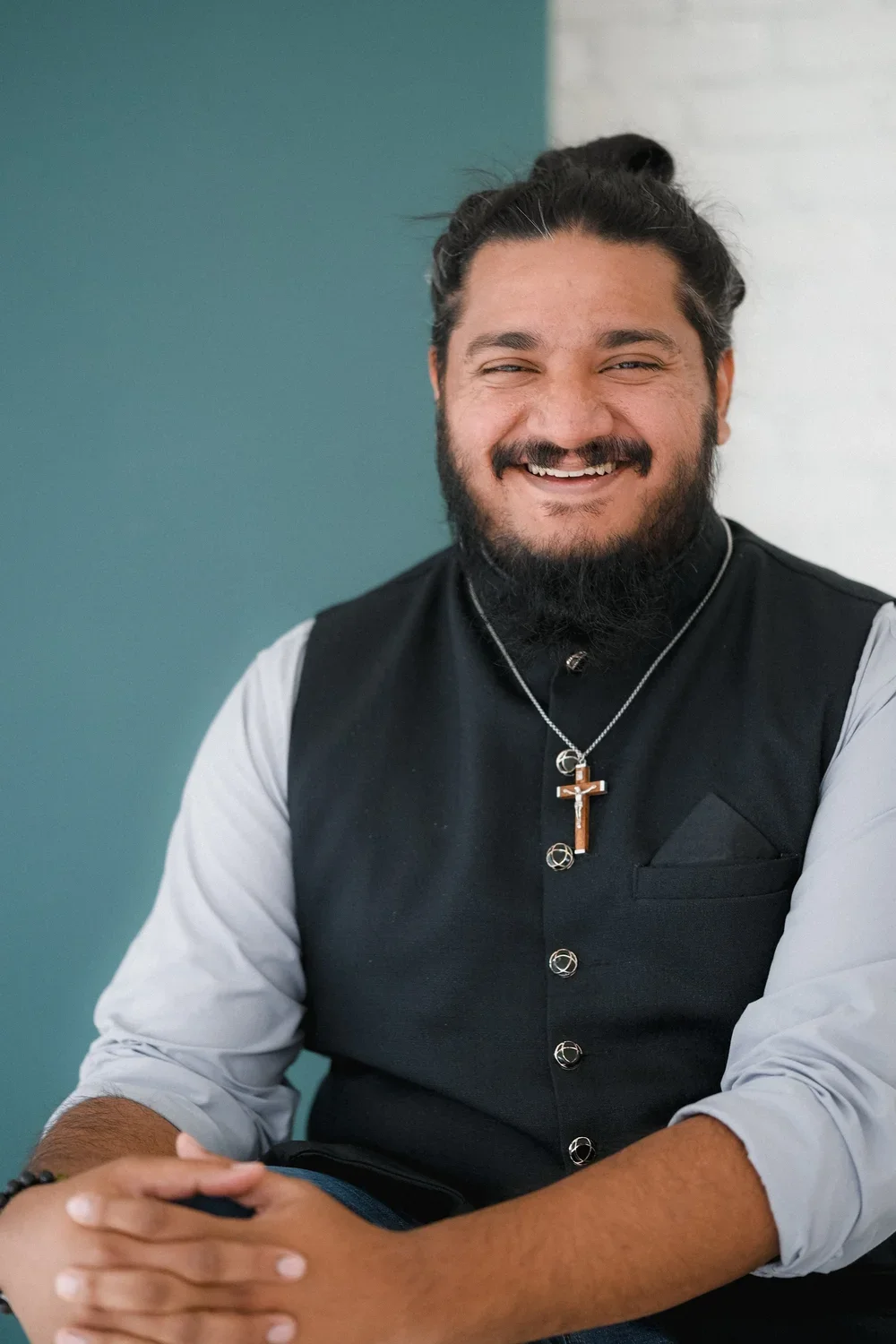
About Fr. Joash Thomas
Father Joash is a Priest, Public Theologian & Bestselling Author Drawing from his St. Thomas Christian roots and a Jesus-centered & Empire-informed understanding of Scripture, Fr. Joash helps audiences reimagine a faith that unites rather than divides—and that stands firmly with neighbors on the margins. Through speaking engagements, teaching, and advocacy, he calls Christians to a more contemplative yet courageous activism, motivated by the grace-filled, non-violent way of Jesus. Born and raised in India, Fr. Joash served as a U.S. political consultant and lobbyist before pivoting to global human rights advocacy. Now based in the Toronto area, he holds a master’s degree in Political Management from The George Washington University and two master’s degrees from Dallas Theological Seminary in Christian Leadership and Theology. An ordained Priest in the Diocese of St. Anthony, he is the author of the #1 Amazon Canada Bestseller in Liberation Theology, The Justice of Jesus (published by Brazos Press / Baker Publishing). Fr. Joash serves on the leadership team at St. Stephen’s University as Director of Fundraising & Advancement and Instructor in Public Theology, Peace & Justice. You can keep up with Fr. Joash's writing on his Substack, Masala Chai Theology.
Show Notes
Visit Fr. Joash’s Website - https://www.joashpthomas.com/
Buy Fr. Joash’s book - The Justice of Jesus
Courage Faith In A Time of Fear Conference
Follow us on Social:
Transcript
[Introduction]
Welcome to the Ministry Forum Podcast, where we believe that you are not alone in your ministry journey. I'm The Reverend John Borthwick, your host coming to you from the Center for Lifelong Learning at Knox College. Here, we connect, encourage and resource ministry leaders all across Canada in the joys, the struggles and everything in between. I love that I get to do this work, and most of all that, I get to share it with each and every one of you. So thanks for giving us a listen today. Whether you're a seasoned leader or just starting out, this podcast is made with you in mind.
[John Borthwick]
There's a question that's been pressing on ministry leaders across Canada lately, what does courageous faith actually look like when fear is everywhere. Fear of decline, fear of division, fear of saying the wrong thing, fear of the political movement we're in, and fear of what's being lost, and fear of what change might cost us.
This episode comes on the heels of something significant. On May the 13th and 14th Ministry Forum and the Institute for Christian studies collaborated on a conference at Knox College called Courageous Faith in a Time of Fear, and today's guest embodies exactly that kind of voice that that gathering was meant to amplify. Father. Joash Thomas is the author of The Justice of Jesus: Reimagining Your Church Life Together to Pursue Liberation and Wholeness. He's an ordained priest, a global human rights advocate and now serves at St Stephen's University as Director of Fundraising and Advancement and Instructor of Public Theology, Peace and Justice. But headline biography misses what makes Joash's voice essential right now. He's a St. Thomas Christian from India, part of an ancient tradition of believers whose faith was passed down from the Apostle Thomas, more than 1500 years before European missionaries arrived. He's also someone who once worked as a Republican political consultant and lobbyist in Georgia, before an encounter with Christ redirected him toward international human rights work and eventually towards writing this book. What Joash brings is a perspective the Western Church desperately needs one shaped by the Global South, by the margins and by the long memory of what colonization has done to the Gospel itself. His book is what the endorsements call a pastorally disruptive and brilliantly convicting book, and the person or he interviewed at our conference, Kristin Du Mez she says it's filled with truth and grace. The justice of Jesus invites Western Christians to rethink what it is that God requires of us. And Sarah Bessey has called it an invitation into the group project of liberation. Those are some powerful accolades, and I'd so totally agree it was a fantastic read. And so today, we're going to be talking about justice and courage, fear and decolonization and what it means for Canadian ministry leaders to follow Jesus faithfully in this moment. Whether you were with us at Knox College, or whether this is your first encounter with this conversation, I trust you'll find something here worth wrestling with.
Joash, welcome. Welcome to the Ministry Forum Podcast.
[Joash Thomas]
Thanks for having me, John. This is great, and thanks for those kind words.
[John Borthwick]
Cheers, Josh. Before we get into the book itself, I'd love for our listeners to hear a little bit more of your story. You've described an Emmaus Road type encounter that took you from political consulting in Georgia, to human rights advocacy and now to ordained ministry. I wonder if maybe, as you navigate that journey, you might be able to speak to what Jesus might have looked like to you before that encounter, and what did he look like afterward.
[Joash Thomas]
So good. No. Thanks for that, John. I mean, quite honestly, I feel like that was preparation for ordination into the priesthood for me, in many ways, having these diverse life experiences, intellectually, geographically, you know, ecclesially as well. And you know, I think what that does for me as a priest today is that helps me meet people where they are, the way Jesus does, including on Emmaus Road, as you mentioned. So for me, I was born and raised in Mumbai, India to St Thomas, Indian Christian family. So what that means is my family's been Christian 2000 years, going back to the Apostle Thomas, who introduced us to Jesus. But for the last five generations, we've been more evangelical so and so much of that is because of the influence of Western missionaries. So unfortunately, I was kept from the rich history and liturgy of my St Thomas heritage, and was told by the more evangelical near ancestors that those aren't real Christians. The first Christians in the family were the Pentecostals and the brethren folks, the evangelicals. But, but you know, what I am grateful for is I was introduced to Jesus at a young age by, you know, people who, to me, represented the best of evangelicalism, the more thoughtful side of it, the more graceful side of it, and the global south side of it, which is quite different from the Canadian side or even the American side, as I've spoken at ETS once, comparing, contrasting all three and so to me, you know, it's yeah, just really grateful for these experiences. I moved to the US when I was 18, and spent most of my adult life there. First half of it was in while I was in university, you know, working in Republican politics that got me into Georgia, Republican political consulting and lobbying. And, you know, essentially, you're right. I had this Emmaus Road moment of realizing that ultimately I was betraying my own humanity by being a part of the system and structure of the American empire. And this is what empires do. I think they rob us of our Creator given identities. And so for me, it was a powerful moment of, you know, writing an opinion article saying that immigrants who came to the US through a specific legal pathway shouldn't be allowed into the country, even though, quite ironically, that's how my family came to the US and that, for me, was a wakeup call. And so, yeah, for the last decade, I've worked in international human rights, and that's led me into the priesthood, and, yeah, led me to write this book, The Justice of Jesus from that journey. So it’s a very unique journey. And you know, there's a lot of trauma that's also come with it, but there's also a lot of hope and perspective. So yeah, just grateful to be able to share those perspectives.
[John Borthwick]
Yeah, and this episode is going to be released after the Courageous Faith in Time of Fear conference, and you mentioned that sort of trauma, and the journey you've navigated along the way, and the courage to speak out, or the courage to go in a different direction than perhaps you were going, and all the ways in which that can impact somebody. Clearly, that question that the conference raised is not going anywhere. I guess when you when you survey the Christian landscape from the unique perspective that you've had and the journey you've had politically, culturally, and when it comes to church, what kind of fears do you see that are gripping the western church right now? And what's the cost of fear, of letting fear set the agenda? What's the cost to the Western Church? Would you say, from your vantage point?
[Joash Thomas]
Wow, that's a really deep question, and quite honestly, you're right, there is a cost to fear. And I think that cost is discovering Christ in all things. Ultimately, for me as a Christian priest, and for all of us who consider ourselves Christians, that's, that's the cost. You know, when, when we fear something. We put up walls of hostility that Jesus and the Holy Spirit came to take down, and that keeps us from discovering Christ in all peoples, religions, societies, cultures, Christian traditions, created beings. And it really separates us from that and, and quite ironically, Jesus came to reconcile us. Jesus came to unite us with ourselves, with each other, in humanity, with creation and what we do when we have fear is we, we given to our empire shaped instincts to put up these walls of division, which then allow the empires of our day to divide and conquer. And you know, I'm so excited that we got to have this conference and have spaces like this in the Canadian church, especially for me as someone who you know, lives in the Toronto area, Southern Ontario. You know, it's important for us to have these spaces, because the work of expanding our imagination takes courage, because these imaginations have been divided by Empire. And you know, I see this in my own family's history. But you know, the easiest way for Empire to steal our wealth and resources is to divide us by dividing our imaginations and this is something that still happens today, and this is also why it's important for all of us to overcome these fears and overcome this cost to fear that you talk about,
[John Borthwick]
Yeah, well, and one of our themes at Ministry Forum is you're not alone as you minister. And I think picking up on some of the things you're talking about around the conference, or just around mobilizing a movement, or mobilizing people together to realize that, you know, if I'm having these kind of feelings or thoughts or wonderings myself. You know, what would it be like if I was in community with others to find out? Oh, actually, other people think similarly, that's captured human imagination forever, sometimes for very bad and destructive reasons, and sometimes for really beautiful things that have happened. I think it's interesting, because I do feel that part of it is a there's a momentum the way you speak about, there's the way you speak about Jesus is fascinating to me, around this idea, and I think it plays into all the themes that you capture in your book. And when you talk about empire, there's a sense of, we've got him and unless, and it's not possible for you to possibly have him in the same way, unless you conform to our way of having him. And it seems so disappointing to to imagine people have that kind of experience when his story as we read the gospels, I've always imagined his story is something like he's turning up on the scene, and people are responding to him in a positive way, but other people are responding to him in the way that you're not ticking the boxes. You're not the kind of thing we were predicting or wanting, or you're not doing it the way we like you have to fit into this box, and Jesus just doesn't do that. But the other fascinating piece, I would say is, when I read the book of Acts, the early part of the book of Acts, and one time this happened in congregational ministry, where I preached the book of Acts, like all the way through and it came to me as I was preaching it. I'd read it before, but I'd never seen it in the same way, because there's this story after story after story. And I think this touches on this idea of Jesus being, you know, how could it possibly be that other people could see Jesus in in their own context? But every story is another story, of like the people, even the people who followed him, like Peter saying, Surely this can't be possible. Oh no, we're not gonna, these people can't have Jesus. Can they? Surely not these people. And it ends with Empire. Surely Empire can’t have Jesus? Could they, like Romans? Is that possible? And it's not necessarily those people saying that. It's the people in the early leadership of the church, like, as they expand, it's like, okay, so yeah, okay, we've let these people in, but surely we can't let somebody else in that's different from us. And it's just a constant story like that. And I wonder if that's part of, that's part of the fear that somehow that's going to change us, somehow that's going to mean that we have to change I wonder, like, what's your reflection on some of that around why people would want to hold so tightly to one way of seeing Jesus or the church or whatever that might be, or Christianity, I guess.
[Joash Thomas]
Yeah, yeah. You know, I think one of the ways in which Empire shapes us is to fear what we can't control. And this is quite honestly why I feel like queer inclusion is the issue of our time today, and of course, it has roots and connections with colonialism and white supremacy and all these other sins that we've ignored and haven't healed from, which is what keeps us from healing to help heal the world in this area when it comes to the inclusion of our queer neighbors. So I have a friend of mine, black queer person recently in conversation with me, helped me understand how the thing from his perspective, that folks who aren't inclusive of queer folks are afraid of is the uncertainty, really. And to me as a theologian, that ties with this idol of certainty that we have. This is why we like to categorize things neatly, put them in a box. I think it was Willie James Jennings who said, under the colonial imagination, to know a thing is to own a thing and to put a label or a category on it, right and when we can't do that, when we can't assign a gender binary to someone, when we can't assign this Joash guy, what theological camp does he fit? You know, and don't know what to make of him. So I'm terrified. Jesus, you know, so mysterious, which the Eastern Church teaches us, too, so mysterious. We can't put him in a box. So let's put him in our box and make everyone else conform to that box. Well, it gets weird when you then. You know, set sail for foreign lands to colonize them and come across ancient Christians like my ancestors, who have been worshiping Jesus in very different ways. Even though they were creedal, they held to the Nicene Creed, and at the same time, were quite Christian, universalistic in their faith. Didn't have this pressure to convert their neighbors, to conform to a certain belief pattern around Jesus, but believe that, you know, Christ is all and in all, and would reconcile all things when Jesus returns, right. So all to say, I feel like there's just this so much uncertainty in our world today that we classify as uncertainty and doubt, but, but it's really mystery at the end of the day. And I think Jesus invites us into that mystery with eyes of curiosity, but we can’t do that. We're unable to do that because of our empire shaped imaginations that require us to categorize and put labels and be afraid of what we can't control, which is ultimately why I think we're terrified of queer people, because they don't fit into a box, and we have to overcome that cost of courage to draw closer and to see Christ in them, so that we can embody Christ to them as the church.
[John Borthwick]
Yeah, so powerful. We fear does a lot to us, it seems, yeah, fear of the unknown, fear of what we can't control. In your book, you make this statement of instead of being shaped by the liberating Spirit of God that anointed Jesus to bring the good news to people in poverty and oppression, much of the Western Church was shaped by a theology that prioritizes the salvation of souls at the cost of the dignity and liberation of human bodies. I think this plays into a bit of, you know, almost like a shell game, like, there's, there's, sort of the good news of Jesus has been announced, and then it's like, well, yeah, he did talk about loving our neighbors and taking care of the least of these and all that kind of stuff, but, but let's talk about this instead. Like, this is what's the priority? How do you think we got there, and what's been lost in this gospel that's only about souls and not about bodies? How would you articulate that even more fully in the way that you beautifully do?
[Joash Thomas]
Yeah, no, I think so much of this has been lost because of what Empire has stolen from us, and more recently, Western colonial empires, you know. So I say this throughout my book, but colonization wasn't just bad for the global south church and the global south, it was also bad for the Western Church because it shaped us to resist justice for our marginalized neighbors. In our context here, right, it's boomeranged around and come back to hit us. And this is why we're not safe or inclusive, not just for marginalized communities, but even for advocates of justice with privilege, wanting to steward that privilege as allies, you know, for people asking questions and people harmed by the church and I think we need to, you know, just like any good therapist would tell us, you know, go back to the past, heal from those wounds, heal from that trauma, and then heal from what that's done to your humanity, what that's robbed of it, and then you'll be able to be the best you in the world today. And I think the church needs that advice so desperately to go back in time, to heal those things we've swept under the rug, to sit in the tension of things we've benefited from or been complicit in, and understand how that shapes us in our theology today. So, you know, I think, I think, to your point, it's, yeah, just important for us to sit in that tension. And my ADHD meds haven't fully kicked in yet, so I've lost track of your question. If you would mind.
[John Borthwick]
I love that. Joash, no, we're all good. We're all good. Let's, let's just keep the conversation going and we'll, for the sake of our Ministry Forum audience, that you know this happens to all of us, at times we we think of other things. There's so much going on. Maybe where I'll pick up on this conversation would be what I what I sense. I'll speak my home my home team, so my home crew in the Presbyterian Church in Canada. And I could be wrong, and Ministry Forum audience, if you're listening to this and you think John your way, you're so wrong. Let me educate you. That'd be great. I'd love to hear your comments. My sense is we as a denomination, haven't really, haven't really been a part in the fullness, in a full way, of that deconstruction conversation. Because really, that's what I think you're pointing out a part of the journey for some of our Christians in the Western Church has been this, this piece of deconstruction. And you've been hanging out with some cool people like Brian Recker, who we've had on the podcast before, who's talks deconstruction himself in his book Hell Bent, lots of deconstruction going on there.
What I really thought was interesting and probably lands a little uncomfortably for some who are doing that painful work of deconstructing their inherited faith is when you say deconstruction without decolonization is pointless and does nothing for our marginalized neighbours. Can you unpack that? These are big words for people, deconstruction and decolonization, but it touches on what you just said earlier. I remember being in a training. It was a for our community that where I was serving like the city. So there was social workers and city employees and other people and guests who were wanting to learn about essentially, it was taught by an Indigenous leader who was doing some training on Indigenous cultural awareness, kind of training. And at one point, she beautifully said to the entire crowd, people what you don't realize is you all have been colonized. Stop using this term of that you're the colonizer. You've been colonized, and you need to decolonize as a part of your own journey. So maybe touch on this, how it intersects with deconstruction as well.
[Joash Thomas]
Yeah, absolutely no, I'm so glad you. You mentioned that. And yeah, this is why, yeah, the books written to a broad audience, it challenges the imagination. So both conservative evangelicals and progressive mainline Protestants, ex-evangelicals, Catholics, you know, Orthodox like, like, really challenges everyone who, who hasn't maybe started unpacking decolonization, how it ties. So you know, something else to say in the book is that many of us leave, you know, fundamentalist spaces with more colonized theological frameworks. And we move on to other things or other traditions, or start our own thing that perpetuates that harm. Because we haven't gone back and decolonized. We haven't looked at Empire and power structures and how they shape us. So we isolate our experience to just us and our time and do exactly what Empire wants us to do at the end of the day, to not reconcile with our ancestors, those who have gone before us, who were also victimized by Empire in that they were robbed of their humanity and then just made these cogs in a larger machinery to go exploit, steal, divide and conquer. And so, you know, I've been speaking to this more big picture. If I were to zoom in a little bit on this, you know, I often get asked, what does Christian mission look like in our world today? By, very well meaning folks who have left those more harmful frameworks, and have said they come out and they say things like, but you know, Scripture still teaches us that we need to do great commission. What does that look like? Right? And I'm like, Okay, well, let's go back in time a little bit the phrase Great Commission. I'm hoping to unpack this more in my sub stack Masala Chai Theology soon, but the phrase Great Commission, where does it first pop up in the history of the church? Now we know where the great commandment pops up. Jesus explicitly says, This is the greatest commandment, but the Great Commission, Jesus doesn't use that language, right? That's a heading like, like in Scripture, like, where does that pop up in human history and church history. And if you look into the history, it's actually like 1500s where it pops up, funnily enough, the age of colonization. You know, to most of the world, the Age of Enlightenment, to a few and Europe, few men in Europe, but, but to most of the world, is the age of colonization. And you know, you all, you had other things going on around then, the Protestant Reformation, and so there was this well-intentioned spiritual zeal that was there that was also deeply connected with systems and structures and imaginations of empire. And again, most Christians don't know that the phrase Great Commission was nonexistent before. I believe it was a German, Dutch, Prussian, maybe nobleman who wanted to be a missionary himself came up with it to convince others to send him and others into the mission field.
Now, if you go back in time to pre-colonial Christian traditions, like Celtic Christians in the West, or St Thomas Christians, my ancestors in the east, and if you were to have a conversation with them, forget that like Look at, look at the Vatican's archives on what they believed, how they interpreted. You know that Matthew text on the Great Commission, what you'll see there is that they read that piece of scripture and its context, and who is Jesus saying this to? He was saying this to his apostles. And what did they do? Well, Thomas came to the ends of the earth, to my people in India, and so the Great Commission has been fulfilled in their hearing and their reception. And my job today as a Christian is to obey everything that Jesus commanded the end part of that great commission text, right? So we've received it. The apostles have done their job and now obey everything they've commanded by embodying this faith that the Eastern Church calls Theosis, in a Theosis kind of way, that is concerned more with looking like Jesus, smelling like Jesus, sounding like Jesus, and not converting by changing anyone's mind. Yes, converting people from the evil ways of Empire, which are violent to the peaceful way of Jesus, whether or not people acknowledge Jesus, and for those who hold to the name of Jesus, teaching them what it means to believe, not just with your head, but also your heart and your hands and your feet and your whole body. And so we've created this disembodied gospel that were reduced and packaged and franchised and and exported that's actually doing so much harm, you know, because I guess it's like water's H20 right? And you strip away the oxygen, it's just hydrogen, you start exploring that all over the world that can be quite harmful, right? And that's exactly what we've done, I feel like with the beautiful gospel of Jesus by taking the version that's been given to us by Empire, through colonialism, and then sending those frameworks. Instead of looking at Mission and reconstructed, decolonized ways, like, Okay, what does it look like for me to go not as a teacher, but as a learner, to humble myself, to cultivate the eyes, to see Christ in all things. And what's really fascinating is, even in Indian Christian history, you have archival letter accounts of, you know, like Jesuit Catholic Portuguese missionaries, like de Nobilis, who goes and studies. He was sent there to translate scripture in southern India. So he gets there, and he starts reading local literature, which is all religious, because that's the only form of literature available. So he starts studying local religion as a way of understanding local languages, and realizes that, oh my goodness, these are very sophisticated religions. These aren't savages, and I'm actually seeing Christ in their religion, and he started becoming a student of it. And then he started sending letters back to the king of Portugal and the Vatican, and was immediately cut down by Empire, telling him, hey, you were sent there to convert the pagans. Don't go native, don't incarnate, which is what Jesus does, right? And so anyway, we need to, we can't just look at a text. We can't just inherit the frameworks we come out with and not ask these deeper questions, and not look at history, and not see how empire and specific has shaped us, especially through colonization of the last few centuries.
[John Borthwick]
Yeah, one of the really tiny pieces in what you've just shared so meaningfully is, you know, we forget that the Bible, as we understand it, as it was formed, didn't come with subtitles like, like the actual text. When Bibles were created, in the text that we have, they have all these subtitles that never existed in the actual text.
[Joash Thomas]
Didn't even come with punctuation, right?
[John Borthwick]
Exactly, right? Yeah. We miss a whole bunch of things. And we do miss so many times as as I, as I read the text, and as I read that in community, so many times we forget about the audience that it was intended for, and some of the things that we hold up as powerful truth for us today, in some ways, if, if you read it well and understand the context and who the original audience was, in some cases some of. What Jesus is saying is a very pastoral message to his immediate followers. It's we can always extrapolate through preaching and reading, and it is a living word that's meant. Means something for us today. But sometimes the text is the text for the immediate audience, and we get to listen in and take on that sort of pastoral notion. I always think the text that talks about Jesus baptism, or Jesus on the mountaintop, the transfiguration, whenever you get to hear the voice of God, talking to Jesus in that experience, I always think it's like we get to hear, overhear that, and there's a beautiful, pastoral, meaningful message of, you know, the relationship of the Trinity in some way. And yes, we could extrapolate that as you are, also my beloved child, and take that on in some way, but sometimes it's just a message for the immediate community and so, yeah, so amazing as you unpack that.
[Joash Thomas]
I mean, Empire shapes us to be narcissist, doesn't it? In a sense.
[John Borthwick]
It’s all about me, right? Yeah, right. I think there's some songs like that. No, it doesn't say it's all about me. I don't know. Maybe I've dabbled in some places it feels a lot like it's all about me.
[Joash Thomas]
But even to your earlier question, this the part I forgot to mention, your earlier question of putting Jesus in a box, right? Like, like we've reduced Jesus to a personal Savior when scripture is so clear that he's the savior of the world, right? And that doesn't just include all human beings and societies, cultures, religions. That also includes all of creation, you know? And so we abandon creation care, and Stewardship of Creation, because we have reduced Jesus to this personal Savior, and we've exported that as the ultimate thing, and, just forget to bring the rest of our bodies in the process.
[John Borthwick]
Yeah, the wholeness in the sense that, you know, we I think we're starting to capture that a little more in our cultural moments that we're experiencing now, where we are talking about things from a holistic perspective, we're so fixated on these brains of ours, and Presbyterians are very much about our brains. It's all about the thinking. But to actually have a full bodied experience of how you engage the Divine is what I think we lost, in some cases, around being so fixated on our getting our theology right or focusing on understanding as opposed to experiencing, you know, destroying things that were images that we might see, or taking away things where there might be a tangible thing to touch or hold or or smell. So much of that process for, certainly the reformed tradition, and definitely within a Presbyterian sort of context, it became such a heady religion that never really forgot that we have bodies, and we talk about that even around stress and trauma. You know, people are like, it's not just in your brain. Your body is going to do things like, it's a, you know, this somatic experience of trauma or somatic experience of life. Like we are bodies. We're not just brains, and a brain is just an organ in the body. We do get these minds, which is lovely, but they also confuse us and delude us that this is the only thing that matters. And even Jesus says, or no, the Bible and the New Testament speaks about every part of the body is important, even if we have if we have to remind ourselves. I also think it's interesting. I used to do this a lot in congregational ministry, and every so often I'll do it when I'm preaching as a guest. If you have a crowd that is your community, they sort of get you. I don't always do this as a guest, because they may not fully get me. It depends on how depends on how courageous I want to be in that Sunday. But the prophets, I'll say, the prophets of the 80s, Depeche Mode, your own personal Jesus. They're one of their songs. Who knew that they were being so prophetic in the words that they were offering, I think, in a different kind of context. But just to claim those words as prophetic words, that that's kind of what we've created, your own personal Jesus. I don't sense that's what it was all about.
[Joash Thomas]
Right.
[John Borthwick]
Yeah, let's jump into a couple of more things, just around pastors. So I think pastors feel a bit caught, and certainly feel caught in this moment that they're in. Maybe Canadian, Canadian pastors, definitely, in some ways, I'm sure some of our American siblings are experiencing some of what's going on in a much more, much more frightening way, probably, to use that kind of expression. But some of what you've already said and teased out there, many of them sense this sort of call to justice and call to reaching out to their neighbor, and sometimes doing that in a very courageous way, but they're afraid, in some cases, of losing relationships maybe within the congregation, some of them could be very tangibly afraid of like, if I do this too much or push this too hard, people might want to get rid of me from my job. You know, if they were to say these things out loud as a as a preacher in a congregation, occasionally, I would get called out for preaching politics, and I just don't read the gospel without seeing politics being in there and justice being a thing. But what would you say to a minister who's afraid, maybe afraid, not of being wrong, but just the cost of stepping out that that sort of being courageous or or trying to be honest about either where they're at as they're seeing things in the world and trying to respond to that in a holistic gospel way?
[Joash Thomas]
Yeah, that's a great question, and I'd like to respond by offering a challenge first and then an encouragement. So my challenge would be, just and again, you know, I say this with the deepest love and admiration for folks wrestling with that question. This is the job. You know, this is what you signed up for. You signed up as a pastor to point people to a better way. Because, guess what? The ways of this world, the ways of empire, are broken. I mean, read the headlines. See empire, empire-ing all over the place, not just in America, but also in Canada, with social safety nets being cut. With immigrants being demonized and vilified. And, you know, our participation and the American empire, historically and today and so, so. So, you know, if, if we're called to be salt and light, and that is going to be challenging to the status quo, that is going to upset the old order of things, literally, the story of the entire book of Acts, right through the Holy Spirit. Here are some ordinary people, upsetting the status quo, getting in trouble for it, and they're fresh off the resurrection of Jesus. They're fresh off the Pentecost, right? And so, so for them, yeah, why would we think it would be any different for us? Well, tell us why. It's because we've been domesticated by the empires of our day. We've been, you know, just like the religious hypocrites of Jesus' day, we've been conditioned into protecting the status quo and opposing those who upset it, who, you know, show things that empire can't control.
And so our responsibility as clergy is to bring the needs of all the people to the church, every human being, and you know, that that that is the job, even if it upsets others along the way. This is what it means to follow the narrow way of Jesus and so. So that would be my challenge, you know, like, and if we're not comfortable with that, then we need to examine whether we're in the right line of work. We need to examine that and if we're not willing to pay the cost, that's okay. If we need to heal from trauma, that's okay step aside for a season, or, you know, for permanently too. If you need for your own well-being to step aside because you're not in a position to have that courage. You don't have that privilege right now of having that courage. That's totally okay, but don't hold that fort down and get in the way of the spirit and the Spirit's work in our world today, as church leaders often have in the West, historically and around the world. So that would be my challenge.
I think my encouragement would be, my encouragement would be discerning the pace of change with the Holy Spirit. This is something my bishops advise me and fellow clergy on as well, especially because most of us are in more low church evangelical settings, and we're bringing ancient sacramental wisdom that can often be terrifying to people because it's too Catholic or too orthodox when there's beauty and there's Jesus there too, in bridging ways, right? So as we're doing the work of bridge building and healing the divides within the church by. Uniting low church with high church. You know, bishops advise us. Hey, you know, just discern the pace of change with the Spirit, because you do want the medicine to also go down pastorally.
Now, that's not an excuse for a lack of courage or an action or apathy, but open ourselves to this posture of constant wrestling with the Spirit. You know, don't think we have it all figured out, because that's when we get in trouble. And I think as long as we're wrestling, we don't have to get it right. Here's the good news, the liberating news, we don't have to get it all right. As long as we're wrestling, I think God smiles on us. And even if we're not, God still smiles on us, but you know, we have been conditioned by Empire to expect success and effectiveness and perfection. And these aren't bad things in themselves, but they can become idols for us, but we're called to faithfulness at the end of the day. And faithfulness, the way of Jesus, should cost you something. And if it is costing you something, Jesus is right there with you, and the cloud of witnesses, the saints, right there with you.
[John Borthwick]
Amen, I'm thinking of just a few bits of seasoning as I listen to you the idea of a long obedience in the same direction. You know that that sort of call to continue to see the world and navigate the world and speak out and continue to model, if you're a leader in a community this obedience in the same direction, and that direction being a Jesus movement kind of piece. The other the other thing I was as I was listening to you, I was thinking about, you know, in Acts, people are referred to as these people are turning the world upside down. And we know that Jesus did that on a regular basis, but sometimes literally. But that sense of, I'm not sure, ministry leaders, and I mean this as somebody who was a ministry leader, and there were many days and months and possibly even years that I wasn't turning the world's upside down, but it was never put in my job description. But maybe it should be your job is to turn the world's upside down sometimes, or at least help us to see the world in different ways. Help to do that, uncovering work, that apocalyptic work, that revealing work, right? And the other thing I would say, because you do speak about it in the book often, and so as people engage with the book if they've never experienced this, and it's possible, if they've never heard expressions or words like this, in some cases, in the church, where ministry leaders are look a lot like me, white males or white females or white people. It could be that there's a whole mass of privilege, and there's reasons why the system works for us and why we may feel like we wanted to conform or hold it lightly or not push it too hard, because it's still working for us. But we if we don't know, or if we're coming to know for a lot of people, the majority of people out in the world, it doesn't work for them and if we're called to be, you know, as liberation theology, sort of unpacked for a lot of people, God as a preferred option for the poor, then that's where we need to be. We need to remind ourselves, where would Jesus be standing in these moments, and that's where I think that courageous, courageous faith in a time of fear is really engaged. Are we willing to, how far are we willing to go for the sake of the gospel? But I love your pastoral piece there that and your metaphor of medicine. You know that this is good medicine, but you might want to be measured in how, how you're administering it, but because it's also about just even human interaction and human dynamics. How do you have an open stance to trying to continue to maintain relationships with people, but also a pushing and nudging and encouraging, a disrupting kind of influence as well. And sometimes you can have that disruptive influence even more powerfully when you seek to maintain relationships at the same time. So we're not necessarily saying, Go out there and tell everyone they're bad people, but how do you do both and at the same time? And that's an incredibly hard thing to do. We just need to acknowledge that for anybody. And it's a lot of carrying work. It's a lot of hard work, and it sometimes starts to bring up stuff for ourselves as well. And we need to take. Care of ourselves as we do that.
[Joash Thomas]
Absolutely, yeah. And, I mean, you know, you have way more wisdom experience to offer on this, John, and maybe I'm just like, you know, super young and idealistic about this and naive about it, with the freshness of my ordination, but you know, I'll say this. I think it's important for us to hold both intention, you know, hold that that challenge and that encouragement piece intention, for our communities and totally lost track of what I was going to say, maybe it'll come back.
[John Borthwick]
Let me just say I think you just called me old, number one, in love. I'm sure it was in love,
[Joash Thomas]
That’s a good thing in my culture
[John Borthwick]
I love that. Thank you so much. But I think one of the pieces that you're that you're naming there is, I've done work in connecting with other with people in sort of the calling or discernment that they've done, not just in ministry, but in other things. And one of the things we would often try to encourage folks to remember is, why are you in this? What was the thing that called you into this in the first place? And so maybe the freshness of your ordination, the fact that you can still smell that ordination smell on you, which is beautiful. Mine it's old. It's, I don't know what it is, but it's recapturing that. Like, what did you go and, you know, some people have those very basic senses. Why'd you go into ministry? I want to help people. Well, that's really nice. I want to proclaim the gospel. Great. Whatever that might have been, you know, how can you reclaim that and deepen that for you and for the community that you're serving? Where can you find that passion, if that passion is diminished, because, again, it's hard. The work of ministry is hard, because people, and Empire, and the world we live in is hard. It's a lot to carry. So where can you find that passion for what it was to rekindle that, that enthusiasm to do what you're doing and, you know, navigating. I'm not sure if that that helps recapture where you were going, or could take you another direction.
[Joash Thomas]
it'll probably come to me at 2am tonight.
[John Borthwick]
Give us a call, we'll try and throw it into the gas recording.
[Joash Thomas]
I love that. I love that wisdom. And yeah, I think, yeah. You know, it's that constant tension, and I think we get into trouble when we don't live in that tension of encouragement and challenge, when we lean heavily into encouragement or into challenge without love. This is the thing I wanted to say. You know, what does it look like for us to be very honest and very blunt about the harmful systems and the harmful theological frameworks, the harmful imaginations. What does it look like for us to be almost merciless towards that in our challenge, while at the same time being radically graceful, radically inclusive, radically gentle, radically pastoral towards people stuck in those systems and structures and theological frameworks who have lost parts and pieces of their humanity to that. What does it look like for us to meet them where they are, like Jesus came across the Roman centurion, and to be radically graceful to them in that moment, while at the same time being, being harsh about, about the ways of empire that condition them, recognizing that and making them feel like, Hey, I'm being very kind to you here, but this thing that that you've idolized is actually harming you and your humanity. And I want you to, I want to see you liberated of that in Jesus's name.
[John Borthwick]
Yeah, to bring that abundant life, that fullness of life that Jesus came to bring, that would be a beautiful way of ending. But I, but I do want to add a bit, just on. I try to, I try to encourage in the conversations I get to have. Just, you know, because some, some of this can feel heavy for folks, but, but is there? Are there places, spaces, people, communities, churches, whatever it might be that you're seeing that are actually embodying or, or at least striving to embody what you just described. You know, what would it look like? Are you seeing signs of hope, or places that are bringing you that sort of joy of a sense of Yeah, like this, this place or this space. And even if you want to talk in generalities, yeah, I've seen a bunch of places, but I don't want to name anybody by particularly like on this address, in this in this city, in this community, or if you do, then that'd be great. It's. For let people know who you're, who you're seeing that in where they could, where they could go deeper for themselves, or be inspired in the same way of you know, whoever might be inspiring you right now.
[Joash Thomas]
Yeah. I think we're in a unique season of life and ministry in the Canadian church right now, we're in a culture that's trying to figure out, like, what is our Canadian identity, right? And within that, you've got Canadian Christians trying to be like, we know we're different from our neighbors down south, but how? And I think I want to challenge us to examine, how are we also similar at the same time, by the ways we've been shaped by Empire, you know, and so it's important for us to sit in the tension of that and not just throw stones at our neighbors being like, Thank God, we're not like them, you know. Like, I wish. I wish Jesus had something to say about that, but maybe a parable something.
[John Borthwick]
Yeah, our true, our definition can't be we're just not them. Way of forming an identity that's not healthy, .
[Joash Thomas]
That’s it, yeah, like, that’s exactly it. Like, what would it look like instead for us to say we’re the Western Church, where the part of the Western Church that decolonized first, that that brought our evangelical siblings along in that journey in ecumenical ways. That, unified with Catholics and Orthodox and and immigrant denominations coming in Pentecostals to add to the common good. That figured out, you know, in healthy ways what it means to work in interfaith ways. What does it look like for us as the Canadian church to become experts in that to the point where we would then be consulted by our siblings in Australia, the UK, Netherlands, reaching out to us, saying, Hey, will you tell us how you did that there? Will you advise us? Will you share your experiences with us? And that’s who, I, as a newer settler Canadian myself, would love to see the Canadian church be someday and I see signs of this. I see potential of this all over the place, and the work you do at Ministry Forum in spaces you know, like ICS, St Stephen’s University, where, there are these spaces of wrestling that are becoming more known internationally and have a more global student body, because people want to come and learn with us as we engage in conversations with our marginalized neighbors, here, indigenous neighbors. And NAIITS, you know, doing incredible work like, like, the global influence it has in that space, and indigenous wisdom. And so, you know, there’s so much good happening like, and I get to sit on the board for The Good Table, that’s caring for churches being kicked out of denominations for being inclusive to their queer neighbors, or even asking inclusive questions. And I’m seeing so many of these spaces, they’ll they’ll likely never make the headlines, but that’s how the Spirit works. The Spirit works in the mundane and not in what the Empire dictates as the headlines, right? And so I find hope all over the place, and I also find hope in I was sharing this with you before our recording. But you know, just queer neighbors and queer Christians being their full selves, loving Jesus, and being their full selves at the same time and really poking holes in the neatly packed Empire shaped theological frameworks of other non-inclusive folks, so that one day the light can shine in through those holes, right? And you know, I think there’s beauty in us just being our full selves, being who we were created to be going back and reclaiming the stolen identities that empire stole from us, the creator given identities. And yeah, and then figuring out wrestling what it means to follow Jesus and work with people who don’t follow Jesus towards the common good for the healing of creation. And so that’s what I see happening, and that’s what gives me so much hope.
[John Borthwick]
That’s a beautiful vision that you’re casting, and I’m so glad that you’re seeing glimmers of that hope. I think I get a chance to see some of those glimmers as well. And I hope others can find or come into community with some of those glimmers as they serve in ministry today. Is there? Is there anything I haven’t asked you that you just really wish I had, or any sort of final words from Joash, what’s coming next? Ministry Forum audience, I hear that Joash may be speaking with someone about his next book. That’s right, I’m excited for you, but anything you’d want to share that I yeah, don’t.
[Joash Thomas]
No, I mean, I, you know, so much of this work is relational and conversational and learning and community, and one of the ways I do that is through my substack. It’s called Masala Chai theology. So if you want to keep up with my work, it’s Masala Chai theology. And sub stack, if you’re on Instagram, it’s Joash P. Thomas, that’s where I’m active, otherwise, the most on social media. And then, yeah, my book, The Justice of Jesus, is available wherever you buy your books. I also got to narrate the audiobook. So if my voice hasn’t driven you away by this point.
[John Borthwick]
Very soothing. Yeah, I always listen at 1.5 speed, though, so I don’t know what that’ll do to your voice, but yeah, that’s awesome. Yeah. And then another book coming out, any sort of teaser you’d want to give to the Ministry Forum community, even a tiny bit of where you’re wanting to poke at a little bit more.
[Joash Thomas]
You know, I think I’m just exploring this idea. It’s still TBD. And you know, the thing with this is, I can be really passionate about something, but will a publisher think that that it will sell that? You know, it meets a need right now, right? And there’s wisdom there that I want to integrate so I don’t want to be too close handed, but I’ll say this, this next book I’m working on, helps people who love Jesus and love justice and are called heretics for it, and who feel lonely for it. It speaks to those folks and telling them that they’re not alone, essentially. The work you do at Ministry Forum, and the way I’m doing it is by unpacking ancient pre colonial Christian traditions like my St Thomas Christian ancestors, or Celtic Christians who were who were called heretics by the empires of their day for having justice oriented, love oriented, you know, Jesus centered, ways of following Jesus and loving neighbor. And so I want to retrieve those stories that have been robbed of us by Empire. And offer that pastoral encouragement to people who feel alone right now and saying, you’re not alone. There’s a great cloud of witnesses that we’re a part of. And keep going. Keep going, because Jesus is right next to you. Yeah.
[John Borthwick]
Music to my ears, my friend. So appreciate. So appreciate this conversation. It’s been a blessing to me and I hope to and I know to our audience, it will be I look forward to getting a cup of chai with you sometime in person, that will be further blessing to me. But thank you for taking some time to be with us on the Ministry Forum Podcast today.
[Joash Thomas]
Absolutely. John, thanks for having me.
[John Borthwick]
Thanks for joining us on the ministry Forum Podcast. We hope today's episode encouraged you and reminded you that you are not alone in ministry. If this episode resonated, tell someone, please don't give us a secret. And if you can subscribe, rate or leave a review wherever you listen, it helps us reach more ministry leaders just like you. And honestly, it reminds us that we're not alone either. Find more resources and ways to connect at ministryforum.ca and follow us on social media @ministryforum. Until next time, may God's strength and courage be yours. May you be fearless, not reckless, may you be well in body, mind and spirit, and may you be at peace.