
She Believed Author, Taylor Scott-Reimer
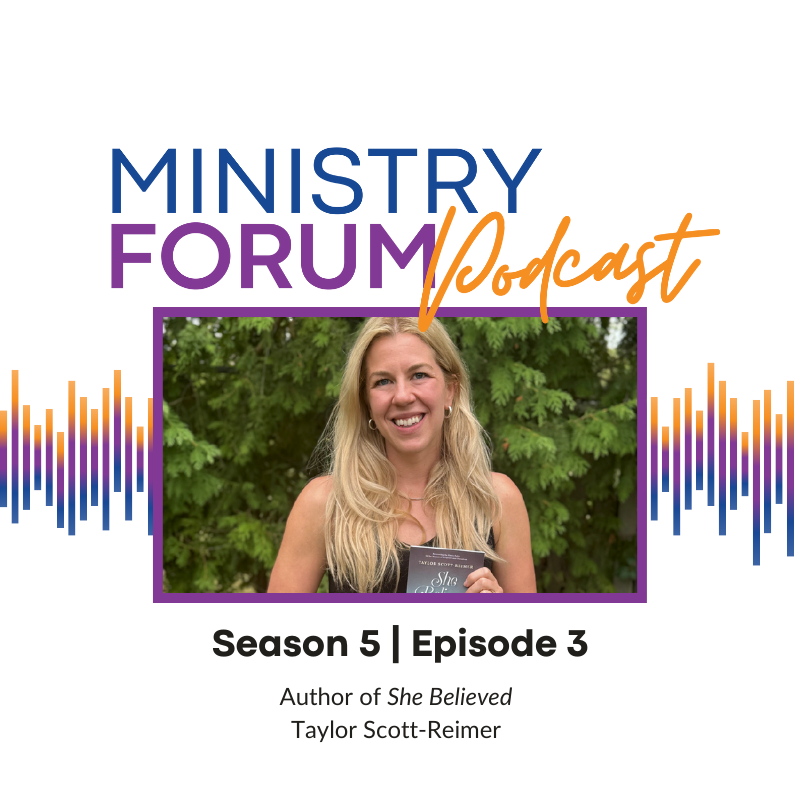
In our conversation with Taylor Scott-Reimer, Scripture springs to life through the stories of women who faced impossible choices and still chose courage. Taylor reflects on what she’s learned from writing She Believed, why certain interpretations have done harm, and how reclaiming overlooked voices can steady our own faith today. Rahab, Tamar, the daughters of Zelophehad—each becomes a doorway into questions of power, belonging, and hope. It’s a thoughtful exploration of how ancient stories can reshape our own.
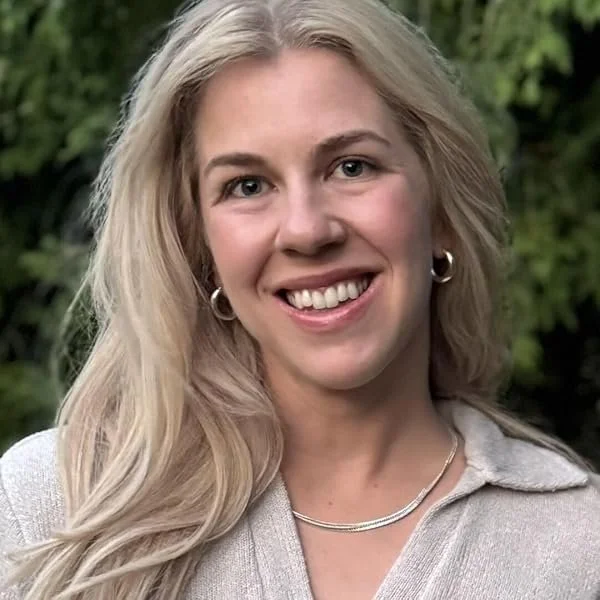
About Taylor Scott-Reimer
Taylor Scott-Reimer is a writer, preacher, and educator passionate about recovering women’s voices in Scripture and replanting them at the center of the Church’s story. She is the author of She Believed: Recovering the Fierce Faith of the Women of Scripture—and Ourselves (2025), blends biblical exegesis, cultural critique, and personal narrative. With over a decade of ministry leadership in Presbyterian
and interdenominational contexts, Taylor has preached and taught widely on women in the Bible, faith deconstruction and reconstruction, and abuse prevention in ministry. Her academic training includes an MSc in Communication from Purdue University and a BA in English from Tyndale University, grounding her work in both theological depth and narrative craft. A mother of two, she writes from the trenches of motherhood, faith, and reconstruction, weaving maternal imagery as a framework for leadership and hope. Taylor’s voice is f ierce yet pastoral—poetically theological, witty, wounded, and wise.
Show Notes
World Communion of Reformed Church's recent gender audit report and one of the themes of their recent General Council: Ordain Her. Here's the link to the report.
Reading the Bible on Turtle Island
In Reading the Bible on Turtle Island, Indigenous scholars Chris Hoklotubbe and Danny Zacharias explore what it means to read the Bible from the lens of Indigenous peoples in North America. Exploring the intersection of Scripture, Cultural Traditions, Hearts and Minds, and Creation, they affirm Creator's presence with Indigenous people since the beginning. By recovering these rich histories, this book offers a fresh reading of Scripture that celebrates the assets, blessings, and insights of Indigenous interpretation.
Indigenous culture has often been dismissed or deemed problematic within Western Christian circles, and historical practices have often communicated that Indigenous worldviews have little to offer the church or its understanding of Scripture. Hoklotubbe and Zacharias challenge this perspective, reasserting the dignity of these cultures that were condemned through colonial practices and showing how Indigenous interpretations bring invaluable insights to all of God’s people.
Save the Mothers Ministry Learn More Here
Follow us on Social:
Transcript
[Introduction]
Welcome. Welcome to the Ministry Forum Podcast coming to you from the Center for Lifelong Learning at Knox College, where we connect, encourage and resource ministry leaders all across Canada as they seek to thrive in their passion to share the gospel. I am your host, the Reverend John Borthwick, Director of the Center and curator of all that is ministryforum.ca. I absolutely love that I get to do what I get to do, and most of all that, I get to share it all with all of you. So thanks for taking the time out of your day to give us a listen. Whether you're a seasoned ministry leader or just beginning your journey, this podcast is made with you in mind.
[John Borthwick]
Ministry Forum, podcast audience, you know, I hope that I love books. I love books, and today we're going to be sitting down in the virtual studio for a meaningful talk with a new author. And let me tell you, I hope that you will take and read this book, because it's about another book that I'm so very passionate about, the Bible at ministry forum, we're on a mission to get people talking about the Bible, its stories, its characters and its profound meaning and relevance today, and that's why it is called a living word.
But before we begin, I would offer a content warning, one that probably should preempt any reading of the Bible. Likely we will be engaging in a frank discussion about the Bible, which touches on many sensitive topics, including sex and violence. This may be disturbing to some listeners. Please take care of yourself as you prepare to listen today.
All right, let's jump straight in so that we have as much time as possible chatting with our guests. Joining me today in the studio is Taylor Scott-Reimer, the author of She Believed: Recovering the Fierce Faith of the Women of Scripture and Ourselves. And here's her bio. Taylor is a writer, preacher and educator, passionate about recovering women's voices in Scripture and replanting them at the center of the church's story. And she is the author, as I said, of She Believed: Recovering the Fierce Face of Faith of Women of Scripture and Ourselves. The book blends a biblical exegesis, cultural critique and personal narrative with over a decade of ministry leadership in Presbyterian and interdenominational context. Taylor has preached and taught widely on women in the bible, faith, deconstruction and reconstruction and abuse prevention and ministry. Her academic training includes a Master of Science in Communication from Purdue University, and a BA in English from Tyndale University, rounding her work in both theological depth and narrative craft. A mother of two, she writes from the trenches of motherhood, faith and reconstruction. Weaving maternal imagery as a framework for leadership and hope Taylor's voice is fierce yet astral, poetically theological, witty, wounded and wise. I'll add that Taylor's voice is one that the church needs to hear, and I'm so delighted that she is sharing it both on the podcast and through her amazing book. Welcome to the Ministry Forum Podcast, Taylor.
[Taylor Scott-Reimer]
Thank you. I'm excited to be here.
[John Borthwick]
Awesome. Now, bio is certainly one way of being introduced, but I always like to invite our guests to share how they would introduce themselves, or share anything that maybe the bio misses that might be of interest to our audience today.
[Taylor Scott-Reimer]
Amazing. Well, thank you so much. If I were introducing myself honestly, I would say, I'm what happens when you raise a child almost exclusively in a church building. I grew up in the front pew at St John's Presbyterian Church in Bradford, Ontario, watching my dad, a Presbyterian minister preach, which means I was deeply formed by scripture, Presbyterian liturgy, and really, whatever my mom had in her purse to keep me occupied, you know, deeply sacramental objects like Cheerios and crayons. And in our church, women could preach, and sometimes did. And as a child, I never really thought that my gender would be a barrier anywhere the gospel was preached. Watching my dad up there week after week planted something in me. It gave me a rooted conviction that faith was something you could really lean on with your full weight and it wouldn't collapse. But it was really my mom who taught me the most. She asked a lot of questions, and her questions were not always loud, but they were very sharp. She noticed the wives, other women in ministry, the overlooked, the ones often standing just behind men in the spotlight. And I didn't know it then, but I was learning something sacred. The Church can be loved deeply and still held accountable. My parents raised us to know our bibles, but my mom raised me to notice who was left out of them. I'm a writer, yes, and a lay preacher, but I'm also someone trying to raise two little kids while doing the hard work of reconstructing a faith that can hold all of us. I read out of the trenches of motherhood and ministry and rebuilding. At 18, I found myself in a very different Christian environment than the one that I had grown up in. At 18, I became a youth minister at St Paul's Presbyterian Church in Nobleton, while studying full time at Tyndale University, which is a Christian University in Toronto. In a second year theology class at this interdenominational Christian university, professor made a quick and kind of dismissive remark about women's ordination. And in that moment, something in me rose up, probably the same thing that survived years of lukewarm potluck pastas. I rose up in holy rebellion, and I've been trying to figure out what to do with it since then. At 22 I got married. At 23 I had my daughter. I wrote my master's thesis during maternity leave while she napped beside me and the world outside quieted with the pandemic. And it was in those long months, the stillness of early motherhood and the onset of the covid pandemic with the urgency of theological questions coming up that I really began to revisit the women of the Bible through the practice of Lectio Divinia, I began to listen to what the Spirit might be saying to me and to them today, and so now I say to wrap up this very long introduction that I usually write for women who are wondering if there's still space for them in the church, and for the ones who have already walked out of the door, but haven't stopped missing Jesus.
[John Borthwick]
Awesome. Taylor, awesome. That's really helpful to give people a sense of who you are and your context, and all the grounding that you've had and sort of those disruptive experiences as well. Really appreciate that whenever I interview an author, I always encourage people to read the book. I can't state that enough go and read the book. You should read the book. Because I always commit to reading the books that I feature on our podcast. That means that our conversation, because it's because it's kind of my podcast, is shaped more round about the tidbits that stood out for me, and so I call it a little bit of a selfish indulgence. So let me begin with a question that you asked very early in your book. You say “I began to wonder if we can trust that all scripture is God breathed. Why do we hear so little from the women who lived it? This book was born from that question”, I wonder if you could say a little more about where that question led you and what you discovered along the way.
[Taylor Scott-Reimer]
That question, if all scripture is God breathed, why do we hear so little from the women who lived it, really undid me a little bit. I grew up believing that scripture was a living word, trustworthy and spirit filled, but in the churches and the evangelical culture that I moved through as a young adult, women's stories for often preached as more of a cautionary tale. Honestly, John, once you see the Madonna whore complex and evangelical preaching, you can unsee it, and I really think Rahab is a prime example of that. Scripture tells us that she was a sex worker living in a brothel built inside the city's walls, and two foreign spies walk in and she makes a deal with them. The bible never sanitizes her story, and, more importantly, it never really shames her either for her line of work. It doesn't even justify the men in the story, which raises the delightful question of what we're two nice young Jewish boys doing in a brothel anyway. But Scripture simply asks us to look her in our eyes, and it says, Here is a woman surviving the world as it is, and I think that's something we need to pay attention to. In writing about women like Rahab, I was really forced to come to terms with my own story. I'm a millennial or a zenial, depending on who you ask and where you decide the cut off is, but that means that I grew up in my peak teenage years when purity culture was running rampant. So I grew up with a lot of those metaphors of chewed up gum tape that loses its stickiness, all of these really toxic things, and I learned quickly that a women's woman's work. Truth was tied to her body, her behavior and her ability to make herself small. When I began in ministry, I was only 18 years old, and I found myself navigating a version of church leadership where my appearance was commented on more than my sermons or my Bible studies. And I want to be clear, it wasn't malicious, just deeply ingrained cultural habits that made it hard to be seen as anything other than the young woman in the room. Over time, in that environment, I realized that my love for God was never meant to be equated with enduring that. So I stepped back from church, from ministry, from Christianity writ large, not because my faith necessarily faltered, but because I refused to confuse faithfulness with tolerating environments that diminished me. And for years, I really wrestled with that. I thought leaving meant that I had failed, and then women in Scripture like Rahab showed me something truer. Survival is holy, and sometimes the most faithful thing you can do is live to tell the tale later. Rahab story is ancient, but it raises questions that are painfully current. And once I started listening, really listening to these stories, to these women, to Rahab, Tamar, Deborah, Priscilla, Ritzba, the Daughters of Zelophehad, I discovered the problem was never that scripture lacked women's voices. The problem was that we as a church had stopped listening, and I suppose John, this is where my Presbyterian side really comes out. But I believe in the sovereignty of God, and if God keeps calling women, who are we to form a committee to disagree?
[John Borthwick]
Yes, yeah. And one of the things that we'll, we'll come back to at some point in our conversation, but one of the things I've just been bearing witness to over the last little while is as I've expanded, I guess, my own intersection with the Christian stream, as I like to call it. The diversity is that is people who follow Jesus. You speak to speak of it in the book, and we're going to talk about it a little later, but there's a sense of like in your story, there's like you hung up with a certain kind of community for a time, then you intersected with another community. Both would say they're following Jesus, but just a different sort of take or vibe or a feeling, and for myself, some of the stories that I'm hearing from people who have grown up in the church or been a part of certain church communities, was never a part of my experience of Christian church. And so sometimes I find that surprising, that that people are taking that that tack. Sometimes I find it deeply troubling where people are going with it, and sometimes I'm not surprised where some people, you know, we see a lot of it writ large, on our social media and everywhere else. But it's just, it's just a fascinating thing that I just want to name as a part of when people are listening to other people's experience of the Christian church, and yet we're allegedly all grounded on that one scripture, the bible, somehow we've all taken it in different directions, and we get that diversity theologically, but there's also just this sort of day to day, almost a cultural experience of Christianity that sort of gets formed at some point. And so I just find that fascinating, and I appreciate and I guess this is where I've where it's been helpful for me, as somebody who stood in a pulpit for 26 years, you'd have to ask the people that I that had to listen to me for all those years whether this was a good thing. But I always took a stance of wondering. And I love that in your book, that seems to be the stance where you come from, you're wondering about these things. And so another wonder that that you sort of spoke of, that sort of stood out for me as a meaningful part of my theology is has always been a wondering about Genesis one like the very beginning, setting the tone for our theology, beginning with God's delight in creation, before we speak of its brokenness. I've often called myself a Genesis 1 Christian. I don't know if that's an actual thing, but that's just where I've sort of landed. And recently, I've been reading another really great book to take away from yours. Yours is awesome, but another one that just came out called Reading the Bible on Turtle Island: An Invitation to North American Indigenous Interpretation. And in it, the authors are highlighting how Genesis 1 is a very indigenous framework for engaging creation. And so I do sometimes wonder if the work of deconstruction that we often hear about in the faith is often about unpacking our own baggage that we've had placed upon us, and rewiring ourselves in the knowledge that we're not only good, but as I read the text, it says, we're so very good in the eyes of the one who has created us. I wonder if this resonates with your journey, and if you could offer any encouragement to those who are also wondering themselves, where their faith fits in a structure that sometimes maybe seems so very rigid.
[Taylor Scott-Reimer]
Well, first off, I love that you call yourself a Genesis 1 Christian, I think that actually is a thing, or we're going to make it a thing, because I'm going to start using it as well. Nice. Genesis 1 really became a grounding text for me, and you'll see that throughout she believed, but throughout my university experience, I had heard Genesis one. Genesis 1 to 3 really use more as a scientific argument for everything from literal creationist takes to using it to justify headship and hierarchy within the church and within the world. But Genesis 1, when I went back to it. Scripture really begins with blessing and belovedness and delight. Before we ever get to this sin and rupture, we meet a God who looks at creation, and as you said, says it's very, very good. And for many of us who talk about deconstruction, that is really what we're doing. We're not trying to burn the whole house down. We are trying to just kind of pull off the drywall and see what is load bearing. We are going back to that first story, a story where creation is good, where our bodies are good, and where women and men bear the image of God together, where God's posture towards the world is delight before it's disappointment. And you're absolutely right to connect that to colonialism and patriarchy, if we know that our culture, including Canadian churches and Western evangelical spaces, is shaped by patriarchy and colonial histories. Then it stands to reason that our interpretations of scripture are often clouded by that too. It shows up in how we talk about Eve or Rahab or Mary Magdalene, but it also shows up in how we organize the business of the church who sits at the table, who gets paid, and whose pain is believed.
Something that was very, very healing for me along my journey, was working at St Clement's Anglican Church in Toronto, and being in an Anglican community, I found there a community that really embodied maternal leadership in ways that that were new to me and shocking at times, especially seeing women clergy and knowing women clergy going by mother, it widened my sense of what faithful authority could be. I also realized that for some Christian communities, reading Genesis 1 as a blessing and responsibility toward creation, naming the harm of colonialism out loud, was not radical or liberal or anything like that. It was just discipleship. So yes, this very much resonates with my journey, these days, I often say I'm trying to kind of do a theological replanting, and myself and others, I'm pulling up the weeds, but I'm also tending to the soil so that something healthy can grow again. For those who feel like faith no longer fits its frigid structures they inherited. I just want to say this, your longing for goodness is not rebellion. It truly is remembering, remembering Genesis 1, remembering that you are called very good before you achieved anything, before you performed anything, and before you fit any mold. If the system you're in cannot hold that goodness, that doesn't mean that the gospel has failed. It means there is something wrong with the system, and it's okay to set down some of the baggage and go back to the beginning with God, back to a God who delights in you before you have ever done a single thing.
[John Borthwick]
Yeah, well, well, good to know there's other Genesis 1 Christians out there appreciate that. She Believed is really a bold reclamation of the stories of biblical womanhood, and some of our audience may have heard of and others whom our audience might have to ask chat GPT to summarize or read your book. I just wonder why did you feel it was important to reclaim the stories of biblical women right now? For a time such as this, as it were, I'm just wondering, could there be anything possibly going on in our current cultural reality and context that an ancient book could possibly speak into in a meaningful way? I wonder, Taylor, please tell me.
[Taylor Scott-Reimer]
As you said, I definitely take a sense of wondering at times in this book, but I can answer that one point blank. I do think there is a specific cultural moment that's happening right now that demands the work of reclaiming biblical women. I think we're living in a moment that's really hungry for honest stories, and we're really watching women all over the world rise up, speak out, name harm, and tell the truth about what they've survived. And as you kind of alluded to, John, the Church has the audacity to possess century old stories of women who did exactly the same thing. If you ask a Sunday school kid to name a Bible character on the street, you'll get probably Noah, David, maybe John the Baptist, aside from the obvious ones of you know Jesus and God, but it tells you everything about whose stories that we've centered and whose we've begin began to quietly erase. So the call to action, in She Believed, is simple, if we can name the men without thinking it's time we start intentionally naming the women, Rahab tamer, Deborah, Mary Magdalene, etc. These women were fierce, faithful, bold, complicated and embodied.
The Bible is an urgently current book, and when we reclaim these stories, we reclaim a gospel that speaks to survivors of sexual violence, to mothers raising children in crisis, to communities wrestling with power and leadership, and all of those dynamics. And if I can speak frankly for a moment, the cultural moment we are in absolutely demands this work. I think of my own social media algorithm. What it pops up when I'm just trying to, you know, Google a Bible text or look at a video of Christmas prep, within seconds, it will start feeding me clips insisting things like Christians cannot be feminists, or telling women that their highest calling is to serve quietly, or even framing biblical womanhood as the mission without agency. And what scares me is it's a very short hop from that type of content into manosphere talking points, Trad wife culture, and frankly, a revival of alt right rhetoric dressed up as theology. We know this is influencing young men. The data is clear on that, but I worry deeply about what this is doing to young women and teenage girls, especially the ones raised in church contexts that already emphasize these types of things. I think a lot about some of the women I encountered while at a Christian university myself. If her husband is getting his theology from YouTube algorithms and whatever the heck he's watching online, what does this mean for her when she's postpartum and barely holding it together?
So why reclaim the stories of biblical women right now? Well, because our daughters deserve a gospel that doesn't silence them, and because their sons deserve a gospel that teaches them to honor women as full human people, and not to fear them, and because the Bible has always told a bigger, freer and more liberating story than what many of us have been handed. For me, What broke going through my period of deconstruction wasn't my belief in God, but a belief in a container it was being handed to me in. So that's why I'm here, John, doing this type of work. I think we can all name a lot of Christian influencers in the social media space right now, who might come at this with a different take, who might be emphasizing different aspects of femininity and what it means to be a wife and mother. And I just feel if they get to tell their side of the story, I should also tell mine, and we have a duty to tell ours.
[John Borthwick]
Too true. Taylor, too true. Yeah, what I do find challenging these days, especially in the social social media sphere, is that there, there doesn't seem to be enough voices that are speaking an alternative perspective of that Christian stream. You know, we need, we need a little more balance, a little more, little more other ways of thinking and seeing how we read this book and how this, this book profoundly offers transformation, but also love and grace in people's lives. I often, I don't know how this happens, but I, you know, I have some suspicions, but I'll try, and I'll try and keep focused, for the sake of our conversation, sometimes I encounter the church, even the conversation that we're having where the church would say, well, that all that stuff that you're talking about that sounds like it's, you know, that's something that's happening in the culture that's really not our thing. Surely, we don't have these systemic issues in a church culture. But in your book, you often challenge faith communities to consider ways of shedding light on the stories of biblical women, but also talking about those systemic issues. And you rightly convict the church, I think, by inviting it to uncover those patterns of power and authority that persists today, and you do so like using the Scripture as a way of, sort of saying, Here's a story that's there. How is this story perpetuated in in a church system, in church culture. I was interested to read recently the Gender Audit Report from the World Communion of Reformed Churches, not necessarily light reading, but we shared as a part of their general council that happened recently, and I'm really sorry to say that it highlights us such a number of challenges that still stand in the way of member churches, and the PCC would be one of those embodying full, fully, the inclusive vision of Genesis 1:27 and the WCRCS, 2017 declaration of faith on women's ordination. So this body essentially declared way back in 2017 and I think they've been doing other declarations along the way that was encouraging people to sort of have this real think about, how do we include everyone in the story and in the in the part of being called into ministry, into ordained ministry, even. And so I'd encourage our listeners to read that report, and we're going to share that in the show notes, for sure. But again, I'd wonder, is part of the issue and need to reimagine what leadership looks like. You've touched on a few of the few things around that already. You weave that into the stories that you also highlight and put light on. Can you say more about this rethinking leadership using a different lens, perhaps, and the ones that we've either inherited or been told that that's the only way to lead, or the only people who can lead.
[Taylor Scott-Reimer]
I think part of the issue as you directed to is that we've inherited a model of leadership that often looks a lot like Empire, top down personality driven, and almost always male. But when you look at scripture through the stories of its women, you see a really different pattern begin to emerge. One example I give of this, and She Believed, are the Daughters of Zelophehad. They really offer a model of leadership that works through covenant community and legal reform. They identify a gap in the traditions practice, bring their petition to their assembly, and God, God affirms them, and it results in a permanent legal amendment. And their tenacity expands the covenant for God's people. And I think we can really learn something from it. What struck me as I wrote the chapter was how that kind of leadership, that kind of procedural background work of getting things done, was the example of leadership I really learned growing up from the women in my own church at St John's before our congregation. Moved into a bright, accessible church building where we get to worship today, the old one was literally falling apart. There were bats in the attic that I remember swooping down during coffee hour when I was a kid, which was really exciting at the time, but probably really scary for the adults, crumbling staircases, leaking ceilings. It really had just outlived its ability to serve the community, and while committees and Presbyteries, were kind of busy debating what to do, it was the Piepers, a group of mostly women who named themselves the Piepers who got to work, they cooked and sold Turkey pot pies, hence the name, and over time, those pot pies turned into 10s of 1000s of dollars for a building campaign, and it was that money that came from the women in the church that became the backbone of the new building where we get to worship in today. Years later, now, my own children run through that same building each summer for vacation Bible school, my husband watches them in the nursery on Sunday mornings when I get to preach in the pulpit, and it's all because of a group of retired women in a church basement when I was growing up. They didn't just preserve a tradition, they cracked it open to make space for the next generation. They made it safe, they made it accessible, and they made it intergenerational. So when I talk about reimagining leadership, in She Believed, I'm not inventing anything new, I'm asking us to recognize what Scripture and our own communities, especially PCC communities, already show us that leadership is communal, embodied, persistent and often carried by the people we overlooked. The Daughters of Zelophehad asked faithful questions that reshaped the law. That's the kind of leadership our churches and communities need right now.
[John Borthwick]
That's inspirational. It's often, you know, who knew that chicken or turkey pot pies would bring about the catalyst to build something new, right? That's beautiful, that's amazing, and that leadership that's held within a tradition that sometimes says that, you know, we couldn't possibly do a new thing, and yet, there are some new things happening that's really amazing.
Taylor, as I read, she believed I had, I did have to force myself to resist from time to time, this kind of, this kind of notion that we sometimes have when we hear people's stories and it's not a helpful notion. But as I read it, I was like, oh, oh no, Taylor, if you'd only were hanging out with a different community of Jesus followers, your experience might have been different. And sounds like you had a bit of duality in your in your experience. I'd imagine some other readers, as they encounter the book, may have the same kind of experience. And I want to say that I think there's also a myth and a bit of a temptation for one tributary of the Christian stream to imagine itself as somehow better, more open or more accepting than another. And you certainly had experiences of standing in a variety of streams within the Christian tradition. And I do say myth with intention, because I certainly, and certainly the report that I mentioned earlier bears out in my own experience in the church bears out as well even my beloved PCC for almost three decades now that I've been hanging out here, it shows me that sometimes we may not be as far down the road as we think we are. And in fact, in some ways, it feels a bit like we're regressing from time to time, especially when it comes to gender violence, certainly in our society. But it pervades in our church communities too. And so in our faith communities in particular, I do name it in part as a lack of personal engagement, I think, with the Scripture and a reliance on how the word has been interpreted and sometimes weaponized and certainly distorted by others, and often, more often than not, by people who look a lot like me. I wonder if this reflection connects with your experience, and I'm certainly curious if you if maybe you have a story or two that surprised you as you revisited these stories of fierce faith, having been steeped in a Presbyterian tradition for a season of your life, and then moving along as you reencountered in different Christmas streams, and then certainly, as you started to do some of the work yourself.
[Taylor Scott-Reimer]
Yeah, that reflection really does connect with my experience. One of the big shifts for me personally was while I was writing my chapter on Romans 16, and I really began to realize how much of the church's real leadership or real work has always been carried by invisible labor. The kind that you know you don't usually put into an annual report. Romans 16 looks like a list of names, but it's really a map of all the unseen work that held the early church together. Phoebe, financing ministry, Priscilla, teaching theology. Junia, carrying authority, Tryphena, Tryphosa, Persis, doing the quiet and exhausting work that Paul refers to as a labor for the Lord or in the Lord. And without that labor, the early church would have collapsed. And here it's named in Romans 16, a part that most of us kind of skip over when we're reading. When I revisited this passage, I realized how much my own faith has been formed in the same way, and how guilty I was of allowing this labor, this ministry, to be invisible in my own life, women who ran nurseries and Sunday school programs when I was growing up, people who dropped off gifts and food, when we had had our babies, checking in on lonely people during coffee hour or sitting with somebody who needs to talk. That's the kind of labor that allowed me to stay in the church, it shaped me far more than anything else. So for me, the question isn't whether I could have landed in a better stream of Christianity, or if I should have been hanging out with a different group of Christians. It's that every stream that I've been in and every denomination or every grouping, it has its blind spots, but every stream is also held together by these Romans 16 type of women, these women who hold it all together.
I think another example I give in the book is the day that I realized, or saw the news rather, of the scandal that had hit the meeting house. Now the meeting house, and I know many of your listeners will know, but was one of Canada's most recognizable mega churches with a sanctuary for many a brand of progressive evangelicalism that was offering something really new in Ontario, with 19 campuses across Ontario. But in December 2021 everything began to fracture. Allegations surfaced against the lead pastor, Bruxy Cavey, about a decades long abuse of power confirmed by a third party investigation. In total, I think the church disclosed 38 reports of misconduct Involving four pastors. Cavey resigned criminal charges followed, though most were withdrawn by 2024 when this all broke, I thought I would feel relief, and that's going to sound weird, but I thought it would be a form of vindication. I thought I'd be happy to see a church and a massive church at that be what I had come to believe that it was I thought the answer to a lot of my questions would be found in being able to point at this as an example of see I was right. This is what happens in churches. But instead, all I felt was this deep, aching sadness. I was so sad about this, and I was actually on a zoom call with a colleague, someone who had once shared with me that she attended the church, that her daughter had been part of its ministry and youth group. And in that moment, I was really just overcome with the impulse to pray, and I wasn't working in a Christian organization. So I will say that this was a little bit inappropriate of me, but I thought I had walked away from organized religion, and I didn't expect to find anything sacred in the ruins. But in that moment, I was just reminded of the story of Tamar. Now Tamar is in the middle of Joseph's sweeping saga, betrayal, famine, forgiveness, and in that scripture interrupts itself with the story of Tamar. Tamar was Judah's daughter in law, and when her husband died, the law of levirate by marriage required that the next son marry her and provide an heir. Judas son refuses. Judah himself sent Tamar away under false pretenses, leaving her widowed and childless, which was a really dangerous position for a woman to be in in Israel. But it's Tamar's courage that teaches us that covenant justice sometimes demands protest and recognition without repair is not enough. And if the church must be reformed, her story needs to be reformed. So in the silence between all of these things popping up on my social media and in the news about the meeting house, I prayed in a zoom call with a colleague, and we spoke healing over her family, her community, her daughter's memory of the church, and in those words, I recognize Tamar is like legacy and naming shame and holding the gaze of those who wronged her. And in interceding that day, I did not feel strong. I felt wounded, but it was a fragment of her legacy, a whisper from the Holy Spirit, calling the church to account. So John, returning to the stories of women in Scripture, surprised me, because it revealed that the church's strongest leaders have often been the ones we never thought to call leaders, and that the Church does not suffer from a lack of doctrine. It really suffers from a failure of narrative, and whoever frames the story holds the power, we know that from communications theory, and I really think it's time to frame it again, to tell it whole and to tell it true, and to tell it in a way that recognizes the lived experiences of modern women, but also the lived experiences of ancient women that we have an entire book on.
[John Borthwick]
yeah, that's, wow, yeah, that's a there's a lot in there, Taylor, of how, yeah, just how you processed all that. Because I think you, I think one piece you're naming in that in that story, is the sense of like, yes, there's a there's a piece of vindication that we sort of think a hopeful sense of justice in some way, but also all the brokenness that happens as a part of that story and around community and everything else, and yeah, just reclaiming those stories and reclaiming, especially the story of Tamar, that seems to be like even how you phrased it. You know, it's in that grand epic of Joseph, but it's just sort of like inserted in. It's like, I've always wondered about the Bible and how, how it's written, that it's unabashedly honest and vulnerable and real it. I've often said to folks, and, you know, I tend to be a bit jokey. It needs a good editor. Like a good editor would take out some of those bits to make it you know, consistent. And you know, if this is going to shine a bad light on somebody, let's take, let's move that one away. And it's really the not the Bible, but the people who choose to focus on certain texts and not others, choose to like you, say, tell a certain story, but not tell others. And often it's women who get and vulnerable people and and others that get sort of sidetracked in the story that is told. So thank you for trying to raise up those stories through your writing. I have a sense that you have lots of hope for what people might take away from She Believed. Can you tell us a little bit often authors, I've never written a book, and I'm often really impressed by people who do. But I always sort of had a sense that people are writing this with a hoped for outcome, that this something might happen as a result of this book. What are you hoping for that people will take away from it?
[Taylor Scott-Reimer]
Yeah, I hope readers walk away with a sense that their story matters in the kingdom of God, that their questions are not threats, and that bible study can be a place where we bring our real self. I'm struck by this experience I had when I was 16. I was interning as a co-op student with the non-government organization called Save the Mothers, which is an organization that was founded by a Canadian obstetrician named Dr Jean Chamberlain Froese, and their tagline is, if you save the mother, you save the child. Now save the mothers works with women in medical settings in East Africa. But I was really inspired by the accidental theological truth in that that if you save the mother, you save the child or the family. I think for me, this work has been reminding myself that women, mothers, especially have been the people who pass along our faith, who bring their kids to church, who unfortunately do the bulk in raising the next generation. And of course, we can talk about the need for partnership in that, but if we hold that line of thought of the influence a mother has. How are we ministering to her, and what are we telling her about herself? And is that true? I'm not against the church. That is something I hope people take away from this book, but I am against any distortion of the Gospel by forces that benefit from keeping women small or silent or sacrificial for the sake of someone else's comfort. Jesus never blessed that kind of power. He called it out, he overturned it, and he raised up women in the middle, middle of it, I think the church is in danger of forgetting her mother's and my children and your children deserve to inherit the gospel that's unshackled from this type of patriarchal thinking. Our daughters need to know that their voices belong but also right now our sons, our sons need a gospel that frees them from the prison of dominance and teaches them that greatness is found in service. So to wrap it up, John above all, I really hope people walk away believing that the God who empowered women throughout Scripture is still empowering them today.
[John Borthwick]
Amen, that sounds wonderful and good and much needed in our culture today. Is there anything that you were hoping I would ask you that I fail to ask you or didn't this time around?
[Taylor Scott-Reimer]
No, I just want to say, first off, thank you for giving me so much space to talk about this project and for really giving your time to these pages. As I step from the writing of it into the wild world of sharing this book with actual, real life people, I'm realizing how sacred it is when someone else enters a story or enters into the world of a story, and the fact that you John read, She Believed with such care and brought these thoughtful questions brings me a lot of joy and means more than you know. I'll add just one thing as we wrap up, that this book is really meant to be read in community. And throughout it, you'll see calls for group reflection and corporate prayer. So if anything in this conversation has resonated with you, the listeners at home, I would just encourage yourself or encourage you to pick up a copy of she believed for yourself, but also for your church, your book club, your daughter, your colleagues in ministry. These stories are meant to be shared, and I believe they can change us when we read them aloud together.
[John Borthwick]
Yeah, and that's so true, of so true of the Scripture as well. There's been a lot of stuff sort of coming into my into my purview, I guess lately there's spoken about that a lot. The idea of Scripture is not meant to be read all by yourself. It's always been meant to be read in community and in dialog and in conversation and in the most widest of ways. One of the things that Ministry Forum that we're open to not hoping, we're beyond hoping at this point that we are going to work on with intention in the coming years is this whole area about bible study and prayer and spiritual practices and things like that. And the one thing that we're really passionate about around bible study is sort of reclaiming or reinvigorating the notion of people just being in a room together around the bible and having conversations about it. Some of the resistance to doing that is often, well, what if somebody in the room has a different opinion from me or thinks about it differently, or what if there might be, you know, some conflict or some disagreement here and there? And so people are a bit resistant. Sometimes there's also a sense of like, well, how could I be in that study? Because, like other people probably know the Bible better than me, or whatever that is. And what we want to really do is reclaim the notion of, as we tell these stories together, like your book does so eloquently and well, it's, it's, how are we hearing that? And what's our what's our experience, our own life experience, what are we bringing into that? And how can we share that together and have a better sense of how this ancient book somehow might have actually something transformative and meaningful and powerful to say into our own lives today, and that we can claim the stories, stories like Rahab and stories like Tamar and stories like Mary and all those stories, as our own story, or as a story that can be celebrated and raised up as something powerful, something meaningful, something beautiful for all of us who've been called very good by our Creator. And so I'm so grateful that you've put this out into the world. I'm so grateful for how you wrote it, just to offer some real sense of praise for how you how you came to pull this together, because I really did, when I finished reading it, I said, this is something that could easily be used by groups of people as a Bible study, or as a as a learning opportunity and a prayerful one at that, you know, not just a an exercise in education, you know, now I know some stories, but really as a as a meaningful engagement with Scripture and stories of fierce women who have who transformed so many different things that we take for granted today. So thank you for putting it out there. Thank you for being brave and doing that, and thank you for continuing this journey, as I know many authors are either encouraged to do or pushed to do, by themselves or by their publishers, and all those kinds of things, to keep telling that story in different ways and responding to questions and engaging your community now in the world of social media and all those different ways to continue this journey that you've already set yourself on. So thanks Taylor for being with me today. So appreciate it.
[Taylor Scott-Reimer]
Thank you so much.
[John Borthwick]
Thanks for joining us today on the Ministry Forum Podcast. We hope today's episode resonated with you and sparked your curiosity. Remember, you're not alone in your ministry journey. We're at the other end of some form of technology, and our team is committed to working hard to support your ministry every step of the way. If you enjoyed today's episode, tell your friends, your family, your colleagues. Tell someone, please don't keep us a secret, and of course, please subscribe, rate and leave a review in the places you listen to podcasts. Your feedback helps us reach more ministry leaders just like you, and honestly, it reminds us that we're not alone either, and don't forget to follow us on social media at Ministry Forum, on all of our channels. You can visit our website at ministryforum.ca for more resources keeping up with upcoming events and ways to connect with our growing community. Until next time. May God's strength and courage be yours in all that you do. May you be fearless, not reckless, and may you be well in body, mind and spirit, and may you be at peace.