
Season of Renewal Initiative in the Anglican Diocese of Toronto with Judy Paulsen
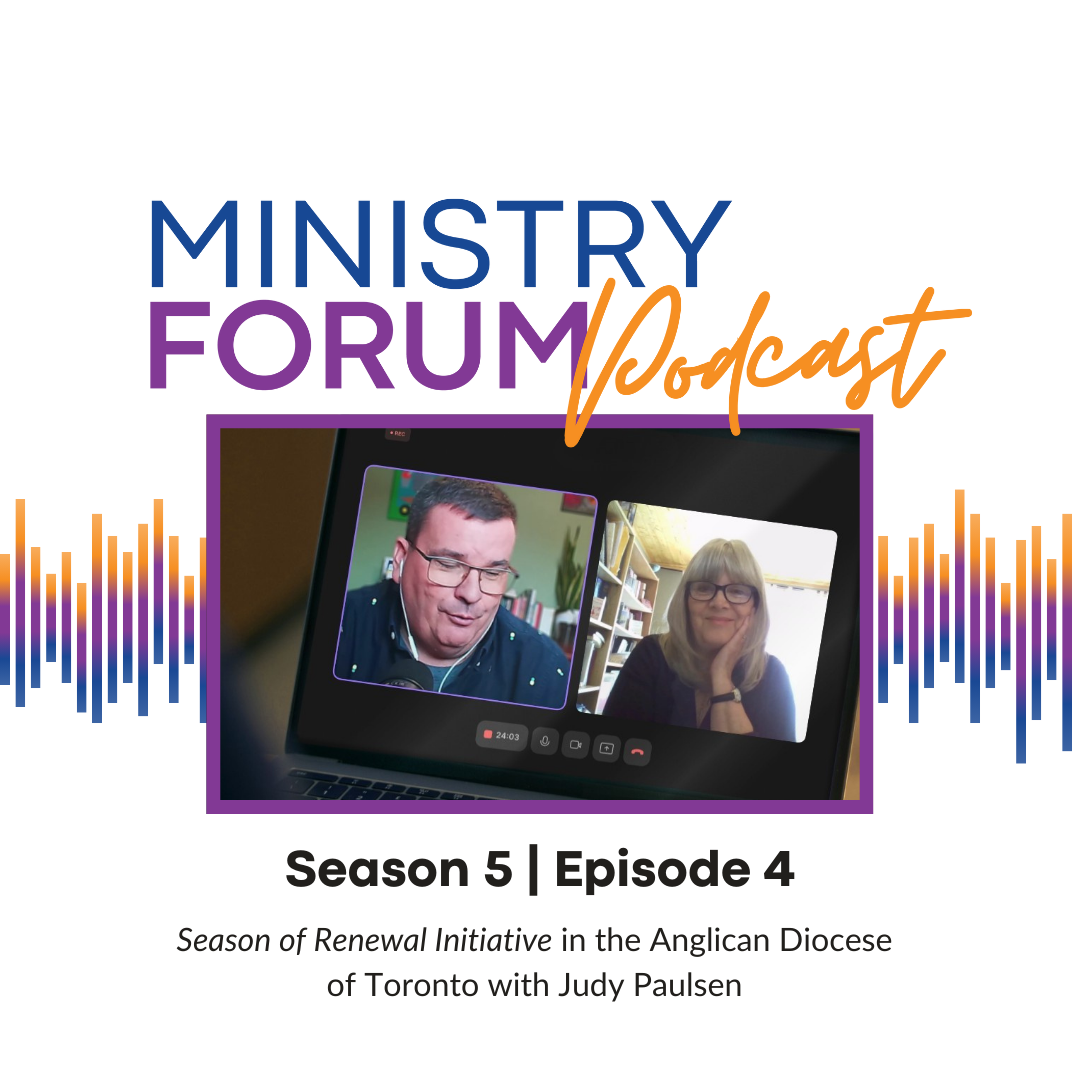
How does a whole diocese lean into spiritual renewal without getting lost in programs or pressure? Judy Paulsen walks us through the Diocese of Toronto’s two-year Season of Spiritual Renewal and the surprising things that grew when congregations focused on prayer, Scripture, and simple, steady practices. Judy shares stories of communities rediscovering connection, courage, and a shared sense of purpose. It’s renewal that looks less like a campaign and more like a quiet turning of the soil—slow, honest, and deeply hopeful.
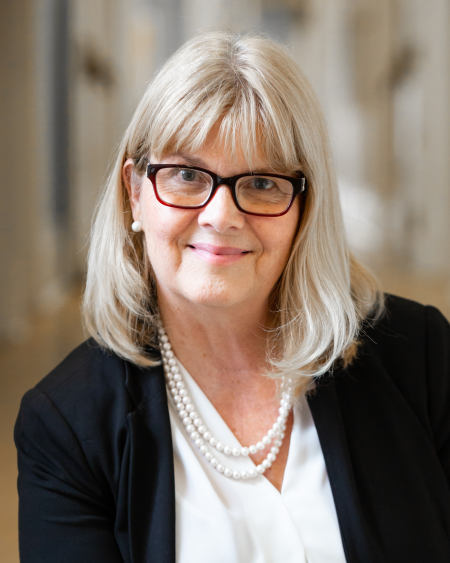
About Rev. Canon Dr. Judy Paulsen
Judy Paulsen is an Anglican priest who served in parish ministry for sixteen years. She then joined the faculty of Wycliffe College where, for eleven years, she taught courses in: evangelism; gospel, church, & culture; worship; and Church leadership.
In June of 2024, her book, A New & Ancient Evangelism: Rediscovering the Ways God Calls and Sends, was published by Baker Academic. In December, it received the Award of Merit for Apologetics and Evangelism by Christianity Today.
Judy now teaches a course on the conversion stories of scripture for the Niagara School for Missional Leadership in the Diocese of Niagara, and serves as Coordinator of the Season of Spiritual Renewal in the Diocese of Toronto.
Show Notes
The Centre for Practical Theology - Learn More Here
The Diocese of Toronto's Season of Spiritual Renewal - Learn More Here
Follow us on Social:
Transcript
[John Borthwick]
Welcome to the Ministry Forum Podcast coming to you from the Center for Lifelong Learning at Knox College, where we connect, encourage and resource ministry leaders all across Canada, as they seek to thrive in their passion to share the gospel. I am your host, the Reverend John Borthwick, Director of the Center and curator of all that is ministryforum.ca.
I absolutely love that I get to do what I get to do, and most of all that, I get to share it all with all of you. So thanks for taking the time out of your day to give us a listen. Whether you're a seasoned ministry leader or just beginning your journey, this podcast is made with you in mind.
[Music]
Today on the ministry Forum Podcast, we're talking about one of my favorite subjects, spiritual renewal. You may have heard me say once or twice, or a whole bunch of times, as I look at the institutional church today, that I really feel that what makes us distinct from all other organizations, charities and agencies, is that we still believe that an ancient book has the power to transform lives, and that thoughts and prayers aren't just a throwaway phrase, but something that actually can bring meaning and hope to our encounter with the world and humanity every single day.
And I might say it again and again this week, as I talk with our guest today, since we're coming down from our Week of Prayer for Christian Unity high, maybe that's just me, I don't know, I thought it would be great to invite one of our sisters from another mainline denomination today to talk about their experience with a project that was focused on spiritual renewal for one of their regions.
I heard about this project when I attended another ecumenical gathering about a year or more ago called Revitalize. It was hosted by the Centre for Practical Theology in London, and it was there that Judy shared about her work with the Diocese of Toronto within the Anglican Church of Canada. A project that she is going to tell us all about, called Season of Spiritual Renewal.
I can't wait to share our conversation with you today, but let's hear a little more about who Judy is. Here's the bio, and let me say that Judy is modest and humble. So let me just for a moment share her full earned titles, since she doesn't in the bio that she provided, and to express my Presbyterian jealousy that we don't have extra ones in my sphere of the church. There's one in there that I'm pretty sure you'll understand what I'm talking about once I say it out loud.
The Reverend Canon Dr. Judy Paulsen, is an Anglican priest who served in parish ministry for 16 years. She then joined the faculty of Wycliffe College, where for 11 years she taught courses in evangelism, gospel, gospel, church and culture, worship and church leadership. In June of 2024 her book, A New and Ancient Evangelism: Rediscovering the Ways God Calls and Sends, was published by Baker Academic. In December, it received the Award of Merit for apologetics and evangelism by Christianity Today. I'll need to add that one to my list, and it'll be in the show notes. Judy now teaches a course on The Conversion Stories of Scripture for Niagara School of Missional Leadership in the Diocese of Niagara, and serves as Coordinator of the Season of Spiritual Renewal in the Diocese of Toronto. Judy, welcome to the ministry Forum Podcast!
[Judy Paulsen]
Thanks, John, and thanks for having me! I'm looking forward to this conversation.
[John Borthwick]
It's great to be in company with you. We already had a chat a little while back, and it was a fantastic chat. We could have gone on for hours and hours. I promised the podcast audience, we won't go on for hours and hours, but you'll be delighted by what the richness of our discussion, I'm sure. Judy, a bio is one way of being introduced, but I always like to invite our guests to share how they might introduce themselves, or maybe share something that the bio kind of misses, that might be interesting to our audience today.
[Judy Paulsen]
Well, I guess, besides work, life stuff, which is usually what's in a bio, what else can I say? My husband is Pat and he and I have been married for 48 years. We got married very, very young, I must add, so we have three grown children and six grandchildren, and they are an absolute delight in my life. So apart from work life, I think it's important for us as Christians to remember that all of our life is our worship of God. And I think being a grandparent and being a parent is just one of the great delights of that part. You know that we lift up to God and often ask help for and also give thanks for. What else? I love to kayak. We live in the Kawartha Lakes area of Ontario, and so that's almost a daily activity for me. And I have gone down the very deep rabbit hole of making sourdough. This is my latest thing I do.
[John Borthwick]
that's awesome. We always got to have a project or something
[Judy Paulsen]
Absolutely, yeah!
[John Borthwick]
Keeps the mind-the little gray cells working-and all that good stuff. Amazing. Well, tell us a little bit more about how you became to be involved with this project. Maybe even before that, can you share how the Diocese of Toronto came to identify spiritual renewal as an actual need? I'd be really curious about how that happened within that diocese.
[Judy Paulsen]
Yeah, well, I think coming out of COVID, the diocese wanted to sort of chart a course to try to figure out where to go next in terms of our health and our life together. So they initiated a discernment process called Cast the Net. Basically this meant tons of focus groups, online surveys, in person, meetings in certain cases at every level of governance across the diocese. There are almost 200 churches in our diocese, and it extends across quite a wide geographic area that reaches out past the GTA out towards Muskoka and east towards Trenton and west towards Burlington, you might say.
They did this, Cast the Net process, and out of that came 12 calls to action. Twelve things that everybody kind of thought, yeah, I think this is what God's calling us to do next. But the number one, much to, I think some people's surprise, was a call to spiritual renewal. And it was, really clear, you know, people said, we think we need to rediscover, go deeper with, and experience God in a fresh new way and a deeper way. So out of this Cast the Net process came this initiative called the Season of Spiritual Renewal. A two-year period in which the whole diocese was going to be invited to engage in spiritual renewal.
Now, you know, this is a weird thing. Anglicans don't always talk this way. It's also weird because none of us can manufacture spiritual renewal. There is no magic pill. We know that this is a work of the Holy Spirit, and so this was going to really require us to trust God. That God might be at work in a new way, in us and among us. That was our first recognition, and we were using this metaphor of the Northern Lights in a way, because, we all want to see them, but we can't make them happen. We can watch for the markers.
Basically, how did I get involved? I was invited. I had one foot in retirement, actually, already, and then I had this weird call from Bishop Andrew Aspel, who's our diocesan-wide Bishop, inviting me to be the Coordinator for this initiative. And it just sparked my interest enough that I said yes. Then began to think about, what would it look like for a diocese to experience spiritual renewal and then to enter into practices that continued that as the norm. Because obviously, we are hoping that what we're doing now is planting seeds whose spiritual renewal will grow down the road for us.
So that's where we started off, and we began to-the diocese and Bishop Aspel set aside a chunk of money to put into resources and staffing, et cetera, et cetera, the on the ground boots, if you like, and away we went. We began in January of 2024, and we are going through to Epiphany 2026 so we're almost done. In epiphany, this initiative will come to a close, and the next thing that is going to happen to respond to these 20 calls in the Cast the Net report will then take off.
[John Borthwick]
Amazing, yeah. Two things that really stand out to me. The how many times in in have I heard the story, I had a foot in retirement and someone else had plans for me. Someone had to, in a congregation I served, had to actually move away because they came to me and said, “I'm retiring.”
And I'm like, “I know, I knew you were going to be retiring soon. I have a whole folder with all the things that you're going to do now that you'll be freed up from all your work.”
And they said, “and I'm also moving away.”
And I'm like, “Oh, that wasn't in my plans. You weren't supposed to move away.”
But also spiritual renewal. Apparently, it's a not the typical thing for Anglicans. I would hazard a guess that it’s not the typical thing for Presbyterians either. There's something about spiritual practices and some of, what we might even do as we dive into our conversation, the basics that it just seems to me that somehow we've lost touch of them. We can't see them like the Northern Lights in the same way. Maybe there's suspicion. There could be all sorts of sorts of baggage that we have to unpack as we go down the road of spiritual renewal.
And it's such a big ask. As you look at the project itself, someone's asking you, “Hey, could you do spiritual renewal for our diocese?” How did you break it down into more bite-sized, tangible kind of parts for the sake of the Diocese, and also your capacity, but also maybe the capacity of your diocese itself?
[Judy Paulsen]
Part of my work as an academic was to learn about things like the correlates to church renewal. What are the things that the data tells us are correlated with spiritual renewal at a church level? Because we're really recognizing that our churches are at the front line of ministry, not our governance structures. They're all helpful. Our diocesan offices are there to support the work of the local church. That's where frontline ministry happens.
I already knew that there were at least four foci that are correlated with church renewal, and the first, and most clear one, is prayer-prayer for spiritual renewal. Now, as Anglicans, we're really used to praying for a lot of good things. We pray for things that we want to see happen in our world, and these are all good things. Care for the marginalized. Care and healing for the sick. We pray for people that are alone because of the craziness of our world right now, and for countries embroiled in war. All of these things are good, but we don't often pray. Even when we get together to worship, we don't often pray for our own spiritual renewal for the sake of the world. So those two pieces have to both be present and active. We aren't just asking for our renewal so we can be in a happier place and experience God's love and all of that good stuff, but we are asking for spiritual renewal for the sake of the world. If it doesn't have the missional edge to it, it's not worth much.
We began with prayer. The other three foci are very related, and they flow naturally from that rootedness in prayer for spiritual renewal.
The second one is a deepening engagement with Scripture. So what we have found is that although a lot of Scripture is read on Sunday mornings in our worship services, there are many Anglicans that are a bit spotty on how to make sense of the Old Testament. What happened in between the Old and New Testament? How are they connected? How did the early church get started and what did it look like? Where do we get our creeds from? We have a lot of people saying the Creed without really thinking, “Is this a prayer I'm saying? Or is this a statement of faith? What is this? And where did this come from?”
This deepening engagement with the story of Scripture and why do we want that? It's not that we just want more knowledge of Scripture, it's that we want to know God better. If we don't take it to that place where the purpose of increasing our knowledge and study of Scripture is actually to know God at a deeper level and to be able to listen to Him and listen to His direction in our lives. That second foci I was on after prayer was on Scripture.
The third was an increased commitment to worship. So, a lot of us have become a little bit sloppy coming out of COVID. How's the weather doing out there? I can always tune in online, not that online worship, we've actually seen online worship as one of our growth areas, but to be intentional about it, and to raise the bar, to help people see that there's a reason why every week worship is good. It's good for us. First and foremost, it's good for us to worship God and to be fed by our relationship with Him through the Ministry of Word and the Ministry of Sacrament. So we thought, how do we up the bar on worship in our churches? What resources do they need? What training do they need? But also, how do we up the bar for worship as a diocese? Can we gather people in a new way to worship? I'll talk a little bit more about that later. The third one, after prayer and study of Scripture and Scripture has a focus, was worship, and the fourth was sharing the faith.
Now, basically, most Anglicans are pretty terrified of that expression, because they have bought into a model of evangelism that doesn't sound much like them. It's kind of a sales pitch. I call it the sales pitch model of evangelism, and not just Anglicans, but almost nobody else likes that model. So could we give them another model? Could we also get them talking about the reason that they are Christians, the reason they love God, where they've seen God at work. So we did this, this whole thing of sharing the faith. We did it in a whole bunch of different ways. Yeah, we offered some workshops focusing on this, but we also incorporated lay witness talks into all five diocesan services that we ran over the 18 months that were now left in this season after we got going. So those four foci, prayers, scripture, worship and sharing the faith really formed the framework, if you like, and those things, we just kept going back to them. How does this idea that's come up? How does it? Where does it fit with one of those four foci? We let them be the framework, because that's what the data says is a correlate of church renewal, those four really basic things. So, did I answer your question?
[John Borthwick]
It does, that's excellent! That's a lot of work, number one, just to acknowledge that, but also beautiful discernment, trying to stick with that evidence based: these are the key factors that we need to really think about and really tangible as well for people to not have this amorphous, “we're doing spiritual renewal right now,” but very clear, we're going to do this and we're going to do this and this and this. It sounds like a volume of work that has gone into it. For sure. You mentioned some pieces that I think you'd like to tease out a little more, and I'd certainly like to hear about them, but were there specific pieces within that of initiatives, or people, or events, worship, workshops, whatever that might be, that you'd want to share with our audience, of things like your highlights of this project over the last couple years.
[Judy Paulsen]
I'll get down into the details in a second, but I think the biggest highlight for me was that we really began to see the way God was working, right from the start in this initiative. The people that offered to help, the gifted people that were already, of course, the busiest people in lots of ways, and yet they have these gifts. The scriptures that we kept coming back to was the feeding of the 5000. Why did Jesus say, “Bring me what you've got?” And then he takes that which doesn't look like enough, and He blesses it, and He makes enough for everything.
We began, instead of pulling in outside experts, the big name preachers and teachers, the church growth people, or whoever it is, we decided to allow this to be much more bottom up. To say, “What has God placed in our hands?” Now, how do we offer this to Him and ask Him to bless it in ways that we could never imagine? And with this exactly what we began to see happening. I'll sort of walk you through some of the detail stuff now, to give you a sense of how it unfolded, but I have to tell you, time and time again, God reworked our master plan.
We began by hiring some administrative support, assembling a steering committee, co-chairs to help lead that team. We put together a worship planning group to plan these five regional services, and we began to invite people that we heard…I kept getting emails, “Oh, you should have so and so, do a workshop on this. They've been doing this amazing thing in their parishes.” At the same time, I began to just meet with clergy from across our diocese, usually in cleric’s groups. Here's the key piece, they had to invite me. This was not going to be a top-down sales pitch for the Season of Spiritual Renewal. And when I came to meet with them, I took the approach of, “let me pray for you.” Let's pray for each other. Let me hear what your calling was to ordained ministry. It was the opposite of a sales pitch for getting on board with the diocesan initiative, and it was,
“Where do you see God at work already?”
We were under no illusions that the Holy Spirit was only showing up now because we were we were having this diocesan initiative. We were so aware that often times the Holy Spirit's already at work, doing amazing things, and we have not been attending to that well enough. I began to meet with clergy. We talked about prayer. The worship planning group wrote a beautiful collect, a prayer that was going to be used in our services over this two year period, we invited children to submit prayers that they might be writing, and we received a bunch of these from the Cathedral of St. James in the heart of Toronto. We had someone write a beautiful liturgy for use for the intercessions in one of our regional services. So we just began to see stuff that we couldn't have predicted happening, but it was lovely. Then we began to assemble some resources.
While all this administrative stuff, this necessary governance stuff, was happening, I began to delve into books of prayers. And again, it was weird, because I had somebody that I had not met before send me a book of prayers right before this initiative started, a couple of months before, and I'm, “Oh yeah, I remember somebody sent me a book of prayers.” Then I looked at the Richard Foster Treasury of Prayer. We looked at prayers from all kinds of different traditions. We started to compile a little booklet of 31 prayers through the ages, and that's what it's called, Prayers Through the Ages.
It's prayers of the famous, but you would not believe how simple they are, how direct they are. These are all prayers for spiritual renewal, from Ignatius of Loyola, St. Teresa de Avila, John Wesley, Newton. I mean, you name it, they're all there. There are Orthodox prayers from the north of Africa. You name it, this little book of prayers. And we never predicted how this compilation of prayers, basically we made them a downloadable, free resource. Churches couldn't print enough of them. Churches that didn't have a photocopier to print the right size, they asked us, “Could you guys print some for us?” We printed them. We sent them out. Then we decided these were all going. Nobody could keep them. Anglicans were not only taking these prayers, but giving them to their friends and neighbours, which, let's face it, we're not that known for in our current age. That's sort of digging into our past life as Anglicans, I think.
Then we printed 2,000 of these booklets. They all went. This taught us that when we really listen to these basic things about the essential nature of prayer and its relationship to spiritual renewal, that God will show us things about the power of prayer. Then we went on. We got these prayers translated into Spanish and to Chinese for our Spanish speaking and Cantonese and Mandarin speaking congregations. Then we had the Sisters of St. John the Divine. They're an Anglican order of nuns within our diocese. They offered to put together a resource on the ancient prayer and meditation practice on Scripture of Lectio Divina. They said, “Hey, would you like us to put together a resource on Lectio. We already had put together a very simple one with fairly short passages. And I chuckled to myself because the passages were too short for the sisters. They wanted a little more meat. And we put together this second resource on Lectio Divina that came to us again. It was like God was just stirring things up, showing us what was already in our hands.
We then went on, after assembling resources and making them freely available, we went on to plan 40 workshops. These were going to be delivered over 18 months and they were going to be delivered, all of them online. Some of them in the evenings, many of them over the lunch hour. Most of them single sessions, but quite a number that were multi session workshops as well. Again, how did we choose material for these workshops? The four foci. We began with workshops focused primarily on prayer. So we had several workshops on Christian meditation on Scripture, Christian meditation on the name of Jesus. We had a workshop from done led by the Canadian Bible Society, who introduced us to some amazing resources they offer. We had someone that specializes and has written some journals for prayer through different seasons of the church, and he's located in the Diocese of Montreal. He offered to do a workshop for us. So we just became aware of these various resources, almost all of them with from within our diocese.
It was really amazing, what we saw bubble up. Workshops on all kinds of aspects of prayer, that's where we began. Then we move, for instance, we've taught people some really simple things, like how to use the word ACTS, A-C-T-S, as a very simple framework for personal prayer: Adoration, Confession, Thanksgiving, and Supplications, requests. But we also had workshops on how does the ancient practice of silence and solitude? These were some of our most attended workshops, were these ones on Christian meditation. Then we had a workshop called Praying our Songs: Singing our Prayer. The connections between worship, music and prayer. It was really well attended, and not every workshop was focused on everybody in the pew. What we were doing for these workshops was mostly hoping to reach people that could then take this back to their parish and share that information there. So leadership development was a primary focus of these workshops.
Workshops on prayer, then we had workshops on Scripture. The Canadian Bible Society one was one of those, but we also had a number of different resources. We also did things here, like how to lead a Bible study. Somebody that had written a great little resource on that. We had clergy that everywhere they've gone, they've started small group ministry, and yet they never had a chance to share how they did that. And some of them were hugely impressive, getting people into small groups to not only learn and study Scripture, but also learn and share their lives with others. So other things like how to lead a book study. You may not want to read a Bible study, but what about a book study? Or what are the connections between the Bible and social justice and spirituality? Or how do you think theologically? And we introduce them to some other great resources that are out there. What does the Bible have to say about our relationship with creation? We really had a wide swath.
The next level, as you might have guessed, had to do with worship. One of the most popular workshops we offered was actually training people how to read Scripture aloud in worship, because oftentimes what we find is, as long as you're able to walk down the aisle, you are well equipped to stand up and read the scriptures, but we all know this isn't necessarily the case. People may need a little bit of help to do that well, and we ended up offering that workshop twice. It was full both times, but we offered all kinds of things: how to think theologically when choosing music for worship. That was another popular one. We had workshops on preaching. We had workshops on how to incorporate a lay witness talk in your liturgy.
As Anglicans, we can be a little bit, stuck in the groove, you might say, and we had clergy say to us, well, where would that fit in the liturgy? To have a lay person talk about what God is doing in their lives. So all kinds of workshops, and we had one of our workshops that we had never run before was, what does it mean to do hybrid worship really, really well? And again, there's a standing committee of the diocese delving into this and already working with parishes in this area. We were wanting to explore, how does this relate to spiritual renewal? Who can we invite into the gospel because they may not be able to access worship any other way, other than online? So we all learned a whole ton of stuff looking at all these things, and then the last area, of course, was how to share the faith. How to lead an Alpha Course, how to lead a Being With course, which is a new discipleship program out of the UK.
You know how to make changes in your parishes way of being together on a Sunday morning to welcome new people in. Should somebody brand new come into your church, how do we engage with them and help connect them get started? Again, we had a multi session course called Everyday Witness, led by the Dean of the cathedral, who actually wrote that material and used it in the UK for many years. We had a workshop led by our congregational development people on hospitality and the spiritual life of your church, how does, how does being hospitable look on a Sunday morning or on a Wednesday evening in your church? We had a gifted preacher speak to us about how to preach evangelistically, how every sermon can have an evangelistic edge.
So, all of these workshops were the next kind of thing that we did, and it was so fascinating to see. We had over 1,200 people sign up for these workshops, a number that we had not reached before in such a short period of time. And because these were aimed at leadership development, they were taking that information back to their churches and going to be using that. How to run a Christian Foundations course? What does that resource look like? So, all of these different things, and then, maybe also, how to up your bar in what you're doing online with your Sunday morning worshipers.
So, all of these initiatives were kind of rolling along while we did the last thing we did, which was to offer five diocesan services. And we decided, I mean, we didn't intentionally pick the time that Anglicans are least likely to be in church, but we kind of did, because we said we're going to hold these on a Saturday afternoon, and we're going to hold them in five large venues, some of our largest churches, and we're going to just invite people to come to worship God. We're going to plan beautiful music. We're going to have good, solid preaching and a lay witness talk. We're going to have prayer for anointing. Who's with us? Who wants to come? And honestly, the planning team, the bishops who are all there, we just didn't know who was going to show up.
It felt like such a risky thing to do, I got to tell you, but the first service was held at the Cathedral, and the people were streaming into the cathedral. The cathedral was full in the heart of Toronto on a Saturday afternoon, and this said to us, people have a heart to worship. They have a heart to worship God and be met by God, to be changed by God in worship. There they were, surprising us all, coming through the doors. So, across these five services, we had about 1,500 people that came for in-person worship, and we had hundreds that listened in online and then watched the live stream recordings. So boy, I mean, what we found out was God is full of surprises, and the things that we thought were going to be the big draws weren't always the big draws, and God just surprised us all the way along. We were kind of amazed at the response and I think it really reinforced Bishop Andrews discernment that this was what needed to happen in the Diocese of Toronto as a first step to what we had heard through the Cast the Net. Anyway, that was a very long answer, John, to your question,
[John Borthwick]
How could it not be, Judy? There's so much to tell. I can't imagine what this report is going to look like. 500 pages? 1000 pages,? A thesis? A doctoral thesis? Maybe what I found really fascinating as you told the story of the highlights and all the things you've done is maybe one of those pieces that you wouldn't have expected, but I'm curious if that's what actually made it work the way it did, and that's that piece you would expect you'd want to resource things with the best of the best kind of people. Give people all the stuff and that they could participate in, sort of, sitting at the feet of the best. And yet, what emerged, either organically or as people caught, the enthusiasm to participate, or the even just the sense of welcome that perhaps you shaped this whole initiative with it, there was people already there.
I've always tried to remind folks, as much as it's difficult for folks in congregations to sometimes grasp and certainly, even for clergy or the ordained to grasp, that that liturgy is the work of the people. It's supposed to be the work of the people.
[Judy Paulsen]
Absolutely.
[John Borthwick]
And yet, we've professionalized it as, you've got a collar, you went to school, and now you're the one who does, and it's, “Oh.” Even that's how it shapes, over the years, I've seen different places and spaces based on the giftedness or the financial resources of specific congregations, even just from a worshiping standpoint of, we're not going to do anything here in this space of worship that's not professional and the best of the best. Is that really the work of the people in the same way? Or is the dear lady who records herself playing the piano, in the best way she can, and then singing herself in the best way that she can to worship God on a Sunday morning? And that seems to be the work of the people, and we celebrate her offering, her gift, to us in that day. Is it something that you would see in a concert venue? No, but it's hers, her offering.
And connected, that feeding of the 5,000, right? There's the offering of the little boy with, this is all I got, my little lunch, and somehow that makes up into so many things. It seemed like people were coming out of the woodwork for you, of people who've done some pretty cool and amazing things and maybe only their congregation knew that they did that. Now, it's, could I share this? Would you want this? Is this anything good? And somehow there must have been an invitation and a welcome, an appreciation of the giftedness of within your own diocese. That's really beautiful.
[Judy Paulsen]
Yeah, I think the thing that we've really learned was this idea that God asks us, what do you have? What's in your hands? At the little church of 20 people that has a quarter time priest and runs the spaghetti dinner, every spring, and invites at no charge people to come and they've often filled their little rural church halls with people who are lonely. That's a God thing! And it can also be something that is tweaked so that it's not just a serving of spaghetti. The thing that God really drove home for me was there is no one recipe for doing right. You don't have to have a choir, but if you have a choir for goodness sake, use the choir. For goodness sake, one of our workshops was on developing the spiritual life of choirs, making sure none of our worship is performative, except where, I guess you could say we were worshiping an audience of one, but we are never performing for the congregation.
What is worship? These basic, basic questions again, but this question we kept coming back to is this question that Jesus asks the disciples, “What have you got?” And it doesn't look like enough. I'll give you an example of a little church. It's actually our home parish, which has wondered how long we got. We’re little. The church was built in the days where everybody had to go by horse to church. [It] seats about 40 people with a crowbar, but more like 20 and yet we had a young couple come, and he's a gifted musician. So now, instead of trying to sing with an organ that might regularly kick out or we didn't have an organist because of COVID and feeling so bad that we couldn't do worship now. Now it's led on guitar in this little church. Well, now, hey, a couple of weeks ago, two teenagers showed up, and then they came back, and then they came back. And now we've had two other couples who are new retirees, who've moved in there. They're starting to come and now we're like, “Wait a minute!” Now we've got kids, now this young couple, the dad leads music. Now there's two little kids in church. We got to make some space for these kids.
So, rip out a pew, add a play area. Nobody predicted this five or six years ago, but I think when we truly offer what we have to God, guess what? He does bless it. He does multiply it. And God is not finished with the main line yet. This is something, this was a biggest learning for us, out of this, is we are seeing in urban areas we're seeing churches where significant growth is happening. We're seeing Gen Z-er’s that are coming to church for the first time. We've seen people that have been absent from church for years showing up. Some of them attending first online for quite a little while before they take the big step, and some of them staying online because they have mobility issues, or visual or hearing impairment. So, God is teaching us, is, I guess, the bottom line from, “what have we learned?”
We've learned so much. We've learned churches are hungry for resources on the basics. They don't want the latest, best idea that originates in some far flung place. They truly want resources that are going to ground their people in the basics. I think we discovered that people actually do love to worship. I mean, in our churches, I'm thinking of one of these five regional services was held in Orillia, so in the north, sort of west of our diocese, we wondered who's going to show up. These are really small churches mostly. In Orillia, it's large, but again, it was full. And lo and behold, we had Anglicans from right across the diocese. So, we had new Anglicans that are recently immigrated to Canada showing up, and boy, they were teaching us about worship. They were singing their hearts out. They had hands raised. They were singing all the communion music. It was planned. We just didn't stop after the bishop was done up at the front. No, no, we were going to sing it all.
And it was really a moment at Saint James Cathedral, we sang, “Breathe on me, Breath of God.” It was started off by this really great group of worship band that led us in acapella. And you just really felt the Holy Spirit just rolling through that cathedral as people raised their voices singing that very simple hymn. That very simple prayer. I think we really learned that God is still working in the main line and working through the main line. We have to stop reiterating this narrative of decline, decline, decline, and hear again, the words of Jesus, “Show me what you got. Bring me what you've got, and I'm going to bless it, and I'm going to show you some things.” I know I'm paraphrasing a little.
[John Borthwick]
It's okay.
[Judy Paulsen]
So, one of the interesting things was we had these lay witness talks where we invited lay people to get up and share what God is doing in their lives. Some of them were people that had worked in nonprofit sector for a very long time. Some were brand new people. We had a 20-year-old get up and hers was one of the most important, poignant talks about how God helped her overcome a deep grief in her life. Another young person got up and shared why they chose to go to church and why they invited their parents to come with them and how they were all now going as a family to church. I mean, we're not used to hearing from lay people what God is doing in their lives. And again, bring me what you got, and I will bless it. We were so blessed by those lay witness talks. So, you can tell I get enthusiastic, John, when I talk about this stuff, and I tend to rattle on, but…
[John Borthwick]
As you should, as you should, Judy. I think what's so neat about some of the stuff you're sharing is, one thing I've been reflecting on lately is the ways in which, as the church has declined, we find ourselves in a space where there's small pockets of us spread across wide swaths of geography and everything else. It's almost like taking it from a youth ministry kind of model, where you'd take a youth group in the day, where it would be five or six Kids at one church, maybe 10 kids at another church, if we're generous, maybe 20, who knows. And then you'd gather them for different events throughout the year, in larger events, so that they have a chance, or even city wide or even North America wide, kind of events where they get to experience and understand that there's other people like them out there. I'm wondering if part of the success or the beauty of the regional worship experiences, you talk about, is part of that, just the idea that we're all together.
There were a group of churches that across the 401 corridor in my area of the province, Guelph, Cambridge. Kitchener, kind of Waterloo area, and they were across the 401. If you're on the 401, if traffic is good, you could be in each other's churches in about 10, 15, 20 minutes, max. So, what they did in a summer was they hosted. Each church took a turn to host two weeks-two weeks at this church, two weeks at this church-two weeks at this church. Now it's quite possible some of them are listening. It's quite possible that they would never, actually, ever think about just all pulling together and being one church. That's totally fine. The feedback I heard from folks who were at these kind of services, just like you say, small country church that maybe fits 60, 70 people comfortably, maybe, packed to the gills in the summer with people singing their hearts out and having a good, beautiful experience of worship.
We hosted something where we did, it was called Catching the Spark, and we hosted at Comrade Grable, in University College. It was a Bible study experience, and it had people from various denominations. It was one of the things that sold out capacity. We only had 80 seats, and we had 80 people from various denominations talking about the Bible, from various age groups and everything else. I think there's something to be said for groups of us coming together and seeing it. We're not alone. There's more than just us in the world and that somehow catches our enthusiasm in that spirit of renewal that you're speaking about, that's amazing.
[Judy Paulsen]
I was just going to say, one other thing that came out of those regional services was people were able to experience worship that was different than what they're used to. We intentionally let the host site their ethos of worship, if you like. We allowed it to shine through. So yes, they saw the cathedral type of service with full vestments, and everything that that goes along with that, but they also saw a service where there was no vestments, a worship band, everything up on screens, and a very different style. Yet they saw that all of these were focused on one thing, and that was offering worship to the living God. Across all five, we learned things from those five services. It was truly amazing the way people said, “Oh, I think that might be something we could try at our church, this little thing.” Instead of feeling like the smaller churches weren't doing enough. That they somehow weren't on the radar of the diocese.
It was beautiful to see some of our tiny neighborhood churches in Toronto when we gathered at St Paul's Bloor Street, which of course, is a big, huge, Neo Gothic, lovely, beautiful building. Many people said, “Oh, we've never been able to worship in a space like this.” They love that. They love things about their home parish, of course, all about relationship in small churches and they have history there and memories there, but to be able to worship as a diocese together was so awesome for them. Because we held five services that were sort of regionally located, everybody in the diocese could have reached one of these services within about an hour's drive. That was our hope, is that nobody would have to drive more than an hour, hour-and-a-half the max.
[John Borthwick]
Yeah, no, it's okay. So, what's the hope for future? From your perspective? What do you hope for the future from this experience that the diocese has had?
[Judy Paulsen]
Yeah, I think I see this as seed planting. We kind of planted a lot of things. We've got these resources now that are out there that parishes and other denominations can use. We planted seeds in parishes. Some parishes are now saying, “Oh, I wonder if we could get some help with our online engagement?” And, “What about our music? If we can't do organ music anymore, what could we do?” So, we're planting seeds, I think, for spiritual renewal going into the future. Yeah, and again for the sake of the world that God loves.
So, we've constantly reiterated, for the sake of the world God loves. This is not so we have a fancier Sunday morning or we run a darn good Alpha course for all our church members. No, whatever we do, we are doing it to worship God, and we're doing it for the sake of the world that God loves. So, the focus, I think we've learned, has to be redrawn, and we just keep having to be going back to this idea that what we're about is a deeper love for and service to Jesus, this person, this enigmatic, often confusing but delightful, winsome person who is at the heart of our faith.
As Anglicans, we have sometimes been reluctant to actually talk about Jesus, and we're learning that we don't have we don't have to be reluctant. We can talk about who this person is, who the Scriptures show us Jesus is. Our experience of Jesus, and the presence of Christ, through the power of the Holy Spirit, is all part of the way God is at work in our world. So, I think, what I hope, is that we will see an increased interest in discipleship and evangelism, in worship and a commitment to prayer. I hope we have upped the bar on, especially prayer, corporate prayer. One of the things we've said time and time again to people is show me in your liturgy, where you pray for people with spiritual questions and longings.
Often we haven't included those people in our Prayers of the People. We've prayed sometimes for the food bank to meet their needs, physical needs. We've prayed for people all around the world with huge problems that they're facing, but have we prayed for people in our neighborhood with spiritual longings and questions? And when you start to pray for such people, then you start to see churches ask, “Hmm, how could we connect with those people? Could we offer a Family Fun Day? Could we offer a Canada Day party, block party? Could we do a prayer walk through our neighbourhoods?” We begin to see laying aside this kind of inward focus, where we just got to take care of ourselves and keep the lights on and say, “Wow, God is already at work in people's lives all around us. Let's, let's engage them, and find out how we can serve them spiritually, as well as all of their other needs.”
So, that's what I hope. What I truly love,we had a really nice piece of feedback that I could almost not believe that it was coming from an Anglican person saying this, let me see if I can find it. Here it is. So, one person said, “We seem to be talking about God differently.” And I thought, wow, when we start to talk differently, it means we're thinking differently.
But here was the one I loved, “I will look at evangelism in a new way, driven by God and supported by dedicated church members. I will also suggest to those who organize our Prayers of the People, that we include prayers for those who seek to start or rebuild a relationship with God.”
This warmed my heart. If this even only happens in one new church, where they begin to pray for the people all around us, let's face it, all around us, who are distressed, who are lonely, who don't think they belong in church, and if we can sow seeds for the gospel to be shared with those people, then “Hallelujah!” is what I say. Yeah, that's my big hope.
[John Borthwick]
That's awesome. Yeah, and the way that I started at the beginning of our conversation, I think the more we can connect people into experiencing a positive and meaningful relationship with the Scriptures, finding the beauty of prayer life, a prayer life that can be, as the psalmist says, “a rock in those times of tumult.” Finding the ways in which we can be connected even more deeply, not just with the people that we turn up in church together with, or the people that are on Team Anglican or Team Presbyterian, but anybody who's out there, and a deeper connection with creation. I think those are beautiful things, beautiful things to hope for as you go forward.
I think you teased it already, but you guys have created some amazing resources, and we're going to have in our show notes the Season of Spiritual Renewal. The website, you've got tons of amazing, amazing resources. I'm just wondering, in a humble way, or would you be, are you willing to share your resources and insights with other siblings in the Christian community? This being the Week of Prayer for Christian Unity. I’m not saying we're going to steal them, but with a few Presbyterian tweaks here and there, I think some of these resources would really be beneficial to some of our community.
[Judy Paulsen]
Not only, “Yes,” but, “Absolutely yes!” You can use whatever. A) These resources have got our branding for this Season of Spiritual Renewal on them, but they're nothing that you couldn't find yourselves and put together yourselves. So why would we do that? Why not? They're there to download freely, and I would say, yeah, just download them and do whatever is going to help your churches use them. That's what I would say. Put your own branding on them, download them, disseminate them, print them off if you have to, and/or make them available through links. We want all of this stuff to be used, and besides the prayer and Lectio resources that are on there, there's also now tip sheets from a number of the workshops. So, I think there's 22 tip sheets from workshops, and most of them are one pagers. Some people disobeyed and made them longer but,
[John Borthwick]
Typical, typical.
[Judy Paulsen]
They're all there and they're really helpful. Things like how to include children in worship, how to encourage the family to be the centre of spiritual nurturing for children, everything from how to use and run the Being With course, how to use the Alpha course, how to train lectors to read Scripture publicly, meditation. I mean, you name it. There's 22 of them there. Again, we didn't demand every workshop leader, we invited. Certain workshop leaders felt their material was less amenable to a tip sheet, and that was perfectly okay, too. So, we offer these sheets. They're downloadable, and you can print them off as you need them.
[John Borthwick]
That's awesome, Judy. What I want to also, though, double down on, is something that you shared repeatedly throughout. While it's great that there's resources there, and we want to honour the good work that you all have done for the past couple of years, I also wouldn't want that to prevent moving those resources. I would still want to create that space for invitational within whatever context that is. If you're a Presbyterian listening to this, or United Church, or somebody else, just that invitational space of, this is great that what the Diocese of Toronto and the good Anglicans have done in that community, but, there could be some stuff. Who knows what God is doing in the Presbyterian Church, and people that have created resources or would be interested in doing that. So, I'd want to just encourage that as a both/and as I speak into the audience today as well. So grateful for the resources you've created, but also, who are the people out there that are already doing stuff as well that we can really just amplify and celebrate along the way? Yeah, really good. Is there anything I haven't asked you today that you would love to share as we close?
[Judy Paulsen]
I don't think so. I would just say go back again and again to the feeding of the 5,000. What has God already placed in your hands? Don't look for the magic pill, the silver bullet, the one right way. It's going to really be contextually driven now, and I think even more so going into the future. I guess the only other thing I would say is, can I pray for you guys?
[John Borthwick]
Yes, absolutely!
[Judy Paulsen]
I would be so happy to be able to say a prayer for all of what you're going to be doing going forward, John, and I think it's going to be exciting to see what God does. I truly think you know the history of Israel is it was always when Israel looked like the lost cause, that God was able to work, and I think it should not be a surprise to any of us that even though there's these dire warnings about the mainline churches, God is apparently not done with us yet. So, can I say a prayer for you?
[John Borthwick]
Absolutely, Judy. Please, I'd be honoured.
[Judy Paulsen]
Let's pray,
Gracious God. We're so grateful for the way in which you've been at work across churches, both small and large, in the Diocese of Toronto. Planting seeds, casting seeds, even where it looks like nothing's going to grow and there you are, the generous, beautiful, sower of seeds. So I pray that this little podcast, would be a seed that would go out to encourage churches right across the Presbyterian Church across Canada. Churches large and small. That they would again also become even more aware of what the Holy Spirit is doing, empowering in their midst, and what you are calling them to as we disciple new apprentices of Jesus Christ. For the sake of the world that you love, empowered by your Spirit, and we give You all the praise and the glory and the honour for whatever it is that you are going to do, Lord. And we pray all of this in Jesus’ name, Amen.
[John Borthwick]
Thank you. Judy.
[Judy Paulsen]
Thank you for having me!
[John Borthwick]
Thank you. It's been a beautiful time to have a conversation with you. I am so grateful for the work that you've been able to do. I'm so grateful that someone pulled you, pulled that other foot out of retirement, and brought you back into the full on game, and you've done an amazing body of work, and certainly in collaboration with so many other folks. I continue to pray for you all as you carry on into the into the next steps of whatever this next thing might be. I'm so thankful, way to model what spiritual renewal looks like, because I think you are after four seasons of the Ministry Forum Podcast, you were the first person who's prayed, so well done. Way to go, Team Anglican!
[Judy Paulsen]
Well, I have learned. It took me a while, John, to learn it, because as Anglicans, we tend to be very heady, having our theology right, developing resources, getting people in line, having our governance correct. You know what I've finally learned, in my 60s now, is prayer has to be the ground for all of this, and to pray together. I love praying with church leaders. I love the way church leaders pray for each other. I mean, this is one of the biggest gifts from traveling around to these different clericals or ministerial groups was hearing the way the regional Deans prayed for the churches that that are under their area of governance.
It really moved me. So all this to say, it's taken a while, but God has finally said to me, don't forget prayer. It's the thing. It's not an afterthought. It's the thing. Every one of our board meetings, every one of our Sunday School teacher meetings, we ought to be praying for spiritual renewal, for the sake of the world that God loves. What if, instead of the pastor leading the prayers all the time, give it to the people. Yes, Amen, brother, and Sunday morning, find a way to do that as well.
One of my favorite workshops was how to include children in worship, and the idea there's something so powerful about hearing a child lead to prayers, having children read Scripture. And you know, they only have to be like seven or eight to read Scripture really well. What does it mean for a little kid to work through how God has helped them with the death of a parent or grandparent? We are missing opportunities if we do not engage the whole people of God in this work that is the work of the whole people. So, Amen, brother, Yes.
[John Borthwick]
Amen. Start with prayer. End with prayer.
[Judy Paulsen]
Yeah.
[John Borthwick]
Sounds like a beautiful thing. Thank you so much, Judy.
[Judy Paulsen]
Okay!
[John Borthwick]
I appreciate our conversation today.
[Judy Paulsen]
God bless!
[Music]
[John Borthwick]
Thanks for joining us today on the Ministry Forum Podcast. We hope today's episode resonated with you and sparked your curiosity. Remember, you're not alone in your ministry journey. We're at the other end of some form of technology, and our team is committed to working hard to support your ministry every step of the way.
If you enjoyed today's episode, tell your friends, your family, your colleagues. Tell someone. Please don't keep us a secret. And of course, please subscribe, rate, and leave a review in the places you listen to podcasts. Your feedback helps us reach more ministry leaders just like you. And honestly, it reminds us that we're not alone either. And don't forget to follow us on social media @ministryforum on all of our channels. You can visit our website@ministryforum.ca for more resources keeping up with upcoming events and ways to connect with our growing community until next time.
May God's strength and courage be yours in all that you do. May you be fearless, not reckless, and may you be well in body, mind and spirit, and may you be at peace.