
Conversation with Sanctuary Mental Health Ministries CEO, Daniel Whitehead
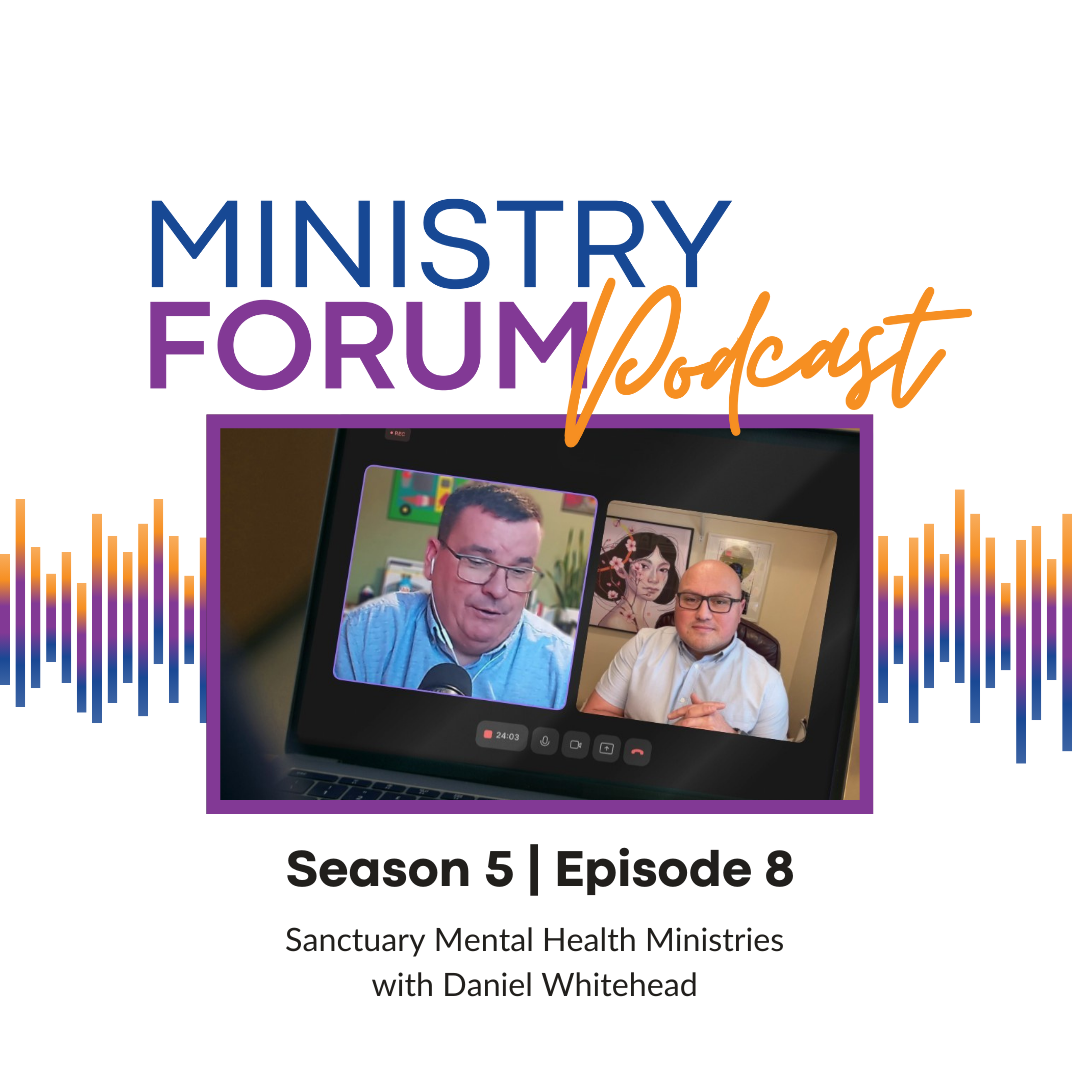
What does it look like for the church to become a genuinely safe place for people struggling with their mental health? In our conversation with Daniel Whitehead, CEO of Sanctuary Mental Health Ministries, we explore how burnout, vulnerability, theology, and ordinary life all intersect. Daniel shares openly about his own journey through pastoral exhaustion, the messy realities of leadership, and why the church’s role is more than crisis response — it’s belonging, community, and hope. He offers a grounded, thoughtful vision for how congregations can walk with people in ways that are faithful, practical, and deeply human.
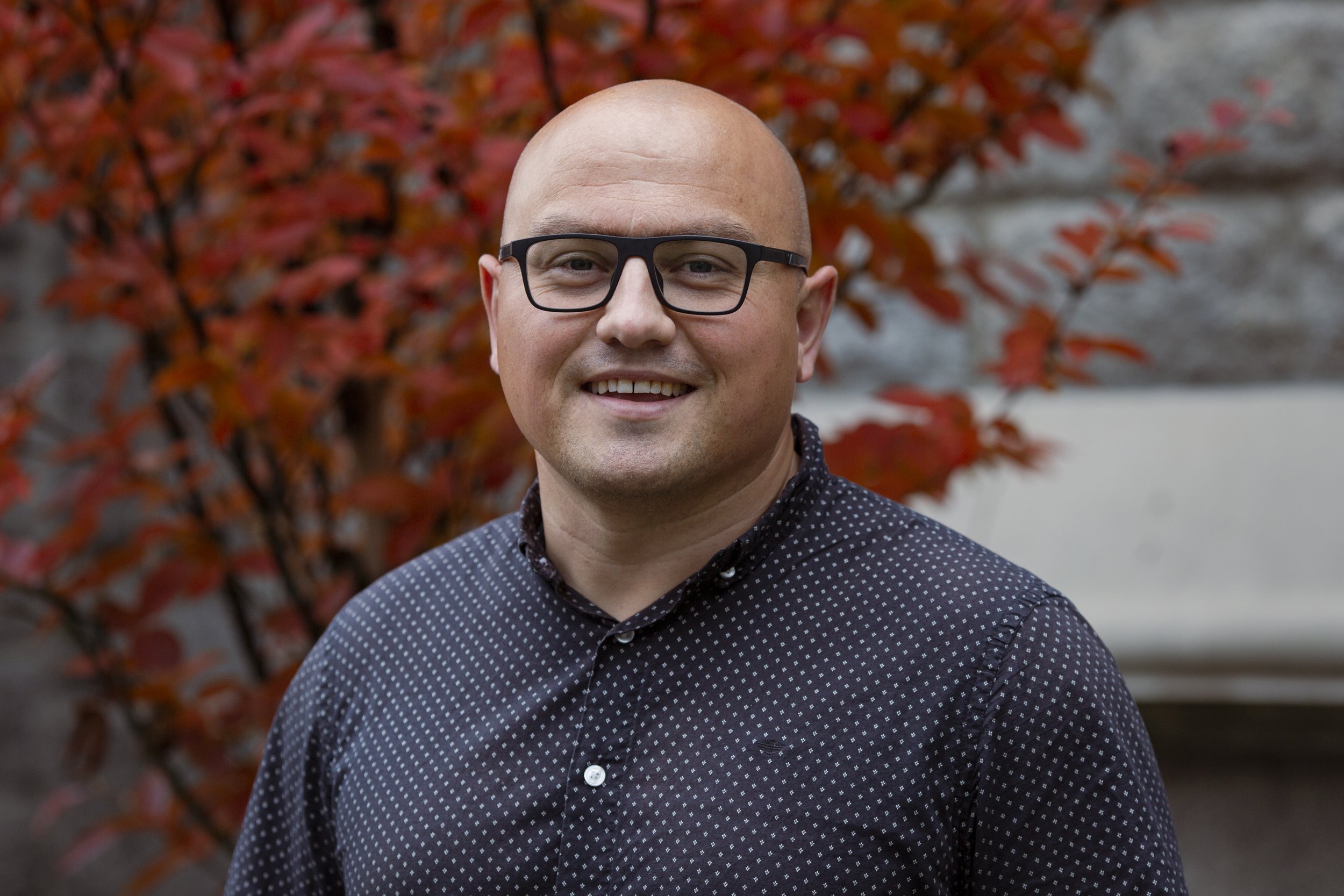
About Daniel Whitehead
Daniel Whitehead is the CEO of Sanctuary Mental Health Ministries. His other roles include being an adjunct faculty member at Regent College in Vancouver, BC; serving as a committee member on the International Network on Theology & Mental Health; and being a member of the advisory group for the Centre of Spirituality, Health & Disability. Previously, Daniel spent 10 years in full-time vocational ministry, including eight years as senior pastor of a church. Daniel hails from the UK and now resides in Vancouver. He is married to Annie and has two children. He is also a certified mediator and holds a double master's degree in theology.
Show Notes
Sanctuary Mental Health Ministries - Learn More Here
Mental Health First Aid - Learn More Here
The Sanctuary Course on Ministry Forum - Find it Here
Follow us on Social:
Transcript
[John Borthwick]
Welcome to the Ministry Forum Podcast coming to you from the Centre for Lifelong Learning at Knox College, where we connect, encourage, and resource ministry leaders all across Canada as they seek to thrive in their passion to share the gospel. I am your host, the Reverend John Borthwick, Director of the Centre and curator of all that is ministryforum.ca. I absolutely love that I get to do what I get to do, and most of all, that I get to share it all with all of you. So, thanks for taking the time out of your day to give us a listen. Whether you're a seasoned ministry leader or just beginning your journey, this podcast is made with you in mind.
[Music Outro]
[John Borthwick]
Today on the Ministry Forum Podcast, we are continuing our conversation about mental health and the church. This is part two in a three-part podcast series on this important topic. We believe that each of the episodes stand alone, but you might appreciate listening to them in sequence. So, if you'd like to listen to our interview with Laura Howe of Hope Made Strong and friend of today's guest, first, then we'd encourage you to maybe stop this one and go back to that one first. That was our previous episode, and if you're interested in where we're going to go from here today, our next episode, we'll talk with ministry leaders who have used the amazing resources from our guests organization in their congregational settings. We can't wait to share that episode with our Ministry Forum audience as well, but we are most excited, in this very moment, to have the chance to chat with today's guest, Daniel Whitehead.
Daniel's passion comes through whenever you hear him speak, and I've had the pleasure of listening to him speak on the topic of mental health and well-being in various settings, not least of which, speaking from Team Presbyterian, when the organization he is the CEO of received the Cutting Edge of Mission Award from the Presbyterian Church in Canada back in 2023. If you've never heard of Sanctuary Mental Health Ministries, first, you're missing out, and second, let me tell you, they have a vision for a future where the church plays a vital role in supporting mental health and well-being in every community, and they deliver, let me tell you. I know that Daniel's a hugely busy man. We were just talking as we were coming on to the studio about all the many trips he takes throughout the year. So, I'm delighted that my friend and colleague, Laura Howe, introduced us officially, and he was gracious to say “Yes.” When I invited him to talk over this in the Ministry Forum Podcast, he's taken this time to be with us, and we're grateful to hear what he might say for us today.
So, let's get to the bio. Daniel Whitehead is the CEO of the Sanctuary Mental Health Ministries. His other roles include being an adjunct faculty member at Regent College in Vancouver, BC, where he's joining us from today. Serving as a committee member on the International Network on Theology and Mental Health and being a member of the Advisory Group for the Centre for Spirituality, Health and Disability. Previously, Daniel spent 10 years in full time vocational ministry, including 8 years as senior pastor of a church. Daniel hails-you may detect this in the podcast-he hails from the UK and now resides in Vancouver. He is married to Annie and has two children, and he's also a Certified Mediator, and holds a double Master's degree in theology, a double master's degree. Wow. Theology was just so very interesting that you ordered the double double. Daniel, way to go.
[Daniel Whitehead]
One wasn't enough.
[John Borthwick]
I love it. I didn't know it was a possibility, but way to go, Daniel. Welcome! Welcome to the Ministry Forum Podcast. We're grateful to be with you today.
[Daniel Whitehead]
Well, thanks, John, it's a delight to be with you.
[John Borthwick]
Yeah, thanks. A bio is just, you know, a typical way of being introduced, but I always like to invite our guests to share how they would introduce themselves or share anything that the bio really misses that might be of interest to our audience.
[Daniel Whitehead]
Oh, yeah. Bios are strange things, aren't they? I almost feel like the whole vision of a bio was not a British or Canadian vision. I feel like someone else in the world came up with the idea of bios. I'm a very normal person, I like to think [laughing]
[John Borthwick]
I love that. I love that.
[Daniel Whitehead]
There's always a perception. Perception is really interesting and dangerous. I think sometimes people hear my accent, and we're not supposed to admit these things, but they hear my accent and they immediately assume that there is a certain life experience I have, which is, somehow elite or something. My life does not feel very elite. My life feels about as grounded and gritty as it can be, and in the moments when it might feel elite, I'm normally brought back to earth with a bump very quickly. So, I would want everyone to know I am a normal human being trying to work this out. Just trying to work out what's happening tomorrow. That is me, aside from all these other things that I'm doing. Actually one thing I've mentioned, because it needs to go in my bio to impress people, is I've become a Praxis fellow. Praxis is a wonderful, amazing organization. An ecosystem of not-for-profits and initiatives and entrepreneurship, and I became a fellow just earlier this year, which is something I'm, in all the right ways, really proud of. So, that's another thing I did recently.
[John Borthwick]
That’s awesome. You're an extraordinary fellow, as it were, but living an ordinary life as you're just trying to and from a spirit of well-being, what a beautiful way of framing, trying to be grounded in the moment, just trying to get through today. Because I think someone said today's problems are enough. Let's not worry about the future. There's enough over there in the future, but let's just take care of today. Seems like a good way to think of it. You were a pastor as well for a season of your life, and then you came to be involved in the work and ministry that you do now. I'm assuming that there's a story behind all that. Maybe an origin story of how you became the CEO of Sanctuary Mental Health Ministries. Is there a story? Can you tell us about that?
[Daniel Whitehead]
Yeah! I mean, when you put it like that, it does feel really unlikely.
[John Borthwick]
[Laughing] No, by all means, Daniel, I didn't mean it was an unlikely trajectory. I'm just curious how one goes from being a pastor to doing what you do today.
[Daniel Whitehead]
Yeah, so I led a church. I led a church on the south coast of England, which it feels like another lifetime or another life. It's strange for me to think back on that time, and when it really hits home is when I see people from that time and they talk to me about it, almost like it's a present reality, and I go, I'm a completely different person to that person, but obviously I am the same person. I just changed and adapted as we're meant to by God's grace. So, I led a church for, I was a youth pastor for two years, senior pastor for seven-and-a-half years, so all in all, about 10 years in full-time, vocational ministry. And honestly, I don't think I was a great pastor, yet I know I am pastoral. I know that my approach on life is, by and large. I mean, don't get me wrong, I have my moments, but by and large, I believe most people are trying the best with what they have, and therefore, we should try and be understanding.
I may have my moments, and that's always a funny thing. I remember leading a church, people would see me when I'm out, like shopping or just picking up groceries or something, and it's even happened with Sanctuary a few times. I get recognized, “Oh, you're the sanctuary guy.” And sometimes I don't look very approachable when I'm shopping. It's because I'm so focused, I have this very focused look. So, I have my moments of being focused on the wrong things, but by and large, my experience leading a church was hugely challenging for me. I was a young man thrust into it in quite traumatic circumstances. My predecessor, who was my mentor, best friend, died really suddenly, and the church asked me, as a recently married, I've been married a couple of months. I was 23 at the time, I was 24 by the time, I took it on, but I took on leading a church. I just didn't know enough about life. I just didn't. I mean, it's not to say it was bad. There are some people who look back at that time and say, “That was the happiest I've ever been in a church,” which seems to me like unthinkable, because I go “but it was so hard.” You know, you've forgotten. Your rose-tinted spectacles are tricking you. It wasn't fun. It was hard and horrible.
But no, evidently, God's grace was enough to use me at that time, to lead a church. And I reached a point of burnout, which I didn't have language for or permission for, and that led me to really ask, “What is next for my life?” The long and short of it is, we moved to Vancouver for me to take a year's study at Regent College and to do a diploma. I didn't know what else to do. So, I talk about that year as a year of loitering with intent, which in Britain will get you arrested if you loiter with intent. I think I came to just really see, what could my life look like and really that one year turned into-became a double masters, became Canadian citizenship. That was a 11 years ago. I've two kids who, we're all Canadians, we're all British and Canadians, but this is our home. Along the way, I took on this little non-profit that was really struggling and had a very different model, and had the same roots and foundation, but almost had a different vision. Certainly had a different strategy, and I stepped into that, and by God's grace, find myself leading a very different organization today, which has opened up all kinds of possibilities and opportunities, not obviously, not only for me, that's a byproduct, but for people all over the world that we've been fortunate enough to serve.
It is quite a remarkable story. And I don't have an obvious one plus one equals two equation for it. It's more a story of risk, of faith, of bravery, of stupidity, and a whole lot of God's grace in the midst which I don't think-we're obviously always dependent upon God's grace all of the time, but if I can put it this way, I don't feel like I've ever needed God's grace more than this moment in my life as a 44-year-old man trying to navigate being a father to teenagers and trying to navigate this cultural moment. It is not for the faint of heart, and I'm forever going back to my faith and to Christ, like, truly, and not in a sophisticated, I'm a brilliant, pious Christian kind of way, but, in a, “Jesus, I I really need your help. Help do something!” Yeah, the journey has been amazing, but I would hate for anyone to think that it's somehow easy, or just because God's in it, that it's somehow immune to the normal stuff of life, because it's really not. Yeah, so there's a there's a bit of a picture of how we got here.
[John Borthwick]
That's amazing, Daniel. I love loitering with intent. It's a phrase I used to use in ministry all the time. In congregational ministry, I'd say that my gig is to loiter with intent. I'm just hanging out with you all, and I'm intending to be here and see what happens, and that's where the real ministry happens. I really appreciate you saying the pieces around there is a there is a notion, and maybe this connects with a bit of your burnout story. I also experienced a burnout kind of experience, where I stayed in ministry, and most people, probably in my congregational setting, had no idea that I was going through what I was going through, because I had a whole bunch of warped ways of perceiving the things that I was experiencing as being, I couldn't possibly disclose this to the church, or the sense of weakness, or Jesus suffered, and so I should suffer too. A lot of, lot of stuff.
I find it beautiful how you're expressing God's grace, but also, within there, a sense of, where you really are needing to lean on God at this time. I often would speak of it. There's been in my life, this pushing away of God's grace, in the sense that, you know, a lot of what carried me through that really significant time, in a long-term pastorate. I ended my time in that ministry after 21 years, and the burnout experience probably happened in year 9 through 11. It was a bit messy, and I often refer to it as dumb luck, not dumb luck, but just sort of luck. If God's gracious, there's a piece of me, and I'm still working this out with fear and trembling. There's a piece of me that sort of says, there's no way that God would, intentionally intervene in my life to make sure that certain things didn't happen to me, but just the certain things that didn't happen allowed me to continue in ministry. If certain things did happen, I probably wouldn't have been able to continue in ministry, and a whole bunch of things would have trickled down in a very catastrophic kind of way.
And so I'm still working that out, but I like to think that all the way through, I certainly felt the accompaniment of Christ, or of Jesus, along the way and truly couldn't have done it, in a sense of that Exodus kind of story of, “Oh, you thought that journey was hard. Well, I carried you most of the way.” It's like, wait a minute, it was really hard, and we did it all by ourselves. “No, that was just me carrying you.” So I feel like there was a bit of a carrying that happened, but I'm not 100% sure all the time. Did God intervene in certain spaces and places to make sure that I could do what I did and stay along?
[Daniel Whitehead]
I think that's a key distinction. The key distinction is, I think, is those hard, those hard times where we say, “Oh, God, carried us through.” I think sometimes when people hear that, what they hear is, “Oh, it's all right for you. You like you must have had some special connection.” Even in Scripture, we talk about Moses’ life. We go, “Oh, the burning bush.” There was a lot of life lived outside of the burning bush or the crossing the Red Sea. There was a whole lot of-it could be nothing. There could be no dialog or conversation, and of course, it's God's mercy, God's grace. Of course, it's that, but it's still, I can't emphasize enough how it's just not as glamorous as we all want it to look. It is hard, and I wish it wasn't. I really wish it wasn't, and maybe there are people who do experience it that way. I know there are people who present it that way, but again, a lot of them, give it enough time and the truth will come out, which is hard. It's something permission-giving in just saying that, and owning that, and not trying to avoid that.
[John Borthwick]
Yeah, definitely. I see sort of it twofold. I remember in my congregational ministry, and I still say it today, Jesus said that, take his yoke upon you and his path is easy and his burden is light. I would always qualify that with, “Yeah, that's what it looks like. It's light and easy Jesus,” because then he tells us how to live that life, and it's like, “Oh, my, you just made life a lot more complex, challenging.”
[Daniel Whitehead]
Yeah. Could Jesus have been ironic?
[John Borthwick]
I truly think he was. Yeah, I love the irony. Yeah, he was probably a Gen Xer. I'm not sure, but there's a sense of when I concluded my ministry and moved into this role at the college. There was a sense after 26 years of ministry, because it was hard. It was hard. I did not have an easy path in the two congregations I served. It was not an easy path. I remember the day I walked out, on my last day of walking out of the church that I'd served for 21 years, and for whatever reason, it sort of just came to me. I'm an only child, so I talked to myself a lot. Good conversation partner. It came to me, these kind of words of, this has been really hard, but on the whole, it's been great and good and meaningful and special.
There were certainly moments where I often describe the call to ministry as an act of will as well. To stay in because so much wanted me to pull out, but there was just that intention of obedience in the same direction, pieces to it. So, it's been interesting, but I wonder as you come into this role, and I know I take it in the role that I have, because the role I have with the college is kind of-I sort of see myself as somebody who's coming alongside people in ministry leaders today trying to offer support and care. Our motto is you're not alone in ministry, and we don't want people to feel alone as they do the ministry they do. But part of the journey that I've had in ministry allows me to come alongside people in that way, in a very tangible way, to sort of say, I've been through some stuff like you said, your 23-year-old self hadn't been through much, but then those 10 years are probably the biggest growth areas for a season of your life that you learned a lot.
Now I wonder if somehow there's some extrapolation for that for you in the work you do, or maybe that's the engine. For me, it's the engine that drives me. I just don't want to see people alone, as I probably felt alone for a season of ministry. If I can offer a cautionary tale or a word or two into people's lives to sort of say, in the one sense, it could get better, but in the other sense, you're not alone. I felt that that accompaniment of Jesus, but I also could have used a few extra friends along the way. Has that been something for you as well, as to the work you do?
[Daniel Whitehead]
Yeah, I think very much so. I think a big part of it is feeling safe, isn't it? You want people to feel safe, and I want to feel safe. We all have those triggers, those points that cause us to not feel safe, whether you're consciously aware of it or not. There are moments and situations where you're, “Ah, I don't feel good, and if you really analyze it, do the work, you'll go, “Oh yeah, it reminds me of that situation 10 years ago when I wasn't safe.” That's how trauma works. It’s how God has fearfully and wonderfully made us. Obviously there are things we can do to help with that. Yeah, I think I would always want someone, well, I think the majority of people I meet my life, I want them to feel safe when they meet me. I'm trying to think of the people I don't want to feel safe. Those would be bad people. I don't want them to feel safe.
It's almost like, I think of Jesus’ ministry, not because I'm likening myself to Jesus, but because I'm called to be like him, and I fail most of the time. In Jesus ministry, there are certain people he just went for the jugular with, and it's almost embarrassing for this meek and mild Jesus that often gets portrayed as this really gentle. He would just be with the Pharisees, or with those who felt the Pharisees, who felt that they had it all worked out. He would be, “You brood of vipers, you snakes, who's going to save you from the Gates of Hell? Who's going to save you?”
That's the kind of dangerous Jesus. But I kind of feel like most people in my life, I would take the approach of, most people are really trying their best, and they're coping and struggling with all kinds of things that make their life hugely complicated. I find myself drawn to want to make those people feel safe. Which is why, I think, I find my role so challenging, because, well, if you take a CEO, you take a title like that, you have to make strategic decisions that directly impact people's lives. It's a hugely painful reality to have to hold that, steward that, for someone like me who's pastorally wired differently.
[John Borthwick]
Yeah, and that's probably where your pastor's heart comes from. There's a sense of you approach that work with a pastor's heart, which isn't how every CEO does that kind of work. I imagine, and please don't get me wrong, this is not my understanding of the work that you do or that the ministry you have does, but I'd imagine that sometimes you get feedback from some Christian communities who may question, Why? Why the priority, or the focus of the church's role in mental health? Is that something you've encountered? I sense, having been aware of you and the ministry of SMHM, are quite clear about, and you've already been pretty clear about where you see Jesus in the midst of this conversation. Is that something you have experienced from, from even Team Jesus or Team Christian?
[Daniel Whitehead]
Yeah, I think there is some implicit pushback. I think there's actually lots of pushback. Some of it is more subtle than others, but you could have pushback that says, “Oh, that's great.” Then it's parked as a peripheral option, which is better than nothing. To be fair, well, like many churches, I'll take that. Your foot's in the door. You'll have others who say, “Well, we already deal with all that stuff. We refer people out to therapists.” Or I had one church just say, “We don't really need Sanctuary’s work. We have a list of psychologists and clinical professionals we refer people.” And to that, I say, “Fantastic. Well done.” Every church should be ready to offer people a holistic, biomedical, healing path, and should feel validated in that.
However, if you are doing that to absolve yourself the responsibility to be a good friend to someone in crisis, if you're just going, “Go to this special group, they will fix you, and then you can come and be normal like the rest of us.” If that's your approach, then we have a huge theological issue, and what appears to be good actually becomes something really bad and harmful to the way people see themselves. So, there are lots of types of pushback.
I think one time, a long time ago, someone said to me, “Well, you know, the Bible doesn't talk about mental health.”
I go, “Well, what do you mean it doesn't talk about mental health?”
“Well, the term, this is a modern idea.”
I go, “Oh, okay, so, yeah, the term is not in there, no, but in the same way that the term Trinity isn't in the Bible.”
So, to say the Trinity isn't in the Bible is kind of silly, right? The minute you have the doctrine of the Trinity, you see it throughout the pages of Scripture. The minute you have a vision for mental health, you see it throughout the pages of Scripture. You see people languishing and flourishing. People in different seasons of life have gone through seasons of struggle, and what are the things that helped them to recover well? Well, it was friendships. It was, at points, it was nutrition, it was food. It was actually recommendations like, take a little wine for your stomach, or God preparing bread for people. There are these stories that are very much rooted in a holistic reality, that when you have that holistic framework, and you re-read scripture, you see mental health from Genesis 1 to the end of Revelation. It's just there. You particularly see it in the life of Jesus, our Lord. So, I think there is that pushback.
I also think denial can be, at the risk of sounding cruel, but denial can be an effective survival technique for a time, but in the long term, it's awful. It will come back to pay with interest. If you just want to deny that something's a reality, either consciously or unconsciously, you may be able to get through that. You may be able to convince yourself and others that everything's fine, everything's fine, everything's fine. I know of a church that my predecessor met with, and she spoke with one of the elders there and said, this is going back a number of years, talked about sanctuary's work before I was around, and they said to her, “Hang on, we don't have any mental health issues in this church.” It was a really big church.
I once relayed that story confidentially to a friend of mine who's a psychologist. I said, “This is really perplexing or troubling me, is a statement like that. This is right in my early days at Sanctuary. I mentioned the name of the church, which I've never mentioned since, to that psychologist, and she immediately became really angry. She said, “There are people on the leadership team in that church that I've seen in my capacity.” What! I think those days are largely disappearing, the days of people, of people pretending it's not a reality. I think most do. I think the challenge now for many churches is it can often be a siloed conversation where we go, “Well, isn't that for doctors? We're not trained. That's for doctors.” We go, “No, hang on. Yes, we need good doctors, and we need to understand the importance of doctors that train medical professionals and therapists and psychologists, but we as the body of Christ, as the friends of Jesus, called to live out and steward the values of Jesus in community, we absolutely need to have a vision, a theologically grounded vision for this.” Otherwise, we're communicating to people that God doesn't care about this. Just see doctors, which is just a cultural modality. It's not a faith driven one. So, yeah, we do get pushback, but less, increasingly less, just because of the unavoidable, undeniable realities that we see in our culture.
[John Borthwick]
So, I hung out with first responders for a season of my ministry, and in that community, there's a lot of talk around stigma around mental health and things like that, but even in the wider society, there's all this sort of talk of stigma around mental health. One thing that came to me years and years ago was this notion of we, really, as human beings, the only lens I know by how I see the world is my North American upbringing and everything else. There could be other ways of seeing things. I'm pretty sure there are. We segment this mental health, or this brain thing, as somehow separate from the rest of how we've been wonderfully and creatively made, and sort of marginalized this in some way.
So, I could easily see a church saying, “Oh, no, we don't have any mental health issues in our congregation.”
“What? Are there humans coming to church on a Sunday?”
Then there's all the stats-with brains-and they just check them out of the door and then you never see anything. I mean, in one case, I think you're having a mental health issue right now because I think you're delusional and you've got a problem. There's also that sense of marginalization that's happened and that stigma that's happened, and yet we see in the stories of Jesus specifically, how people whom we would assume today would be struggling with mental health issues and challenges, that he would reach out to them and speak to them, and bring, and invite them in, and in many cases, heal, but part of the healing and wholeness was inviting them back into the community. Inviting them to be a part, that they were welcome, that they were valued, right? It's just so interesting to me sometimes when we hear people say, “Well, we don't have any of that here.” Or which is also, I think, a denial, but also like a pushing away, like, “Phew, thank goodness, we don't have any active mental health challenges being exhibited in our congregation on a Sunday morning that could disrupt things.”
[Daniel Whitehead]
Yeah, and that could make you feel safe, right? Oh, I feel safe because it's hugely complicated and inconvenient reality, right? My vision of faith is that people do good and good things happen to them, and God blesses people and being a Christian, following Jesus, means everything's perfect. If that's your vision of the Christian faith, you are not set up to embrace mental health ministry. I don't think you're set up to embrace ministry. That sounds a little bold of me to say it, but unless you meet a person where they're at, which is exactly what Jesus did, and you have to re-read Scripture in that way, I think, because many texts throughout Scripture to me, growing up, implicitly, I was shaped to just read them in the abstract alone. I think many of them actually have a root, a groundedness in very practical advice like, you think of like the laying on of hands. It infers proximity, and yes, to be close to someone, to be present to them, at points in life, is really important for people to be able to look you in the eye and know that presence, which is a really important counter narrative to our culture at the moment where too much of our lives are lived over screens.
We know that isn't good for us. We know that from biomedically. Science would show that this connection is important. So, I think we suddenly read Scripture differently, and I think, even the healings of Jesus, which for me, were always about Jesus manifesting the power and authority of God to make all things new as a picture of what will happen in the eschaton, ultimately. Yes, but when Jesus removed those physical challenges that people had, they were able to enter into a religious system that was cutting them off from community, from work, from spiritual worship, from those things, and Jesus removed that and said, “There you go. You can enter in now, you can be spoken to, you can be seen, you can be loved, you can be in community. You can worship God.”
So, it's another way of looking at it, and what are the barriers that we implicitly or explicitly put in place that prevent people, and one of those barriers is the stigma of mental health. The stigma of, “Oh, that person is mentally unwell, and they're going to ruin my service.” If you remove that stigma and give a person permission, they can actually heal in community and become a member of your community, but you've got to remove the barrier, as Jesus did.
[John Borthwick]
Yeah, in our attempt to try and come alongside ministry leaders as well, and as I shared a touch of my own personal journey, there was that sense of, that if I was to express out loud that I'm not doing so great from a mental health perspective, as a ministry leader, I had a bunch of stuff that was, the baggage that I had either inherited. I had come to understand the feedback I'd heard within the community about how they spoke about people with mental health, either in their own families or beyond, or what they had done by putting people like me on a little pedestal and sort of going, “You've got it all sorted out. You're the God guy. Everything must be just going swimmingly for you.” So, I appreciated that we need to really work on how we approach these kind of things from a theological lens and a church community, faith community lens, to help people understand that it's actually okay to sometimes say, “I'm not okay.”
Like in that first responder community, it was always the tagline of, “It's okay to be okay, and it's okay to not be okay in this space, right?” That would have been such a gift to me. We talked earlier about, in the long haul, I can say, “Thank goodness for all that work I've done over the last decade or more.” But had I had a better sense of things, better theology, better understanding of it, or a sense of safety within the community I was serving, and it's not their fault. I don't blame them for it, but it's a better sense of that, “This is a safe place to be fully myself.” Yeah, I wouldn't have had to do all that extra work. That's been a great growth area, but yeah, it would have been nice to have a different path, right?
[Daniel Whitehead]
Yeah, yeah, and so much of those things, I think John, when I look back at my own life, the things that have held me in the abstract, we can say God, but in the concrete, I can say, “I'm so grateful.” I grew up in a home where I felt enough, I felt loved, and I felt like I could take risks and if I made a mistake, I didn't have people who were waiting to- and I realized actually how rare that is. So, I'm very grateful, very grateful, for the privilege of growing up in a home where I felt that. It is the grace of God, but it's also rooted in a very practical reality, and I think, again, God is not just in the abstract, he's in concrete realities. If you isolate human beings, they will not flourish. It's not possible. God hasn't made us that way. So, yeah, we're not immune to those things, and many of the things we take for granted are the things that allow us to be better reflections of Jesus, I guess.
[John Borthwick]
Well, and as the early church was, it was that surrogate family, that new reality for a lot of folks who had been pushed out or marginalized in varieties of different ways, and so the ways in which we can reflect the trueness of the Body of Christ, to have people in that community who weren't raised in places and spaces, or didn't experience a sense of being enough or loved or anything like that. If the church can be truly that body, as flawed as we are and is all the mistakes we make and the messiness that it is, that can be such a gift, not only to ministry leaders, but to anybody who comes in contact with them.
So, let's talk a little bit about one of your, I believe you do lots more, but to zero in on one of your significant contributions from a resource perspective, the Sanctuary Course, we're looking forward to talking in our next episode with a couple of ministry leaders who have actually used that in their own ministry context. It's also on our resource hub at the Ministry Forum. Can you tell us a little bit of what we might expect to learn as a community engages that material, and maybe what the hoped for outcome would result in a community taking that course?
[Daniel Whitehead]
Yeah, absolutely. I think one of the challenges, even with the name “The Sanctuary Course,” I have no regrets about that name. That was my idea. When you say course it's, well, it's an educational resource. It is an educational resource, but I think the magic of what happens in The Sanctuary Course is it models and creates a safe space, a sanctuary, for a small group of people to have a much needed conversation that most people, I think, have never had, which is really to go, “How do we make sense of our own journeys of mental health, the journeys of the people we love?”
Many people do the course because they're thinking of someone they love and care about who's struggling, but then they realize that this is also about them. How do we help churches have conversations where theology, faith, and a person, the reality of a person's story, can all be accepted and seen as being vital parts of fully holding that subject. So, what it does is it creates, it models, and it creates a beautiful safe space for people to have a much needed conversation. The goal, the hope, is that out of that conversation, that experience that people have, that those people are better equipped to support each other, themselves and those that they meet because they have a more full and grounded and robust framework and language and the permission, because it's been modeled, on how to do those conversations better.
So, it's not a-this is going to solve all your problems, kind of sales pitch. Absolutely not, but it will help you to build a sure foundation that will allow you to go on and be more effective in your care for yourselves and others through the lens of faith, psychology and people's stories. So that's the beautiful thing about that resource. Is it perfect? No, but it's really, really good, and there's nothing else that we have found like it. There's nothing that gets close to it in terms of its ability to create that real experience for a small group of people.
[John Borthwick]
Yeah, and that's awesome. You said, there's nothing quite like it, and having hung out with first responder communities and other communities that have that have attempted to bring resources from a mental health perspective to people, it does sometimes feel like a “ticking the box,” kind of experience. Took that training, got that awareness, doing good. When I was in the first responder community, we did some stuff around the Mental Health Commission of Canada. They've developed some resources, and one is the Mental Health First Aid, is one of those kind of trainings. So, when I'm sensing, you probably have a sense of some of those kinds of trainings. How would you, I think you've already shared a piece around how that would be different. I can already imagine how it's different, just from having trained in those trainings as well. Can you say a little more about what people might experience as distinctive from The Sanctuary Course, versus if you were just to take a mental health first aid or, I know Red Cross offers one as well, around mental health first aid as well.
[Daniel Whitehead]
Yeah, well, the first thing I'd say is those courses are all really good, and people should do them. People should be ready. I think where the challenge is, is they're really good in their lane, and their lane is a biomedical vision of mental health. It may tip the cap to other aspects of personhood, like if you think about the biopsychosocial, spiritual reality of a human being, but I would say it largely is in the biological lane, and the challenge is most mental health conversations in our culture, in Western culture especially, come from the assumption that the biomedical way of understanding a person is the primary, or in some cases, only way of really understanding a person, particularly in the context of mental health.
The challenge with that is, is if you go, “Well, this is a biomedical issue, if you could deal with this biomedical part of your personhood, your brain. If you can deal with that and fix that, whatever that means, then you will make someone able to live out the psychological, social, spiritual reality of their lives.” The tension is when that is your only perspective, the only thing you will focus on is symptom reduction. You will focus on how do I alleviate the symptoms that people are experiencing that are causing them to feel dissonance or harm or struggle or to be upset? How do I remove those? I think when you look at mental health as a more holistic reality, as a biopsychosocial spiritual reality, you actually look at it differently, which is not so much, “Here is a problem to be fixed,” although it may be. You go, “Here is a situation, and what does this person have at their disposal to flourish?” Is good mental health, just the absence of a mental illness? Because I don't think it is. I really don't think it is, and the course really gets into that.
So, the irony is, if someone is struggling in their mental health, and you give them a good, loving community, and you give them a spirituality that can support them and hold them up, and they have a proper night's sleep, and they eat the right food, and they see a therapist, and they get medication, there's a whole bunch of things that go into making someone well. I think many of the medical models, like mental health first aid, which is really good, is really just focused on what do we do in a crisis situation? When someone is in distress or something happens, which is very important, it doesn't really focus on hope, and it doesn't really focus on the holistic reality that a person can flourish again. That's where I think the role of belonging, purpose, community, hope, these are things that the church, historically has kind of had a monopoly on in Western culture, and that's why there is a church at the center of every town, city and village. It's because it was literally the thing that defined the geopolitical landscape of the Western world, because the church cared for holistic issues, justice, welfare, education, healthcare. That's because there is an hopeful narrative. I think that's the limit of those resources. They're really good at what they do, but it only really attends to one lane and makes assumptions that really the primary issue is a person is a biomedical reality, whereas, as Christians, we know that isn't true. That's just one part of a more complex reality.
[John Borthwick]
Yeah, one of the amazing, amazing encounters with another human being that I had as a part of my ministry with first responders, was a first responder who basically went through a whole crash, as it were, mentally and not sleeping was the big symptom. They went down the road of-they went to the hospital and got what they needed to sleep and got the other supports that came around them. Then they went on a deep dive around therapy and stuff like that, and reading, and they started-they're all very A Type personalities, so they just went on a deep dive.
The presentation to me was, “So I've come to you, here's all the stuff I've just been through, but I'm coming to you because everything I've read, everything I've heard, everything that's been surrounding me lately, has basically said that I've (and this is where it connects to like a 12 step program) I've come to the end of myself, and I recognize I need something, something bigger, something a higher power, whatever that is. Not 100% sure what it is. It's kind of like I'm one of the travelers on the road, and I know where the water is in the desert, and I've come to you because I think you might be able to give me a sense of what it is that I'm looking for.”
[Daniel Whitehead]
Interesting.
[John Borthwick]
And that was an amazing opening to a journey that I've never had. I never had in congregational ministry, in that tangible a way, where someone has basically said, and again, affirming the biomedical stuff. I need to be able to sleep because it was driving me crazy. Quote, unquote. I needed to have medication to help balance me out. I needed therapy to do this and that, but I also need this, and how can, how can I connect with this in a healthy and holistic way and find community?
They at least had some kind of ancestral connection, and it was actually a grandfather. They said, I know my grandfather went to church and it meant something to him, but this person had no connection with that. Knew it existed, knew I existed, and that I was a part of a church community, but just sort of a sense of, “How can I connect with that?” I think what you're talking about is really, really, really valuable in that whole conversation, that we are not just physical beings, we actually have more going on.
[Daniel Whitehead]
When you think of that example through, practically, theologically, it can be quite troubling for some Christians, because what you could say is, and it goes back to, like the Beatitudes. I think of Eugene Peterson, his translation in The Message, “Blessed are you, and you're at the end of your rope, because there's more room for God in His Kingdom.” You go, “Well, we can say that glibly, but actually, whoa, that's actually kind of troubling for many of us who've been raised a certain way of faith, to go, “You're blessed when you've gone through what that person has gone through, and yet it led him to faith.” I think of like Jesus, sorry, I think about Moses. When Moses, God calls Moses at the burning bush, and Moses is like, “God, find someone else. I can't speak. I'm not good at this.” God is basically like, “Pull yourself together, Moses. Who do you think makes men mute, or blind, or deaf?” And the inference is, God does. Again, that's a hugely troubling thing for the kind of faith I grew up with, you'd be, “Heresy! How can that be?”
It really defines, you really have to think about the goodness of God differently. Maybe the ultimate goodness is that in moments of feeling abandoned, in moments of physical, biological, psychological, ill health, of which I have experienced. I live with an autoimmune disease, hugely inconvenient to my life. Maybe the good news for me is that God wants to be with me in it, and God is doing a deeper work in me that I can't see, and I may not like it, but maybe there's something good with this.
I think the mental health conversation is really tricky when the assumption is, and don't get me wrong, it often is, the assumption is, this is a bad thing. We need to get rid of this bad thing, but maybe God's trying to speak to someone in the midst of that, and maybe actually us just trying to fix it or get rid of it is actually not helpful. Maybe the better question to ask is, “Where is God in the midst of this? How are you seeing God in the midst?” We have to be willing to listen to those answers, because they may not fit our neat and tidy ideas.
[John Borthwick]
Yeah, and even with double helping of theology that we all, that we may learn or grasp, that those are ultimately the mysteries and questions of faith, right? We don't know. We see in a mirror dimly. Someday we might see face to face. We don't always get it and it feels messy and can be really challenging. I wouldn't have wished on anybody what I was experiencing. I'm sure that the individual who came to me and said, “I've reached the end, and I need something more.” The whole journey that they've had that got them there, I wouldn't have wished that on anybody, just so that we could have this beautiful moment together that was meaningful to me and maybe meaningful to them.
It's just a really complex thing of how we think all that through around those kinds of things. Yeah. Well, we're speaking about the church, and I'm wondering, from your perspective, because this is your Daily Bread, as it were. How's the church doing when it comes to supporting mental health and well-being in our communities? I'm going to say more churches need to be doing The Sanctuary Course, and more churches need to be connecting to the ministries that you all are doing, but how would you say, are there stories you're aware of? Places that come to mind of people experiencing and participating in that redemptive work as you talked about making things new around mental health and well-being?
[Daniel Whitehead]
There are definitely stories, and I can say, when I started with Sanctuary nine-and-a-half years ago, no one really wanted to talk about faith and mental health. It was like, “What's this? This isn't even a thing.” Since COVID, it's become a very easy sell. I remember one time I met a person at an event, and it wasn't a faith event. This person evidently wasn't a person of faith, but when I described what Sanctuary did, they were like, “Oh, that's really clever, because those Christian people, they really need help with their mental health.” [laughing]
[John Borthwick]
They're not wrong. We all need help.
[Daniel Whitehead]
I feel like, yes, there's more of an awareness. There's more of an openness, by and large. I think the danger, some of the pitfalls of this subject matter, is it can become a fad. It can become like, someone said to me once, they're like, “Oh, yeah, do you remember when AIDS was a thing? Like in the 90s, everyone was talking about AIDS. Remember when it was a thing?” Pretty sure it is still a thing. You know it's, pretty sure it is. So, I hope mental health doesn't fall into that category, because I think there is an invitation for us to fundamentally understand our personhood and how we relate to God and each other and ourselves in a way that can make our discipleship more effective in being the body of Christ.
So, I think that's one thing I see as a potential pitfall. I think, people, whether they mean to or not? Probably are some mean people in the world who mean to do it, can turn this into what is being described in a negative way as a “woke” subject. That's not really language I use, but I think that, again, is a real pitfall, because when you've known someone attempt suicide or die by suicide, this is a very real issue, and it's way more common than people want to acknowledge. So, yeah, I see an openness in churches. Some of that openness anecdotally, I see in churches who have had something really bad happen in their church, and they suddenly go, “We have to do something.”
And I think obviously the time to do something about it is before something bad happens. So, I'm encouraged that there's more openness. I think it is a hugely complicated subject. I know people that say, for instance, I know funders that say, “Well, we really want to invest in this space,” but they don't quite know how to do it. They don't know what's going to work, what's really going to change it. We're doing our thing to try and change things, but it is complicated because it's really a systems change. It requires change at lots of levels of lots of things, which, yeah, really, really requires a reimagination of our theology as people of faith. I think it really does need a reimagination of our theological vision of this subject and of personhood.
[John Borthwick]
yeah, because it's so challenging when people don't perceive that this is a serious situation that our culture is facing, but also the culture/people, humanity is facing. We hear about the stats that came out a few years ago in the United States around this epidemic of loneliness.
[Daniel Whitehead]
Yeah.
[John Borthwick]
We hear that people, when you do learn something, even dabble in the experience of learning something about mental health, social supports is one of the major preventative factors. If you have people who get to know you and get to know you well, but also surround you and are connecting with you regularly, that was what was so problematic during the pandemic, that's actually a preventative factor. What a gift for the church to be that place where they can be, you can have people, you can feel known.
[Daniel Whitehead]
Yeah.
[John Borthwick]
People have a sense of when you're not functioning in the typical ways you might function and be able to bring that to your attention.
[Daniel Whitehead]
Yeah, my first Masters was in church history, and I think you can look at some of these sociological things that have happened in society that have removed many of the things that made us connected. The Second World War was a great example in my country of origin, in Britain. Britain was bombed so badly that when the war was over, these kind of shell shocked, traumatized men would come back to their communities that the pub was destroyed, the church was in pieces, and suddenly their support network previously, their group of friends, some of them had died. Many of them were also traumatized. They weren't able to have that connection, and suddenly divorce rates start going up.
There's a part of theory that says, actually, to be around the same group of friends week after week, to hear their challenges, to be able to relate to them, to knock those edges off each other, to be, “Why would you think of leaving your wife? Don't do that. That's stupid. Think about your kids.” Suddenly, those things that were just baked into the culture, the fabric of culture. You look at even in Britain, to pick on the idea of pubs. Pubs are dying. In Britain, whether rightly or wrongly, they were the centres of community and certainly the church has played that role. Again, we hear all the time, church attendance going down, that churches are closing. So, I think if you remove this glue that binds our society together, sure we're not going to flourish. We won't have a hope.
I think it may be a controversial thing to say, and it's not a well thought through theory, but my suspicion, my sense, my intuition, tells me that if we could re-learn how to be in community with each other, as grateful as I am for technology so that we can do this, but if we can re-learn how to be in community with others, I suspect a lot of mental health challenges would be addressed in community by people being seen and loved and reminded that they're enough, which then means people experiencing acute distress related to a mental illness or a serious mental health challenge, would be able to access the medical system, which, at the moment, is completely overloaded.
So part of our theory, as an organization, our theory of change, is, if you can make the church, and every town and city and village has a church, if you can make that a really safe place for people's mental health, and you can make that a warm, hospitable space, we can begin to address issues before they fully emerge, and we can begin to ease the pastoral, and ultimately the medical burden, that’s existing in culture. That is a really out there idea in our culture, which 50 years ago or 80 years ago was the norm. Actually, no, the church does do that, and it's meant to do that, and it's always done that, and that's what it is. Suddenly it's become this radical idea that, “Can we create churches that are these radical places of hospitality and care for people who are struggling?”
[John Borthwick]
A true sanctuary.
[Daniel Whitehead]
A sanctuary, yeah.
[John Borthwick]
It's well named, good job.
[Daniel Whitehead]
Yeah, the branding is great. That was the people before me, but that is a good brand.
[John Borthwick]
Yeah, it is a good brand. Yeah. Is there anything else, Daniel, that I haven't asked you, that you just wish you could share as a part of this conversation for Ministry Forum audience?
[Daniel Whitehead]
Only to re-emphasize that I'm a very normal person. Life is not glamorous. I think I'm a fellow pilgrim with you, John, and with the people listening to this. We are all trying to work this out, and I think being kinder to ourselves and to each other, and understanding the kindness of God to us, who are struggling, and often struggling with things that we don't talk about, and the struggle of even talking about it, it's like, yeah, these things are really hard, but you can do it. That posture of vulnerability, which rarely feels good, to be perfectly honest, in my experience, that posture of vulnerability, you have to step into it and trust that it's good. It is a step of faith to be able to say, I'm struggling with this. This is not easy for me. I need help to do that, which, as I said, doesn't feel good, is good for you, and it's good for your community, and it's an act of worship to God, because God doesn't want you isolated.
So, I would say that to anyone listening to find the bravery to do it. Do it as a step of faith. I would probably say, do it as a step of faith with people that you have some degree of certainty that they will be safe, because, as Brené Brown says, “People will use your vulnerability as a weapon against you if you if you use it in the wrong space.” Vulnerability is good, and it's good because we worship a Lord who hung on a cross naked, screaming, “My God, my God. Why have you forsaken me?”
As a pastor, a former pastor, for yourself, I don't know any pastors that have ever done that. That have been front of the people, that congregation, proclaimed that level of vulnerability, and yet, that's the Christ we're called to walk after. The key point is, Jesus doesn't get an answer to that question. It just hangs. If you haven't got answers, remember you're on Team Jesus and it's okay.
[John Borthwick]
Thank you, Daniel. Thank you so much for this time. This has been a gift to me, and I think it'll be a gift to lots of folks who get to listen to this at a later date, along with Laura the week before and a couple of ministry leaders who've been using The Sanctuary Course in their context. Keep doing what you do. Try to take care and kindness to yourself as you lead the organization that you lead so pastorally and so lovingly with a mission and vision that I think is-anytime someone wants to change the world, I'm fully behind you in all the ways, and if there's ways that we can come alongside in that journey, we're happy to do so. So, thank you, and I'm so grateful that you've been called to the space that you've been called to in that wonderfully messy journey that took you there.
[Daniel Whitehead]
Well, thank you, John and thank you for your commitment to your equally messy journey. We need each other.
[John Borthwick]
Thanks so much. Appreciate you.
[Daniel Whitehead]
Thanks.
[Music]
[John Borthwick]
Thanks for joining us today on the Ministry Forum Podcast. We hope today's episode resonated with you and sparked your curiosity. Remember, you're not alone in your ministry journey. We're at the other end of some form of technology, and our team is committed to working hard to support your ministry every step of the way.
If you enjoyed today's episode, tell your friends, your family, your colleagues. Tell someone. Please don't keep us a secret, and of course, please subscribe, rate and leave a review in the places you listen to podcasts. Your feedback helps us reach more ministry leaders just like you. And honestly, it reminds us that we're not alone either, and don't forget to follow us on social media @ministryforum, on all of our channels. You can visit our website@ministryforum.ca for more resources, keeping up with upcoming events, and ways to connect with our growing community.
Until next time, may God's strength and courage be yours in all that you do, may you be fearless, not reckless, and may you be well in body, mind and spirit, and may you be at peace.