
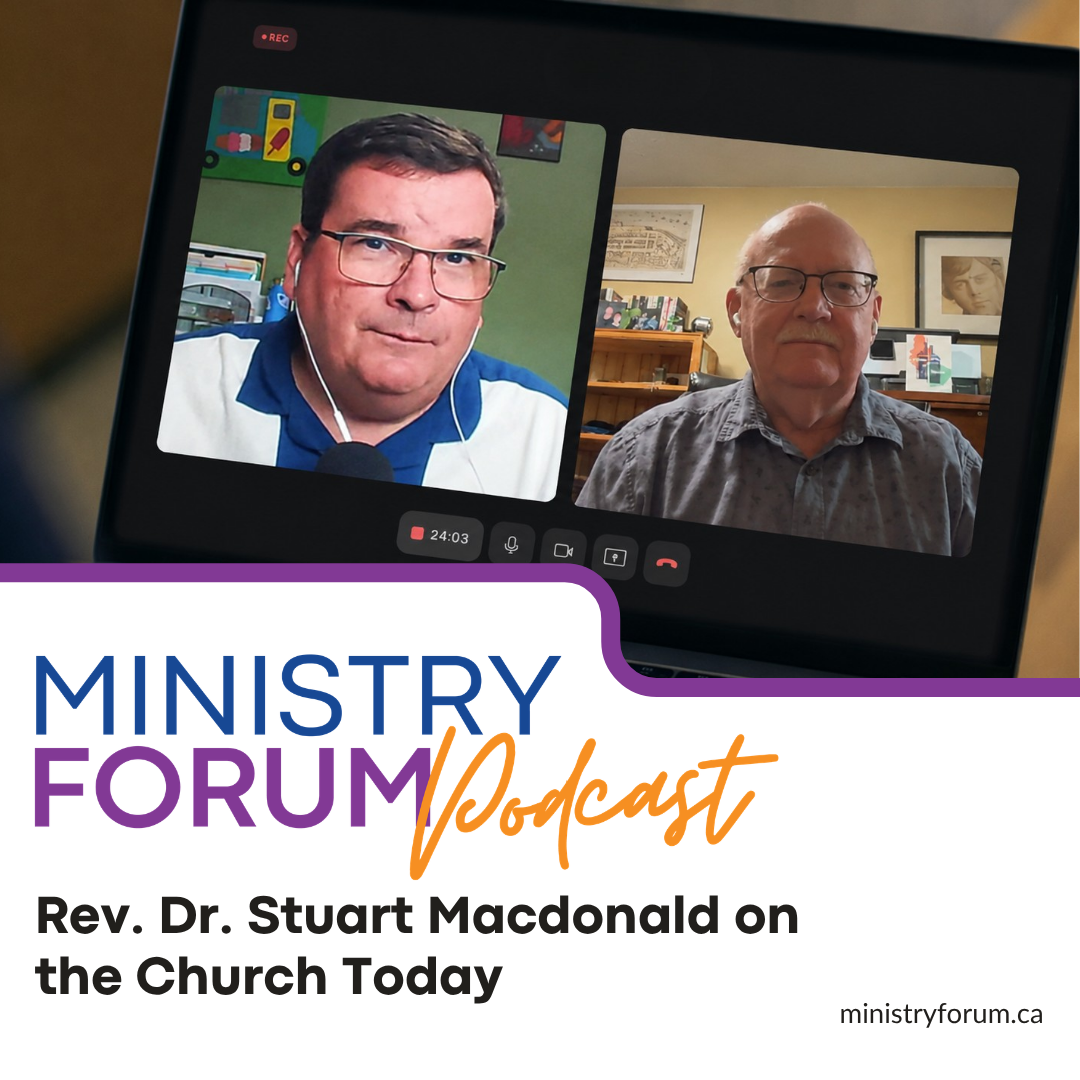
Rev. Dr. Stuart Macdonald on the Church Today
Churches across Canada are asking big questions about the future. Fewer people. Fewer resources. A culture that no longer assumes the Church belongs at the centre of public life. So where do we go from here?
John sits down with the Rev. Dr. Stuart Macdonald to talk about his After Christendom Substack and the ideas that have been shaping his writing. Together they reflect on what Christendom was, why it matters that it's ending, and what churches might need to rethink as they look ahead.
Quotables
The building serves a purpose. Our purpose isn't to serve the building.
We just assume that the only way the Christian church can exist is through these things we call congregations, and as I've been teaching congregational leadership at Knox for the last few years, what I kept stressing to students was that congregations are not that old; they're only about 200 years old. There were other forms of the church before that. We're not stuck with the particular model that a congregation has.
What is our goal? And I'm going to go back to that. It's we need each other to follow Jesus. We need to worship. We need to grow in faith. We need to invite others. And so, if that's our purpose, how do we achieve that? Are there ways of achieving that? Until we get to that, I think we're going to have problems.
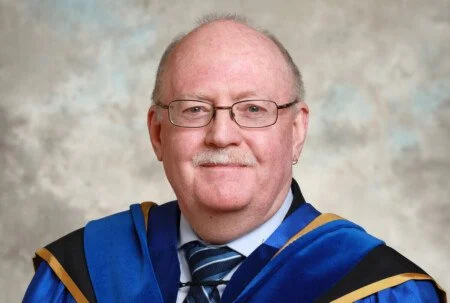
About Rev. Dr. Stuart Macdonald
The Rev. Dr. Stuart Macdonald is the now retired professor of Church and Society from Knox College, Toronto. Stuart had been a member of the Knox Faculty since 1996. His research interests and publications are focused on both seventeenth century Scotland and contemporary religion in Canada, in particular religious demography and history related to The Presbyterian Church in Canada. Stuart’s teaching areas included the global history of Christianity, the reformation era, the history of The Presbyterian Church in Canada, and the various explanations for changes which have occurred related to the place of religion in Western societies.
Show Notes
Stuart's Substack afterchristendom.substack.com/
The United Church of Canada's Toward 2035 report and accompanying resources: united-church.ca/toward2035

Tradition and Tension: The Presbyterian Church in Canada, 1945 - 1985.
In 1945 the Presbyterian Church was one of Canada’s largest and most culturally influential churches. This impressive standing, in the aftermath of a depression and a global war and just twenty years after much of its membership had departed to form the United Church of Canada, was a mark of the Presbyterian Church’s resilience and resourcefulness. Yet the denomination’s greatest challenges lay in the decades that followed.
Tradition and Tension explores the history of the Presbyterian Church in Canada from 1945 to 1985. In the first half of this period, the church vigorously built new congregations in the suburbs, revitalized existing congregations, and took part in the religious revival of the 1950s. It opened its doors to new ethnic communities, updated its forms of worship, and revised its structures to permit the ordination of women. These renewal efforts were not without controversy within the church, however. Amid the cultural aftershocks of the 1960s, and as membership growth stalled, arguments about who was responsible for the church’s waning influence widened the rift between modernizers and traditionalists. Their common vision was lost.
The place of religion in Canadian society changed dramatically in the postwar period. Tradition and Tension examines how the Presbyterian Church consciously sought to reflect these changes – and how it was transformed and even overwhelmed by them. Get the book here
Follow us on Social:
Transcript
[John Borthwick]
Welcome to the Ministry Forum podcast, where we believe that you are not alone in your ministry journey. I'm the Reverend John Borthwick, your host, coming to you from the Center for Lifelong Learning at Knox College. Here, we connect, encourage, and resource ministry leaders all across Canada in the joys, the struggles, and everything in between. I love that I get to do this work, and most of all, that I get to share it with each and every one of you. So thanks for giving us a listen today! Whether you're a seasoned leader or just starting out, this podcast is made with you in mind.
Well, we're trying something a little new on the Ministry Forum podcast today. We're having a return guest, the Reverend Dr. Stuart Macdonald, Professor of Church and Society Emeritus of Knox College, author of Tradition and Tension, the Presbyterian Church in Canada 1945 to 1985, and a Substack influencer or creator or writer - one of those things - I think Stewart is. We also know that Stewart's a… not a magician. That sounds weird. Is a musician. Thank you. There we go, and so we're playing with calling this something that we hope might be a recurring feature on the Ministry Forum podcast. We're thinking we'd call this Stewart unplugged, hopefully never unhinged, but he may get a little vexed occasionally as we talk. For these, I've said to Stuart over the bit that we're just going to press record. We're going to talk about some things he's been raising on his Substack, and if you haven't subscribed, you really should. It's a really good Substack that's talking about stuff, especially if you're Presbyterian. But he also is inclusive of other denominations and even other people who are just wanting to learn a little bit about maybe the decline of religion, or the changing of religion, or religion after Christendom. But anybody involved in ministry leadership today in today's church should could easily glean something for it. So, here we go, Stuart. Are you ready?
[Stuart Macdonald]
I am, and thanks so much, John.
[John Borthwick]
Yeah, cheers. It's great. So let's just start with a lob to you today. Why would you have started a Substack? What's going on with that, and why now?
[Stuart Macdonald]
The first question is the easier one, in the sense that last June, just after retiring, I sat down and I said, you know, I've just got this book that's come out. I've got loose ends from it that I'm tying up. What else would I like to write? Is there anything else I'd like to write? And so I just jotted down an idea. What about a book on the changes in worship in the Reformation from before and after? What about something that got cut out of the book, which was all about how church extension happened in Toronto? A tiny bit of the research made it into the book, and so I thought about all these things. And one of the things I wrote down was, what about just writing some kind of - and I didn't even know Substack, I was thinking of a blog or maybe a recorded thing - just talking about things that I thought were important in the history of the church and in ministry today. So that's where the idea came from, and I was pitching around that idea, and so I did some research on some of the forums, the places that in the past people have done blogs, and I looked at them and saw how they worked, and so I was in the middle of doing a bit of that, and one of the people I admire greatly is the economist Paul Krugman, or Krugman is maybe the better way to pronounce it, and he had just moved over to Substack from the New York Times, and so I thought, okay, this is this new platform, what's going on? And so I looked at it and I decided this is the platform to go on, and so I am going to do this, and I'm going to start this in June of 2026. Because I love teaching, and I had a great opportunity to teach two courses-one for Knox, one for Celtic studies at St. Mike's. So the it was a full winter, and I needed to add something else. Like I, I really didn't, except all of a sudden somehow - and I can't remember if it was you, if it was somebody else - how I found I saw the link to the United Church of Canada's projection of their future toward 2035.
[John Borthwick]
It's all my fault. It was me. I sent it to you. It was all my fault. Made you work in January.
[Stuart Macdonald]
I appreciate it, but it was just the thing. Like somebody needs to comment on this, and I knew exactly the kinds of things I wanted to say about it, and so what ended up happening is we just kicked it off there, and I went with the model of we're going to just throw out some things and learn as we go in terms of what this form is going to be like, and over time we're going to gradually build an audience, and then we're going to try to expand that further. And so, I didn't see any place else that was raising the kinds of questions that I'm raising, and I want to be cautious because when I've said that, occasionally I've said it not as hopefully clearly as that was. There's lots of people talking about beyond Christendom or after Christendom and those kinds of things, and I really respect the work they're doing. However, there's a certain series of things that I think we need to talk about that no one else was doing, and so to give a really odd example, I don't think anyone thinks about congregations. We just assume that that the only way the Christian church can exist is these things we call congregations, and as I'd been teaching congregational leadership at Knox for the last few years, what I kept stressing to students was congregations are not that old; they're only about 200 years old. There were other forms of the church before that. We're not stuck with the particular model that a congregation has, and the model isn't even examined. We really don't even think through what it is, so that obviously became another one to talk through, and as I've been writing, as I've been thinking about it, as I said, there's some other great resources out there, but there's some particular things that I bring to the table that I'm not sure anyone else does, and one of the things I bring to the table is having taught for 29 years of a theological college, beginning teaching the ministry of the church, ending teaching ministry in the church - kind of lovely - and I got the great privilege to teach church history for most of those years, in some form, including for most of that time teaching the broad sweep of the history of Christianity. So it gives you a slightly different perspective, and so it's not a sociologist. Great friends with sociologists and people I truly admire. Not a business consultant looking out of that model. But this is someone who's been a minister in the church, is married to a minister in the church, and has taught the history of Christianity and taught Christian ministry. Reflecting on, hey, what do we need to do now that we're after Christendom? And I'm really pleased with the title. I don't know where that came from, but it's exactly the right title, and it really is what I'm trying to talk about. How do we be faithful people, faithful congregations, faithful churches after the end of Christendom?
[John Borthwick]
So, let's talk there. Let's start there. Then, after Christendom. So, you know, for those who those who may not know, what do you mean by Christendom, and how is it ended? And should it be hard for us to notice that Christendom is somehow ended and now we're into the after, or should it be fairly obvious? So maybe give our listeners a sense of where you see this Christendom thing, and then how to unpack after Christendom.
[Stuart Macdonald]
Those are all great questions, and I'm going to start with what is Christendom, and then if I forget the other parts, we'll come back and remind. That's what we're here for. It's a
[John Borthwick]
very casual story. It's just us having a conversation. Two guys.
[Stuart Macdonald]
Christendom is this concept, and sometimes we haven't even noticed it because it was the ocean in which we swam. And I also think Christendom is the limitation, or it has a limitation on our imagination. Technically speaking, we always date Christendom from the conversion of the Emperor Constantine. So when the Roman Emperor Constantine converts to Christianity, he starts to give privilege to Christianity, he wants a common theology, so he's influential in calling the first ecumenical council - the Council of Nicaea. So, in some way, shape, or form, what we're talking about in Christendom is a partnership between church and state, and eventually, not under Constantine but under one of his successors, Christianity becomes the official religion of the Roman Empire. So that's its origins, and one of the and it has become this concept that all kinds of people-missiologists and church historians and theologians and sociologists-all kinds of people use this concept. One of the interesting things is we sometimes have an idea that it's a static thing. It's created by Constantine, and it doesn't change until we leave, and I think that's a complete misunderstanding. This is always evolving, always changing, and that's again one of the great things of getting to teach the history of Christianity is to see the fights between in the West the emperor and the Pope, and to see what happens at the Reformation and how people like our guys - Luther, and Knox, and Calvin, and even if we want to include the English Reformation there - how they all recreate a new form of essentially Christendom, where you still have state and religion in this tight partnership. And that continues, it continues even when there are allowances for other religions. When Christians stop actively persecuting Christians unlike themselves, which is at the end of the 17th century, gradually, and then they continue to persecute them and not let Roman Catholics vote and things like this for much longer than we imagine. Until you get in the New World, and as well as in Australia and New Zealand, you get these colonies that are created that have a mix of religions, and so they have to figure out, and then all of these churches have to figure out how to exist together. But they're still - I would argue - existing within Christendom. So, Christendom is created, it evolves and changes. It's remarkably adaptable. But I think one of the things that makes Christendom, Christendom is you have a partnership between the church and a partnership between the state and a partnership with the culture - or the culture is influenced by those two other things. So, for an example in Christendom, one of the obvious things is the church has a say on what morality should be (they get to say, and no other influences or more limited influences). The challenging thing, the origins of Christendom are pretty simple. The challenging thing is when does it end, and it really defines. Excuse me, it really matters how you define Christendom. One of the first actively secular states, and it existed very briefly, was the first French Republic after the French Revolution, and then Napoleon threw that over, and both made peace and beat up the Pope at the same time. There's a great book about him kidnapping the Pope. But since then, we've had a growth of competing worldviews, and the Russian Revolution made that even more obvious when the state religion of Russia becomes atheism. Now that's changed, and I should actually be precise and say the state religion of the Soviet Union under communism becomes atheism. Under Russia, the Orthodox Church has incredible influence now. But Christendom is there has to be some kind of partnership, and I could say that in Canada today we have, and this is to your latter question, perhaps why it's so difficult to see at times, is we have so many vestiges of what was Christendom continuing that we can't really get our heads around, that we don't have the influence we used to, and so we still get Christian holidays off. Churches don't pay taxes. Despite what Christians always want to say, yeah, we get occasionally a snippy word, or there's somebody who doesn't like us. And I've been in chaplaincies and hospitals where you get one angry doctor, but we still have a lot of privilege. We're not like folks in the world who their faith is something that they're either killed for, or that they have to be very private about now. There are conventions around some of this, but we're shifting out of it. But there's a lot of vestiges in Canada. Most of those significant shifts have happened since 1945. Indeed, beginning in the 1960s, that's when we see the major shifts in Canada. So that's a long answer, but Christendom was this partnership, and we built institutions that thrived in Christendom. And now, without that cultural support, without that political support, boy, are we struggling.
[John Borthwick]
Yeah, it feels to me almost like, as you were describing it, it feels a bit like that frog in a pot imagery. Like we're the frog, and you know we've been in this pot for a long time, and we think everything's just hunky dory. But someone's been turning up the heat for quite some time, and now it's not going so well, and we're feeling a little well. It's feels a little icky.
[Stuart Macdonald]
Yes, and they've been changing the shape of the pot or something like that. But the real changes in in Canada are quite recent. I think that's important for us to recognize. Yes, but we learned how to compete with the Roman Catholic Church and with Pentecostals and with Anglicans. We all learned how to get together, and we had immense privilege. This is different, and the two things that are often seen as indicators of the change (and I'm not the only one who talks about these). But one is the Centennial Worship Service in July 1st, 1967, which is an entirely Christian service with a Jewish participant. But he, but he's only there because he's part of an interfaith group, so it's incidental and accidental versus the Swiss Air Service. Not too many years later, where they couldn't get any religious elements into it. I mean, and that happened within 30 years of each other, 20 years of each other. I can't remember the exact, but those things really represent a fundamental shift. But the other thing that confuses Canadians - to go on for just a second more, because I think your question is absolutely spot on - is we always look to other countries, and other countries have a different path and a different tradition. So the UK, the United Kingdom, and specifically England - I should actually be precise -England is very different. The Church of England continues to be a state church and has a role in England that is not true in of the Church of Scotland or the Church in Scotland. So that's one thing that is confusing for us. Another thing that's confusing for us is the United States of America, where there is among many other realities there is an active attempt to go back and make a very vigorous Christendom, and actually Christian nationalism. Another way of thinking about it is an attempt to create a Christian state, which we should be careful about because if we're Presbyterians, we tried to do that in the 16th century in Scotland, and there's ways that you could talk about Canadian Presbyterians trying to create that in the early 20th century. So we haven't been perfect on this, but there is a real attempt to recreate a Christendom where you have the state and the church in lockstep, and even defining which churches are allowed or not allowed. I think one of the most chilling things to happen last year, and there were many chilling things to happen, was when the Secretary of Defense refused to have allow Roman Catholic worship in the Pentagon, as was tradition on Good Friday, because the American president and the Pope were in a spat at the time. So that's a particularly interesting, and there's there are voices very much egging Hegseth on, on that one. So, all of which is to say, it's a complicated picture, and for us just to focus on Canada and our reality, that's not something Canadians do well.
[John Borthwick]
Yeah, and yeah, because we always like to. I always joke that, and this isn't original, but I always joke that the definition of Canadian is we're not American, and that just seems to be such a lame definition that we offer. But it's interesting you point out the two different kinds of worship services because I think the public practice of faith is a good indicator of where we are in the barometer of our faith life or faith expression in a country, and what came to mind for me, and I would have to get you know folks who listen to the podcast please fact check me, but especially since I'm going to reference the United States of America, but if memory serves, you know, talk about a tragic, traumatizing event for a nation. Swiss era was definitely that for many people in Canada, but 911 when 911 happened in the USA, if memory serves, at the Washington Cathedral they had a service and it had representation from all like various religions and faith communities. If memory serves, I have the sense because I remember it struck me. I think it struck me as meaningful. Like, wow, they've done a really good job of trying to be inclusive of the varieties of faith expression in the United States of America. And then I put that alongside, dear God, the celebrations, as it were, that the worshipful celebrations that happened just within the last month or two in the United States of America in celebrations or 250 anniversary and the presentation of a varieties of Christian expression as a way of just as you said I mean it's all interconnected with Christian nationalism but just a very different world we're in. And I actually have a good professor friend of mine who, who is going to be doing some projects with us at the Ministry Forum related to Bible study, Dr.Derek Suterman, he's from the Mennonite tradition and teaches at Conrad Greybull. He said he taught a class - one of his classes this year - He had no idea that he would actually, at some point in his career, at a Mennonite seminary, be showing pictures of Pete Hegseth, the Secretary of War in the United States of America, his bare chest. Because he's tattooed, and he's got all these tattoos. And Derek talks about how you can read all the way through all of the tattoos all over his body, as essentially a narrative of essentially Christian nationalism since its start. He's got stuff about the Crusades. He's got scripture that's connected to a variety of different militaristic views of Scripture and the Bible and God. He said it's just fascinating. So, we are in a different world, and I say all that to sort of speak to the ways in which I thought it was interesting how you said that when we're in it we don't really realize that we've gotten out of it. And then we become, I think, in a way, you said something along the lines that we're reactive to it. And I think what I hear for those who have the, I would almost call it like a the fragrance of Christendom, maybe like a scent of it, because the dominant demographic in the Presbyterian Church in Canada and many in the mainline are of a people who I would interact with when I was in congregational ministry who would speak about say the role of the minister or their memories of the minister, and it was often fixed in a time frame of like the 1950s to 1960s in their early working life. So I can remember the guy who said to me when I first came to Guelph in the newspaper was that I had just come to Guelph and had just started a business and this was my business address and everything else and then a nice man with a with a nice hat and a collar came and came to my shop and said, "Hello, I'm the minister from St. Andrew's Church, and we'd like to invite you to worship”. Or the dear lady who her husband moved into town and was a teacher, and she was outside working on her lawn. And that same minister with the nice hat and the little collar said, "Hello, I hear you've just moved into the neighborhood. I'd like to welcome you to join us at St. Andrews”, and so in their minds there was a different context that really got locked in place. I feel like, and so for them there's definitely nostalgia that plays into that, but also a fragrance of what it used to be. So as if people aren't thinking in a nuanced around terms like Christian nationalism, some might actually look at something like the United States and have a sense of well, at least they're willing to stand up for their faith publicly, and it would be like, oh, okay, well, yeah, that could be, because we just don't see that anymore. Because and you do that - we're not going to delve into this today - you talk about it in your in your Substack, people often target Sunday shopping, and you know taking prayer to the schools as being the end of Christendom. We can talk about that another day. But there's a sense that those are the things they think about the ways in which we've not been allowed, we've been excluded, or not been allowed, or there's been we've been prevented from being outright Christian in our communities, and that's a real narrative that's that needs a lot of unpacking I think.
[Stuart Macdonald]
Absolutely it does, and I think the other thing it speaks to - this is a feature of Christendom - that we really don't think about and don't know how to talk about, and that's within Christendom, everyone was expected to have a faith of some kind that was Christian. They activate whether they activated it and acted on it or not. And so, if you did move into a new community, that was an opportunity for a church (and usually one close to you) to reach out, and you would actually know what a church is. You would have walked through the building, you would know what to do in worship. You might not know Anglican worship as much if you were Presbyterian. You would know the United Worship and probably most Convention Baptist worship. So there was a commonality, and so what was fascinating was there was always this sense that there are more people out there, and we just have to reach them, and we have to convert them, and some of the language of conversion, depending on where you were and which part of the theological spectrum you were on, not only within Canadian society but even within the Presbyterian Church, or the United Church, or the Anglican Church. Sometimes you talk about born again, but often you would just talk about engaging that people or getting a conversion experience. People would go to listen to Billy Graham because they all had some kind of Christian faith. So before, that's what Christendom was. After Christendom, absolutely not. And that's the thing that I think those people you're talking about have no sense of. Well, as a minister, why don't you just go visit the new people? They'll want to come to church. No, they won't. Their parents didn't go to church. Maybe their grandparents did, but their parents didn't go to church. They've never been through church, because the other thing we need to talk about and recognize is - and while this is short in terms of the sweep of Christian history - it's long in terms of the history of our denomination. This started in the mid '60s, and we've just seen it grow out. And so, one of the Substacks that you know that I did a couple on was talking about when this break happened and what this break meant, and it was generational that people who are about my age (baby boomers - were not young) most of us are in retirement, if not shuffled off this mortal coil. I mean, at 68, I'm near the tail end of the baby boom. So just think about how long that is. Actually, I think I'm 69. Yeah, I'm 69.
[John Borthwick]
I have the same problem. I spent an entire year thinking I was a certain age, and I told someone, and I said, "No, you're not that age. You're this age. I'm like, "Oh wow, okay,
[Stuart Macdonald]
Yeah, so I've lived most of my life watching this happen. I'm old enough, and I'm just a little older than you, so I'm in. No, I was going to be more gracious because you're quite a little bit younger than I am, but I'm old enough that I remember. I actually do remember the boom years of the '50s in my home church, and I remember feeling at the time in the early and mid '60s, there aren't as many people in Sunday school here. What's going on? And so for me, this is lived experience as well as stuff that I've ended up spending a huge amount of time researching and trying to understand. So this is both new, but boy, the patterns are set, and after Christendom, people don't have religious memory. After Christendom in Canada today, a huge percent of it of the population claims to have no religion, and that was under 1% in 1961. So we've just got to deal with a completely different context, and when I look at reports like Toward 2035 or other things that denominations put together, I just want to say: Could you not simply say we're no longer in Christendom? Could you not admit that and then say, okay, now what do we do? And most churches haven't thought through that they were built for Christendom. The United Church of Canada, perfect example, but the Presbyterian Church in Canada was very much successful there and is built to be successful there, but is not built to be successful afterwards. And so it's raisin, what are some of the things that mean it won't succeed in this kind of environment? So it's raising some of those things and questions.
[John Borthwick]
And what do you think, when you say that, because it was purpose built, what do you think needs to be renovated or rebooted, if the church is to move effectively into this after Christendom season, are there a few little sprinkles you'd want to share with this audience today?
[Stuart Macdonald]
Yeah, and you'll know that I raised a few, and I continue to raise it, and I want to just say here, one of the dangers, and we've been seeing this from the 1960s on, definitely in the 1980s in the church growth movement, definitely since then as well. Is that people have what I used to call an idea on a shelf or a box that you'd break down and then implement this program - program on a shelf kind of thing - and it would work. So, I want to say I don't know what the solution is. I have questions, and I have observations, and I have things that I think we need to take seriously. So I don't know how we solve this. One thing I think we need to put right front and center is money. Our financial model is not working. Now, the financial models have always been awful, and this is what people don't realize that that back in 16th century Scotland, at the time of the Reformation, what were they fighting about? Is money! That's what's in the first book of discipline and all this kind of stuff, and funding the church appropriately has always been a challenge. Let's acknowledge that, and where the church has not generally been able to finance itself simply from the offering plate, that's just a reality, and certainly not from a voluntary offering plate, where I, with someone who's very generous, very privileged, get to choose how much I throw in, and I throw in $10 and feel good about myself, and without any understanding of what it actually costs to run a church. Now I'm exaggerating, but I think there's a lot of clergy if they're listening to this might be agreeing with me that we haven't thought this through, but that's the model that we inherited. It worked when we were in Christendom, where you had a lot of people who might not come this year, but they'd still send the equivalent of $1,000 to the church a year, and so if you have 1020, of those people, you've just filled the hole in your budget in many of our congregations, right? So, and there were those people. Let's just be honest; they didn't come necessarily, but they gave a little. Sometimes they gave more generously than the people who did come every Sunday. It doesn't matter. The model wasn't built for a small group of people supporting a building and professional clergy, and so we have to talk about that and think about that.
[John Borthwick]
Well, I remember a while back in congregational ministry, I was talking to somebody who essentially had been a nonprofit leader in a variety of different settings, and we were just talking about the reality in the church and stuff like this. This was about maybe a decade ago, and I remember him saying, "So, so how does the church get money? And I said, "Well, they pass a plate, and he said, "And that works, and I'm like, well, we think it does. What are the other alternatives? I'm like, no, it's just we pass a plate. And this was pre- pre authorized payment and whatever all the different iterations you could have, or like a QR code that you could scan. Not to say that those things weren't available. In the culture at the time, they just weren't happening in a church. You passed the plate. He said, "So if somebody's not there, they don't give you any money?” I'm like, "Well, yeah, pretty much, unless they mail it in or something, and his point was, "You've never thought of other ways of funding the church?” I'm like, "No, it's the model we have”. And he's like, "Well, that's that's interesting”.
[Stuart Macdonald]
Well, and what's interesting is that in tradition and tension, I talk about Price Waterhouse Coop. I think it was Price Waterhouse Coop. It was one accounting firm looking at the church and doing an analysis and talking about the business model, and they just didn't get that the national church was also funded by voluntary offerings and I mean they just thought, well, you know, people vote for this stuff, but they don't pay for it, and they, I do not think they ever got that through, and I think what the church did in response to that is just rode around that whole part rather than taking seriously the issue that these people have raised. So let me talk about some alternatives. Patronage, you get one person who gives a lot of money. I'm not saying it's a good thing, but it's what happened in the 17th and 18th and 19th centuries in in in Scotland and in England and in other places. And if you want to see the downside of that. Just watch Downton Abbey. How the clergy is very much under the Lord's wing.
[John Borthwick]
Chocolate I think is the other movie that has the yeah the rich person who's paying for the minister and wants to tell him what he's allowed to preach.
[Stuart Macdonald]
Exactly. So there's a downside to that. Let's be honest. Absolutely. Yep. But the other thing is, how do other organizations pay for it? Membership. If you want to vote, you pay, and this will horrify Canadian Presbyterians and probably United Church people as well. But we have to talk about this because what I see happening, and one of one of the things I see in toward 2035 is not talking about things like this. But then saying, okay, well, so maybe we don't need clergy, maybe they don't need professional clergy. Well, maybe we don't. But what is determining whether we need professional clergy? Is it a vision of the church, or is it what you think we can afford? And your real value is you can't imagine anything other than passing the plate. I don't belong to any organization where I just pass, where I just give what I want to, and I've been part of all kinds of organizations that have raised money in different ways. Sometimes you contribute to the charity. Sometimes you're involved in fundraising. You commit to it. My kids were in a very competitive, very professionally run choir, we paid dues, we actively fundraised. Yeah, that was the expectation. And the sports that my grandson's involved in, all of that stuff. Why can't we think about it? Is there a verse in Scripture, or do we make up these things? And this is where the lack of imagination, John, I think, is one of the things that is really restricting us. And I don't see a lot of imagination in the conversations around how we exist, how we continue to be God's people in this after Christendom state, and so the Substack is in many ways throwing out all kinds of ideas on this. The other (and now I'm going to be radical and say something I think the Presbyterian Church in Canada could do) with closing churches. The Presbyterian Church in Canada has more resources financially than it has had many times of its history, so it could identify in different regions of the countries particular churches and not give them a little bit of money, but give them money and make them a church that supports Christian faith in that particular region of our country is accountable for that money in a in a way that again we'd have to create that, but we can do that. But take it seriously and invest money, significant money, rather than giving everybody $2,000 and hoping they limp along.
[John Borthwick]
Indeed, Stewart unplugged.
[Stuart Macdonald]
Hopefully, not unhinged. Not yet. Not quite yet.
[John Borthwick]
Yeah, it's interesting that you say. Yeah, a couple of different things there related to, I've always been fascinated where the church, I wonder if part of the resistance is you know our typical things of we've never done it that way before, how people view membership, because you know I think in the church the dialog has always been, I'm a member therefore I shouldn't have to pay anything for anything, and so like and the collision with CRA, the Canadian Revenue Agency, when it's kind of this thing of like no no, because you know it's like when the tax people understand how membership works, but the church doesn't. You know, it's this idea of like you cannot create tiers like just because you're a member of a church, you don't have to pay for these services that this organization offers. But there is that sense of like because I'm a member, I should be able to do this, that, or the other, and it's often related to money, and where the challenges there would be. I've often wondered, and it's a challenge, of course, but you know if we did invest in churches that were thriving in whatever definition you want to use for that, but we're doing fairly well because I know so many churches across the country and in various denominations. But if we stick with Presbyterian, that are doing that that are doing fairly well, and but man, they're still under resourced and could just, in a way, could do so much better and increase the capacity of their own minister, increase the capacity of their ministry in the community if they were just able to have a kind of like a top up somewhere, you know, and where else would that come from other than the other resources that are out there and what that would look like, because yeah, spreading it thinly doesn't feel like a really helpful
[Stuart Macdonald]
Yeah, I was out preaching at a church that I thought was wonderful. One of my former students was there. I think they're doing great, and he's doing good work. Let me be clear: we have divergent site theologies, but people are doing well, right? And this is a good church was great, and they got a grant because they had a major expense at the church, and they got a grant from the national about a couple of grand. And I'm going, why don't we just pay for it and let you guys? Because you guys are doing good work in this part of Ontario. You are one of the churches that is a bright light, but now you have the other $40,000 or more to come up with. What is that going to come out of? And one of the other things that's going on in the Substack that I think is subtle but very there is I also want to have a positive vision, and so I think one of the things that's lacking in much of what we're doing in the churches. So we're all upset, we've got towards 2035, we've had whatever the Anglican equivalent is, the Evangelical Lutheran, or the Presbyterian. We're all trying to survive, why? Why are we here? What are we trying to do? Are we a building preservation society? What are we about? And so, there's been a couple of times in the Substack where I've gone at that directly, and here's where I find myself using religious language and using it intentionally and unapologetically in a way that I would have for a whole series of other reasons not done 40 years ago, but I'm saying now. We follow Jesus. We're trying to be His disciples, and what does that look like? And what do we need to do that? And what I need is you! I need other people, I'm convinced of that. We need to worship together. We need education, and we need to invite other people in. So, I think we have to get to a clear purpose, and I think one of the things that the church is struggling with is they have other purposes that are irrelevant. They're trying to preserve, you know, back to our whole thing about the money. Well, we've always done it this way, but that's not our goal. Let's put that on hold. What is it we need? A, B, C. Supporting each other in faith, and that's what the church is about: worshiping God, learning about our faith, and inviting other people to join us. Part of my understanding of invitation is, and if they don't want to, but they can partner with us, in causes for good within the broader society, that's part of it as well. And so, for my friends who are not Christian, (which I have a lot of) if we can work together on building a house in the community or doing something about poverty or some other things that we hold in common, let's do that. I think once we have a clearer sense of what it is we're about, then I think we have a clear sense of what it is we need to preserve. But those conversations, again, maybe I haven't seen them happening in these other places, but broad tent denominations have a hard time coming there. Because they have so many different theological and theological sometimes is as much cultural as it is actual deep theological ideas about who we believe God to be, and so I think we need to begin with a purpose. And one of the challenges for us is we don't have that now, and so it's one of the themes that runs through, as I said, below the surface that pops its head up sometimes very directly, other times it's always there. But the way to live after Christendom is to be clear about what you're trying to do and what you're not trying to do, and that's really challenging for churches and congregations that are confused, and understandably, and ministers who are confused, and understandably. But I think that's why we have a hard time letting go of things. The building serves a purpose. Our purpose isn't to serve the building.
[John Borthwick]
Yeah, and that's a pretty controversial statement in these days, right? The number of times I've heard in churches that you know “our goal is to keep this church going for as long as possible”, but then when you dig deeper, of like scratch the surface, it's like, but what does that look like? What's happening inside the church building? How is it serving your needs? And like you say, I think I've often said that part of the part of the challenge around creativity, from what I've learned over my lifetime in the areas of stress and trauma and all those kinds of things, is you know, we're an anxious church. And when we're anxious, when we our thinking brain isn't there, and our creative brain is diminished, and I do think that part of our struggle is, is that in essence of like we're just anxious about the future. We just want it to be the same. We want it to be fixed. We want it to be better, but we don't have any creativity on how to make it there to get it there. I remember a line I used to give the congregation that I served every so often was,there were several lines. It was a “you recognize that something has changed. You recognize that you might need to change. The truth is, you don't know what those changes are. And the greater truth is, if you didn't have to change, you'd like that a lot better”. You know, it's not exactly the best prescription for change management. You know you have to change, but you don't know what it is. But you actually you'd prefer if you didn't have to at all. Like some magic thing would happen with the toward 2035 document that came from the United Church did. What I found interesting about that was how they put it out there as a denomination, and we don't have that kind of document from the Presbyterian Church in Canada. We have a best guess of what how things are going. It's not going great, and we do appreciate your work in at least sort of showing us how the graph is going and how things are happening. But what I found interesting about the materials that were sent out by the United Church, and with all due respect to my United Church siblings, I was just curious that they basically put this out there and then encouraged congregations to have chats about it. And for me, it felt like a very jarring thing to encourage a congregation to have a chat about because the numbers, if you do check them out, and we'll have them in the show notes, we'll have the link to view it because it is a public document. Yeah, I mean, pretty jarring to have to have a conversation about. At least they're talking about the reality, but yeah, what are your thoughts on that?
[Stuart Macdonald]
Yeah, and I intentionally edited out all of my screams of frustration at listening to the response given the numbers. What I did, and I, if I recall correctly, there's about three posts on that. One is to describe what they found, and the other saying is actually worse than you describing it, and the other was saying it's even worse than you describe it, and so let's stop and look at what the United Church of Canada has found. They are projecting that in nine years, they will have a membership of 111,000, and they will have 89 congregations across Canada that will have full-time clergy. In 1992. they had 767,000 odd members, and that was down from about a million at their peak in the mid 60s. And so, one of the things I made it bigger was saying you guys are looking at too short of a timescale, starting at 92. Look at where you were at your peak - this should be setting off alarm bells! And I remember Tom Harper, the late great religion editor for the Toronto Star. And I used to disagree with Tom on all kinds of things, but bless him again, another symbol of Christendom. We had one of Canada's major newspapers who paid a guy to write about religion, and he was really good at it, even when we disagreed with him. But he was really good at it. But I remember him saying, and this would be, I think, when I was a congregational minister. So, before I arrived at Knox College in 1996, him saying of any other, so the very beginning of the statistics that the UCC cited, any other organization, if you presented numbers like this, the board would ask you for your resignation. So yes, I edited out completely the column, just that the response is not what is needed, and I'm open to reaching out to people, and I'm open to talking and getting collective wisdom. And in some senses, the Substack has set that out that way. I'm not telling you what to do. I'm just saying here's what I think the problem is, and putting down intelligent facts, hopefully, and then let's figure this out together. So I'm not opposed to that. The lack of a sense of this is a crisis, but again, what is the purpose of the United Church of Canada in 2026, and again I raise that with my United Church friends, and we do have a significant group within the readership of the Substack at the moment - I'm hoping to expand that is from the UCC. And what is the purpose of your denomination? When the UCC was founded, it had a clear purpose. It was a Christendom purpose to make Canada a Christian Protestant United Church of Canada denomination, the Church with the soul of a nation, to quote and possibly misquote the title of Phyllis Erhardt's wonderful history of the United Church of Canada in that period, but they had a purpose. What's your purpose now? Now, if your purpose is to be the inclusive church, if it's to be the LGBTQ church, those are all good things, and and bless you for it. I think there has to be more. But if you have that as your defined purpose, that would be good, and as I watch the website, that seems to me to be part of it. But I also think you want to have that within a framework of following Jesus. And when I look at the UCC's website, I don't see as much of that emphasis in a way that would be helpful, and so I think the lack of purpose, first of all, the lack of urgency that this is okay troubles me. The lack of purpose is something else, but I think what is happening with many churches is we've hit the iceberg. They know we're going down, and it's just trying to see if we can sink the boat at a slow rate and keep it level rather than at an angle. And I know that's a harsh thing to say, but there's times when you read a report that says you're going to have 89 full-time ministers in a church that believes in an educated ministry in nine years, and that's okay?! Well, it's okay because, and so, what are your values? What was it? I'm worried about this as well, John… and this is a bit of an aside. People seem to be just going well, whatever it takes to keep congregations, to keep the boat level. Why did the reformers go for an educated clergy? Why did John Wesley go for an educated clergy? Because Wesley, for all of his interesting flaws and wonderful things, he believed that people should be like him. The clergy needed to have an education. Now we can talk about what that education should involve. I can be as critical about Canadian universities and theological training is anyone. Not the issue. What is it that we believe? Why do we need this? And if we don't think we need it any longer, that's fair. We can keep costs down. But what if we do think it's essential? Then we go back to how are we going to pay for this? But if you don't know what it is you're doing, if you don't know what your purpose is, you can't make any significant change, and that's one of the things that I think is stymying toward 2035. It has bothered me that we have now said to every congregation, you have to have a mission statement, you have to have a purpose. We've essentially said to them, you have to do it on your own. And I hadn't realized until I did the research for toward for the book for Tradition and Tension that that wasn't the way it used to be. It's been that way most of my ministry, not 100% but there was a sense of movement. But right after the war, the Canadian Presbyterian Church had a clear sense they were going to be the Reformed denomination in Canada because they thought that Reformed Christianity had something to offer Canadians, and they were going to be that for every ethnicity, not just people from north of the Tweed, not just from Scots. They were intentional about reaching out to everyone. Now, a lot of Scottish immigrants, some of them ended up in the Presbyterian Church in Canada, there were Dutch immigrants who immigrated and ended up there, and German and English and many others. But it's a Canadian church; they wanted to be Canadian, and so I think after Christendom, those questions of having a purpose are even more important, because I don't think you will start to adapt until you know what you want to do. The worst thing you can do … So, if you're a hiker, one of the things you know is you have to know what kind of hike you're on and what equipment you need, and if you don't know that, and you think you can carry all of this stuff with you, you will not make it anywhere, because you'll have the wrong gear. You'll have too much stuff. When you're in the Camino, you decide whether you're doing it as a day hiker, which we did, or you're carrying everything from place to place, which many people do. Bless you, that's great. But then you have to make sure you have only what you need. You know what you're doing. You know what your goal is to get there. I have to do this. You know one of the fascinating things about watching people on the Camino and listening and reading blogs and stuff, which Gail thankfully did, is realizing the toll that it takes on your feet that you need to rest every so often. So I use that as a metaphor because I think that's if you want to get somewhere, you have to know where you're going, how you're going to get there, and what you can and cannot take with you. And in Christendom, we didn't have to make those choices; we now do.
[John Borthwick]
Well, and a couple of things that strike me as is interesting in all this is when you talk about the crisis that we're in more and more I'm hearing like you say if it's if in the United Church you're saying. There'll be 89 full time clergy by within the like in nine years the reality that we're facing in many of our press releases in the PCC is. Is not having enough people to do the work of presbytery, and you talk about absolutely being purpose built for Christendom. Presbyteries were built for a Christendom model that assumed full time clergy in 20 - 30 churches, and so the work of a presbytery was the work of those 30 ministers and 30 representative elders, and now we're in a situation where half the congregations in that presbyter are vacant, probably a quarter of them maybe part-time, and now we're leaving it up to just a few clergy who are full-time, and are and in many cases those full-time ministers have a full load in the church that they're serving and in some cases, are having thriving ministries, but they're also being pulled into the work of presbytery and denominational things and stuff like that. I do see that as a real human resource crisis in our church right now, and I don't have the solutions for it either. But I do wonder what that's going to look like over the next nine years. The other thing that's interesting to me is what I think I hear you saying is that we need we need kind of like a national leadership on what our purpose is because I do I would agree with you I think there's been this sense of like it's kind of up to you and every church does their own kind of thing and some churches do nothing as they just do what they do, they don't really think too much about the why behind they're doing it, and I just wonder, like in my experience of the Presbyterian Church in Canada, we have a vision statement, we have these kinds of things, but I don't think anyone really knows what they are, or they're not really all that tangible for people. So I wonder what your thinking is around like a national vision for the for the PCC.
[Stuart Macdonald]
Well, I think we've articulated that it needs to be a national vision, and I think we've articulated some of the problems. I also am not sure we're there yet in terms of even being ready to have the conversations, because I think, and I'm not blaming anyone at the national office on this one particularly. I think they reflect the denomination as a whole, where everybody's just trying to keep the ship sinking on an even keel, and I think until we decide that we need to get off the boat, get into the lifeboats, and go somewhere else, I and I think that's what the conversations about what we need, what we need to leave behind, are so crucial. And it really is what do we need to leave behind? What do we need? What is our goal? And I'm going to go back to that. It's we need each other to follow Jesus. We need to worship. We need to grow in faith. We need to invite others. And so, if that's our purpose, how do we achieve that? Are there ways of achieving that? Until we get to that, I think we're going to have problems. The other thing that we have to speak of directly is the fact that the Presbyterian Church of Canada is a very divided church. Probably more divided than the United Church of Canada, and I think the Anglican Church would be closer to us. and I don't know the Lutherans nearly as well, and those are the churches that I kind of think with some - Convention Baptists here in Ontario - and I keep calling these historic Protestant churches. I'm rejecting the term mainline, I'm going to lose this debate, but I think it's an important debate. I think it's important to get our terminology. So we have our roots in the Reformation. We have our roots in that tradition. What is it we take with us? What is it we abandon? And where I think we are really divided on issues not only of sexuality, but let's also be clear that those issues are reflective of, in many cases, not all, but in many cases, different approaches to scripture, different approaches to culture, and different sense of whether we can get back to Christendom or not. Because I think there are congregations, there may be evangelical congregations who are trying to leave Christendom and bless them. I sometimes get more the sense that if we get this right, we'll go back to the glory days. I could be wrong on that, but that's what I get the vibe from some, not all, I want to be clear, there's some folks who are really doing great stuff from on all wings of our denomination. But those divisions and how they work out for us in a polarized situation sometimes make cooperation and discussion about some of this really, really difficult, and that's why I think we need to probably have more of a theological conversation. Than we've been able to do, and I think those theological conversations can't just be the church doctrine committee. I think they have to be the entire church again, and I think they have to have perhaps not a hot button issue that's basically an ethical issue in front of us, but an issue that's more the purpose of the church or how do we read scripture? And I know doctrine has done some stuff on that. I also think that one of the great dangers, and I've been on too many church committees, and this is why I love writing a Substack, is I don’t have to compromise. I get to say what I want. I've written stuff for committee reports where I've had to pull back, and that's the nature of it. And I don't begrudge that, but I think we need sometimes we just need to hear a voice and a different voice about where we're going, but without always compromising. And I think on some things we need just to be clearer, and so I, I think we have to get there. I'm not sure until we've had more foundational conversations how successful that will be. It still astonishes me how many people in the Presbyterian Church in Canada still think we're in Christendom, or we should go back and can go back. Though I've said this on numerous occasions, forgive me for being repetitive. The reaction when Brian Clark and I published our book, "Leaving Christianity”, the reaction that surprised me most was the denial that we got the numbers right, and that denial was not from my professional colleagues, even my evangelical professional colleagues, who would disagree, but there was a respect that we got a heck of a lot of it, if not all of it right, if not all of it, most of it right. And I have presented in front of audiences in the PCC and just been told I have it all wrong. And so, and that speaks to what we do and don't do with numbers. We always agree with the numbers when they agree with us, but when they don't, we know we discount them, and there's a history of doing that that goes back. Tradition and Tension mentioned a bunch of times where that happened in the denomination. No numbers are ground you in a reality that you need to pay attention to. There are over 24 percent of Canadians now officially say they have no religion according to the census, and I'm sorry I don't have that number right off the top of my head, but it's significant, and that's an undercount. And so, how do we understand this? How we think about it? How do we deal with it? Those are the conversations I think we have to have, and some of them are sociological, but also after that, we have to come with a theological response. How do we then share our faith in Jesus with these people? How do we build our faith in a culture that is indifferent? And in Christendom, we didn't have to do that. We had the support of the culture. I don't even think we're comfortable with the idea of people being indifferent to Christianity, and so we need imagination. So, I think we need to begin the conversation. I don't know where and how we get there, but I think our arguing over ethical issues and hot button issues, which is what we seem to have done for a long period of time, is not, it's that's not going to be easy. We should choose an issue that we all, in in theory at least, can agree with, and then see where our where we disagree. That might tell us a lot more about who we are.
[John Borthwick]
Well, Stuart, I'm sure there's going to be lots more conversations about this. I appreciate that you've created a space and place where people can engage in dialog and in conversation with you as you post your regular posts on Thursdays on Substack. I think that's great. I want to point out one thing that that I found fascinating as you've described it. People often we always use the poor Titanic. We often use the Titanic, and I talk about you know we're often layering on today's ministry leaders, this I call it Titanicking, that you have to bear witness to the Titanicing of the church. But what I found interesting from what you said is, you know, people are pushing back because they think or want to be able to allow for a gradual sinking, and isn't that how the Titanic was actually designed? It was designed. Designed with watertight doors that were compartments that they imagined, and this is where I let me play with this for just a second, just to amuse myself and maybe you and maybe one other person in the Ministry Forum audience. But when we think about you know the church has been designed for a certain kind of thing, the Titanic was designed for a certain kind of maritime disaster, meaning one little one little fracture in one panel, it wasn't designed for multiple panels to be impacted, because the one panel was it would it would fill up with water and then it would spill over the next one and then it would spill over the next one, and it would allow the ship just to sink like as you described, and they would allow for more time to get more people off. It would allow for more time for people to be rescued, the ship to be rescued, blah blah blah blah. And isn't it fascinating that with the Titanic, they didn't expect to be having that kind of incident, but it was designed for something else. And I wonder if, in summary of our little conversation today, you know the church was designed for a very specific thing, and as you say, we are after that thing. And now, what's the new thing? How do we adapt? How do we recalibrate? How do we how do we think about things differently? And it will take that creativity, and that creativity, I think, comes from dialog and conversations. And I'm so grateful that you're putting some of that out there, and I look forward to a future conversation where we can thank you very much. Maybe go deeper on your Substack, or allow you to go a little off script here and there where you've where you've done your Substack.
[Stuart Macdonald]
Thank you..
[John Borthwick]
So thanks so much, Stuart.
[Stuart Macdonald]
Thank you.
[John Borthwick]
Thanks for joining us on the Ministry Forum podcast. We hope today's episode encouraged you and reminded you that you are not alone in ministry. If this episode resonated, tell someone. Please don't keep us a secret. And if you can, subscribe, rate, or leave a review wherever you listen. It helps us reach more ministry leaders just like you. And honestly, it reminds us that we're not alone either. Find more resources and ways to connect at ministryforum.ca and follow us on social media @ministryforum. Until next time, may God's strength and courage be yours. May you be fearless, not reckless. May you be well in body, mind, and spirit, and may you be at peace.