
Transitional Ministry
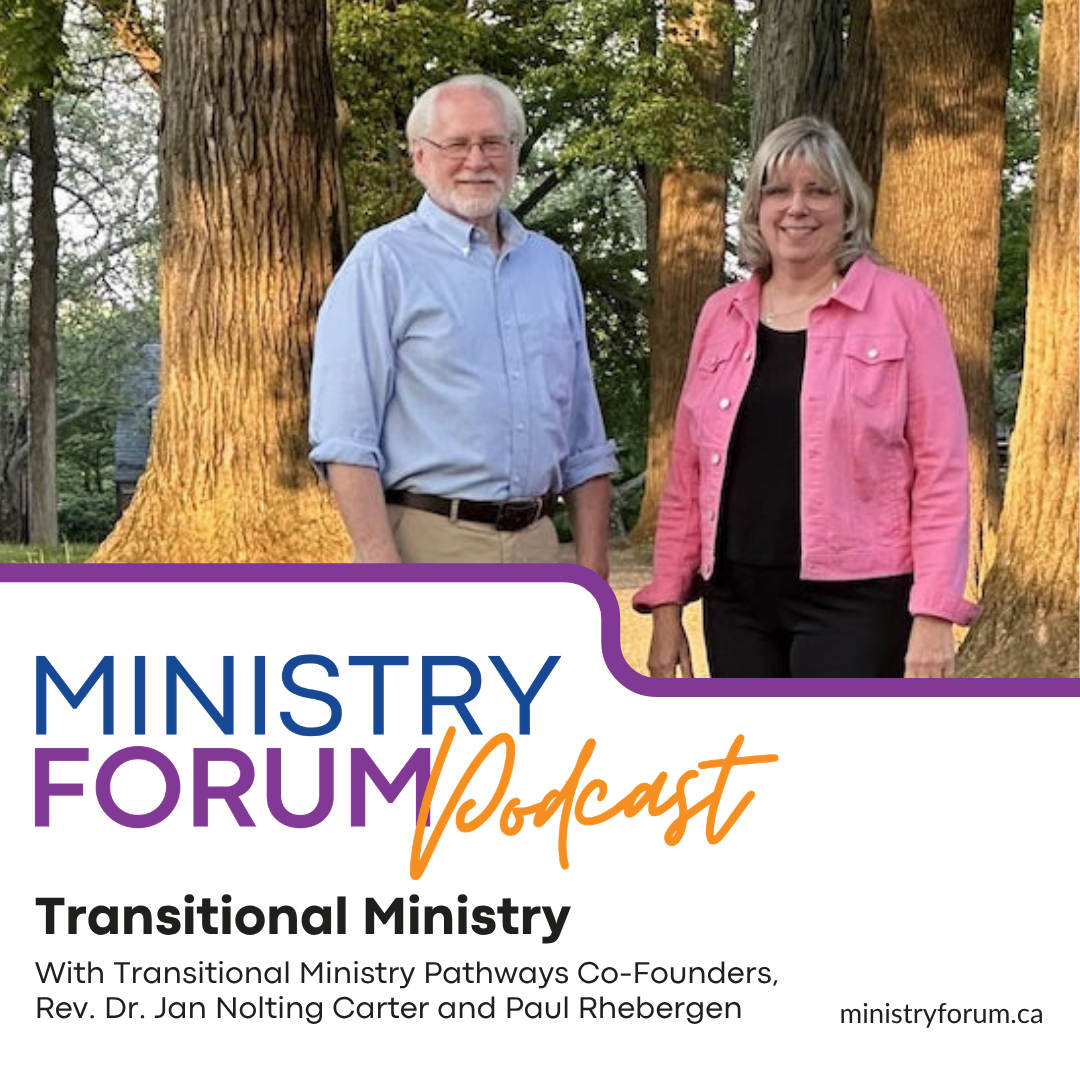
All ministry is transitional… In this recast of a Ministry Forum webinar, Jan and Paul from Transitional Ministry Pathways invite us to think differently about transitional ministry. They explore how grief, conflict, congregational identity, systems, and discernment all shape the life of a church, and why paying attention to those things matters long before a search committee is ever struck.
Change isn't something that only happens when a minister leaves. It's happening all the time, in every congregation.
Quotables
"Congregations have lost their sense of the why they are doing things."
"Change is God's continuing creation. It's the river the church floats upon."
About The Webinar
We start with the premise that all ministry is transitional. As pastors, we are called to be a part of bringing about the kingdom of God. As leaders, we are called to guide congregations and ministry systems with intentionality, seeking to be ever more faithful to God’s call to us in this particular time, in this particular place for this particular purpose.
This webinar outlines the fundamentals of intentional transitional ministry and invites participants into exploring more deeply what how the pieces fit together in our current context.
Key Learnings:
Understand the elements and movement of intentional transitional ministry;
Understand the systems challenges and anxiety in the midst of change;
Imagine the intentionality of leading through change.
About Transitional Ministry Pathways and its Co Founders, Reverend Dr. Jan Nolting Carter and Reverend Paul Rhebergen
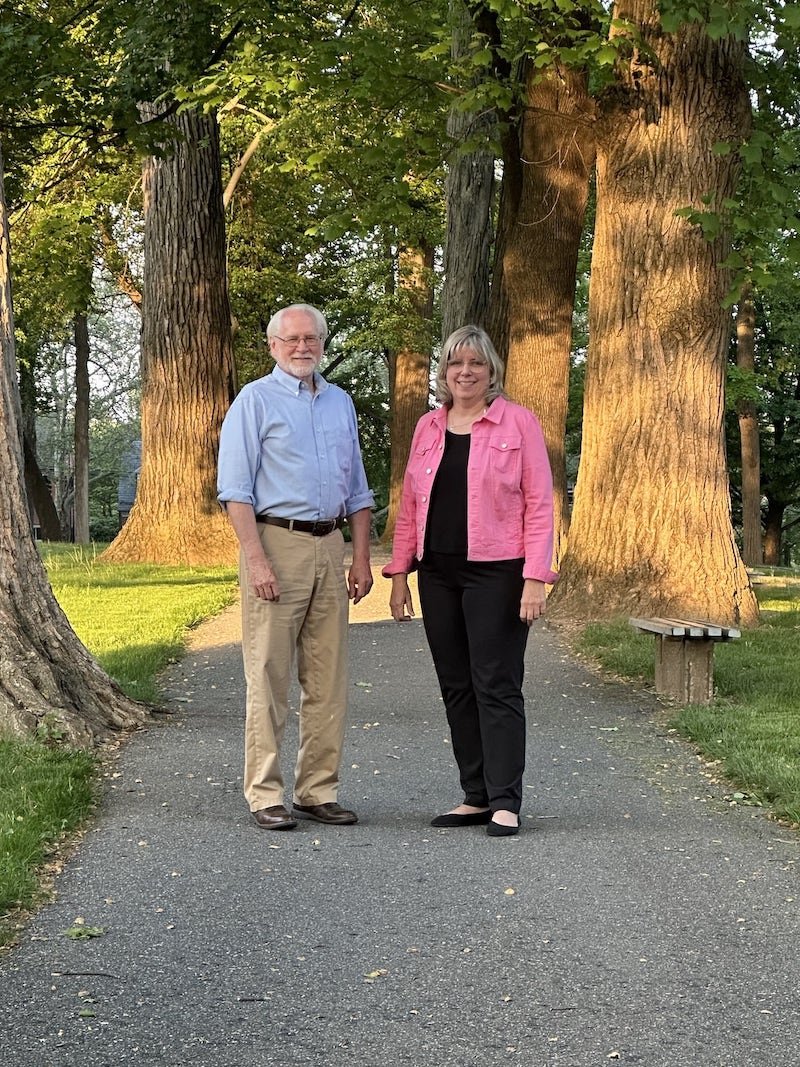
With over 75 years of experience in ministry and thinking about transitional ministry, Jan Nolting Carter and Paul Rhebergen work with pastors and congregations engaging in intentional transition through teaching, coaching and consulting. Together, Jan and Paul have taught Transitional Ministry, first at Pittsburgh Theological Seminary and now through Transitional Ministry Pathways at The School of Global Citizenry. Ordained in the Presbyterian Church (USA), Jan and Paul have served twenty-two churches separately–large and small, urban, suburban and rural. Together, they have been responding to the changing needs of the church, guiding transition through consulting and exploring new models of intentional transition.
Show Notes
Request the full webinar download here: ministryforum.ca/webinars
Transitional Ministry Pathways, Jan Nolting Carter and Paul Rhebergen: https://tmpathways.com
The School of Global Citizenry: https://sgcitizenry.com
Follow us on Social:
Transcript
John Borthwick
Welcome to the Ministry Forum podcast, where we believe that you are not alone in your ministry journey. I'm the Reverend John Borthwick, your host, coming to you from the Center for Lifelong Learning at Knox College. Here we connect, encourage, and resource ministry leaders all across Canada, in the joys, the struggles, and everything in between. I love that I get to do this work, and most of all, that I get to share it with each and every one of you. So thanks for giving us a listen today. Whether you're a seasoned leader or just starting out, this podcast is made with you in mind.
Ministry Forum audience, we’re delighted to bring you another recast in our mission to bring relevant resources to you. Today we’re listening to a webinar funded through the Lilly Foundation grant we received last year, and we invited Jan and Paul from Transitional Ministry Pathways to help us explore the theme “All Ministry Is Transitional”.
Now, you may understand transitional ministry in a different context. It was called for quite a long time interim ministry, but now the phrase that's used more often is transitional ministry, and that's exactly what Jan and Paul spent some time in a live audience talking about for ministry leaders just like you. Now they outlined several kind of what they were calling puzzle pieces to understand how the basics of how transitional ministry works.
They talk that through in the webinar, and then there’s time for Q&A, they offer practical considerations for those thinking about transitional ministry in the context where you are planted, thinking about systems, and thinking about analyzing things around grief or lament or dynamics that are causing some challenges as you navigate change in those places and spaces, and this webinar and the reason for this recast is to hint at something we may be developing through Ministry Forum with other ministry partners in our area.
We’re hoping that we might be able to bring Jan and Paul into our Canadian context and to help us have perhaps a training, network, or gathering to talk about this transitional ministry piece. And so, stay tuned for what that might look like. We're hoping that you'll be interested and curious about that. We're hoping that this will be a meaningful experience for those who are able to attend. You'll hear more about it through our Ministry Forum communication channels. If you’re only a podcast listener, we hope you’ll subscribe to our weekly email. We’d love to have you as part of our growing community.
So, without more words from me, let's hear from Jan and Paul from Transitional Ministry Pathways as we listen in on their webinar from a little while ago.
Jan Nolting Carter
It's a pleasure to be with you, and we're so glad we get to spend this time together. Just a little further introduction to myself. I used to say I ended up in transitional ministry by accident, but we all know that the spirit was at work. I've been ordained for nearly 30 years as a minister in the PC (USA), and for the last 20 years, I've served eight different congregations in a transitional capacity, large and small, rural and urban, thriving and wondering about sustainability. Since 2023, Paul and I have worked together through Transitional Ministry Pathways, teaching, coaching, and consulting.
I bring a particular interest in systems and the dynamics of women in leadership to the conversation, as well as a passion for adult education. My passion for adult education was first nurtured when I taught high school social studies. I live in Allentown, Pennsylvania, and I'm the mother of two children, Seth and Sarah, both of whom are in the midst of their own transitions. One will graduate from college this year, and the other will graduate from high school. And we have been in your part of the world. Looking at the University of Toronto, that application was submitted. In fact, will be submitted, I think, today. Paul?
Paul Rhebergen
So I am a transitional pastor by being a trailing spouse. My wife is also ordained. She received a call, and I needed to find a position. The only position available was an interim associate pastor, so that was my introduction to transitional ministry. But I was ordained in 1976 and have served 14 congregations, 12 of those as an intentional interim or transitional pastor. I've served as the pastor of two small yoked congregations in rural New York, as well as large and mid-sized congregations in rural, suburban, and urban settings.
I've worked with programmatic congregations facing diminishing membership and resources, with mid-sized congregations that have not recognized or met the changing communities around them. I've become a specialist in working with congregations following major conflict, pastoral misconduct, and following long-term pastorates. Those are not all mutually inclusive, by the way.
I've been part of the faculty of the Transitional Ministry Education Consortium (TMEC) of the PC (USA) since 2006, teaching at a number of their sites before eventually being recruited to teach at Pittsburgh Theological Seminary, where I invited Jan to join me, where we were until the pandemic, and then we took our teaching online, where we now do it through the School for Global Citizenry. I live in Hopewell, New Jersey, and I’m coming to you today from my attic there. I’m married to the Reverend Dr. Marianne Rhebergen and we have three adult daughters scattered around the eastern United States.
Jan Nolting Carter
We always start our time together with a brief moment of worship or devotion, and so we thought we would share with you a scripture that we find helpful to frame and think about transitional ministry.
Paul Rhebergen
Hear these words from Romans. I appeal to you, therefore, brothers and sisters, on the basis of God's mercy, to present your bodies as a living sacrifice, holy and acceptable to God, which is your reasonable act of worship. Do not be conformed to this age, but be transformed by the renewing of the mind, so that you may discern what is the will of God, what is good, and acceptable and perfect.
Jan Nolting Carter
Let us pray together.
Holy One, blessed are those who are caregivers, caretakers, teachers, and prophets. Blessed are those who are parents and partners and friends, and all of us who are ministers. You call each of us into our roles with purpose and vocation. We find ourselves in a world of constant and rapid transition. So much of what we experience happens to us as we find ourselves amidst a swirling context. But You call us beloved and call us to create beloved community, an intentional way of living that counters culture and empire.
You call us by name as individuals, and You want us to claim our identity as Jesus followers, Easter people, your beloved who love others as You love us. Guide us to dream dreams and see visions of what that looks like here and now, grant us peace and courage to be faithful to your call and to serve your people. Weave your spirit among us in this time that we share together.
We ask this in Jesus' name, and we say together, Amen.
Paul Rhebergen
So, we will begin today with a basic idea that all ministry is transitional. Transition can be unplanned, caused by circumstances that impact us, or intentional, as a congregation shifts in response to its particular purpose, time, and place. What we mean by transitional ministry is that we recognize that change is happening all around us and within the congregations, and transitional work takes place continually alongside those changes, so that there is intention and direction.
What do we mean by change? Well, one thing is that change is God's continuing creation. It's the river the church floats upon. Our ministry shifts as we flow from placid waters to rapids, and we’d better have some idea of what we’re going to do before the waterfall comes.
Transitional ministry is the ability to be intentional about those changes, working consciously in our ministry to respond to the changes continually affecting the particular congregation we’re serving, and to respond to the events and circumstances that congregation finds itself in.
Ministry takes place for a particular purpose, in a particular time, and in a particular place, and it is important for us to remember, as the King James Version tells us in Proverbs, “Where there is no vision, the people perish.” And so we work in transitional ministry to help the congregation grasp the vision for the kingdom of God, where it is and what it means to live as a beloved community.
We work to move from reaction to what is happening to us and a perspective of sustaining what has been toward a responsive approach, working with the theological frameworks of ministry and mission in the midst of change, that help us give that sense of what beloved community is, and what the purpose is for the congregations that we serve.
In our work together and in our teaching, we have come to find a particular framework of care, and we learn this through the book Another Way: Living and Leading Change on Purpose. We claim this as a guideline for any congregation and any leadership that first we have to create a hospitable space, a place where people can come to feel that it is okay to ask questions. It is okay to say what they think and believe. Finding the ways to make that happen is important. And there, once we have created that hospitable space, we begin to ask self-awakening questions that probe more deeply into what is apparent.
We all recognize that it is rare that the presenting issue is the real issue for a congregation or for an individual. That there are different, deeper things that we need to find, and we find those by asking self-awakening questions, questions of ourselves, so that we can share our response. Questions that we share with others, so they can share their awakening.
And then it's important to reflect on the biblical story and the theological understandings that the people have for why it is they do what they do, what is the story of this congregation that we can most directly connect to for the ministry and purpose of the congregation, and then out of that hospitable space, out of the awakening, out of the reflecting that we do, we are able to find the next most faithful step or steps. It's not the end. This is a continual process, and so each step takes us more fully into what another way has described as beloved community.
And beloved community is what does it mean to live the gospel of Jesus Christ within this context, within this community, in this particular time. So it continues to evolve over time.
Jan Nolting Carter
We're going to share with you some puzzle pieces of our understanding of transition, and we're going to frame that with the understanding that transition is, in part, a kind of helix or a continuous process. It is not a cookie cutter process. We're going to offer you puzzle pieces. There are ways that those puzzle pieces fit together, but we think that these processes are intertwined, and that's why we call our classes the art of transitional ministry because we think in all of us as Practitioners of intentional transition, we need to cultivate nuance. We need to equip ourselves with tools and a variety of frameworks of understanding so that we can appropriately respond to the congregation and the situation in which we find ourselves. Paul?
Paul Rhebergen
The first of the puzzle pieces for transitional ministry that we would emphasize is the continuing care for the congregation. Care is a part of living as the beloved community, and we would observe you cannot move forward with intentional transition without a system of mutual caring among the people of God, and the pastor, the pastoral leadership provides the models and helps establish the systems for caring.
Notice that I’m not talking about the role of the pastor is only pastoral, but is helping the congregation, no matter what the size, reflect on its way of caring for each other and establishing systems that expand that caring, and can even expand it beyond the limits of the congregation. But the first part of our understanding of the process of transition is making sure that the care of God is shared with the people of God. It’s also about building the leader’s credibility within the congregation, in part; it's creating hospitable space for engaging with others.
And as one of the books I had in seminary put it, it is “paying the dues”, so that you are able to carry out ministry more fully later on. That book also talked about a congregation will send the most difficult people to you first to see how you react.
I don't share that with the congregation, but my experience is that it's true, that the people most in need are presented to you as a pastoral leader first, as a test for how much you can care, and how you respond to them helps establish how you will be able to work with that congregation over the course of your time, and that's true whether you're called and installed, or whether you're a temporary stated supply or interim transitional pastor.
Continuing care for the congregation is the bedrock, the foundation, for the work of transitional ministry.
Jan Nolting Carter
The next piece is what some of you just talked about. Intentional transition includes mindfulness of the embedded grief within the congregation and an attentiveness to the system's dynamics within that congregation.
I’ll talk about grief first. Most congregations are carrying systemic grief in varying ways. The first church that I served carried grief about the conflict prior to the arrival of the senior minister that I worked with as an associate pastor. It was probably about five years before the stories about the grief of the conflict prior to his arrival started to recede.
Every time I visited people, I'd hear the story of the conflict and the pain involved with what had happened there, and I also heard woven into that stories of the times when the balcony was full, a time that was always referred to quite wistfully. And interestingly, those two things did not happen at the same time, but because of the grief involved, there was a kind of knitting together or convergence of grief around those issues. So, naming the grief and encouraging storytelling is part of the grieving process.
It's also important to be a student of systems and to know your Bowen theory, and to keep studying it, and learning more about it, and learning more about yourself, and learning about your own triggers, as well as the congregation's triggers. At the most basic level, you need to understand how triangles work, how cutoff happens, the role of sabotage in a system and an attempt to create homeostasis, the way manipulation plays out in the congregation, and you need to know and remember that all systems are interested in creating homeostasis or a balance that is the way that system has always operated; so in order to create change, you need to understand how these systems work, in order to move them even a little bit.
Paul Rhebergen
We use many different lenses in our work as transitional leaders in congregations. Jan has laid out a couple of those: the lenses of grief, the lenses of family systems’ theory. But we have identified some others that we use in our work and in our teaching, and among those are the traditional focal points, or developmental tasks of the congregation if you go back into the origins of transitional ministry or interim ministry.
That provides a framework for our understanding of the work that we need to do, coming to terms with a history, discovering a new identity coming to terms or connecting to ministry partners that used to be connecting to the denomination; we recognize in our current environment that many congregations have many different ministry partners that need to be identified and connected with, and there are others to connect with, and then allowing needed leadership changes and committing to a new future.
Those are the traditional scaffoldings of interim transitional ministry that we have built additional work understanding of that work in our in our ministries as transitional leadership.
Care, another way’s depiction of the creating a hospitable space, asking self-awakening questions, reflecting theologically and biblically, and identifying that next most faithful step and taking it, that's another framework that we use, lenses that we look at as we work with congregations.
Roadmap to Reconciliation 2000 is a book on change that is targeted in the present, as opposed to the past, and is based in connecting in different ways within the congregation and with the community. A powerful tool for using that. Jan's talked about grief, and the book When Steeples Cry is an important resource for us, and recognizing that as we deal with the grief, it needs to be expressed and heard. There needs to be conversations at the work that have become the work of mourning. That the grief and loss is dealt within the worshiping life of the congregation, that community building around those issues is important, and the compassion of caring for one another, but also then expanding that compassion, outward is important.
One of the congregations I served had gone through an incredibly terrible conflict. The stories I could tell of that conflict would make you quiver in place, I think. But and it lasted long, and my work with that congregation was first identified as healing work that needed to be done, and consciously working to help that healing before we could move on to a place where we could begin to explore what the vision for the future of that congregation's ministry was. I'm two years, no, I'm six years into that transitional position, and I have a woman stand up in the midst of the sharing of prayer concerns, who speaks of her loss in the midst of that conflict, the loss of friendships, the loss of community that she experienced, and asking publicly for forgiveness from those that she had broken with back at the time of the conflict; that is powerful stuff for a congregation as it comes out of its grief and loss and pain from conflict, recognizing that worship is a place that happens.
We have found the book Life After Doom to be a useful resource because it deals with the environmental crisis that is weighing so heavily upon so many of our congregants and does so in a faithful way that looks beyond doom to find hope. But recognizing that our congregations, at least our experience here in this country, are having to deal with those questions in very real ways, and opening, providing the open space for people to begin to talk about that, that is important.
We use generations as a lens through which we view the issues of a congregation, recognizing that I, as a boomer, see the world in very different ways than my daughters do, than their daughters and sons would. That a millennial has a very different way of looking at the world than those who are older. Taking that into account not only in stewardship letters, but taking that in crowd in terms of communications, preaching, understandings of what community is. I have a daughter who is now 40. Who takes a religious pilgrimage every year to Comic-Con in Atlanta. If you know the world of fantasy, then you know what Comic-Con is, and she is religious in her participation in that annual pilgrimage to be with people she trusts, that is her extended community too. Much of it is online. That's a reality for our congregations to deal with these days.
And then in our work with conflict, we have found that it is important to see conflict not just in the moment, the episode, the particular conflict that confronts us, but rather to see it in longer terms and in deeper systemic issues and explore that.
We'll talk a little bit more about that later. These are all lenses that we use and layer together to have a greater understanding of the congregation that we're working in.
Jan Nolting Carter
In addition to these lenses, we also are mindful of the life cycle of congregations. And many of you may have seen a diagram like this before you may not have seen this particular one. It's a modification because it has two loops in it, and we find that particularly interesting and provocative. The traditional look of a birth of a congregation and then its rise or incline, and then a kind of peak point that you can see right at the top where it says recline. We think the things that are particularly interested about interesting about this version include that red line of delusion that we think many congregations find themselves in. They think that they are still at the peak of their life together, when in fact they are actually declining, and the cloak of denial in the system is so significant that they don't see the things that they need to see in order to address the need to revitalize.
But this also has this hopeful circle that shows revitalization and renewal and redevelopment, that comes back with the help of being intentional about supporting and nurturing innovators within a congregation, and so it's possible for a congregation to loop back and then find itself at its peak once again, but it's also possible for it to continue in its decline, and we think it's interesting that this particular diagram has this area in the bottom called compost. We think that's a generative image for what happens because after a congregation has lived a life together and has successfully done ministry, it has touched its community and it's touched the members, and that compost allows the people that it's touched to go on into the world as changed people. Some of them will go on to create other communities or be a part of other congregations, and so we think this is a helpful tool for thinking about the life cycle of congregations.
This next slide is a little bit more detail about that, and it talks about these particular characteristics that you might find within the life cycle of a congregation: time, orientation, motivation, attention focus, actions, risk propensity, governance decisions, why the people lead or serve, where do the ideas come from. You can see those questions that are in the turquoise color, and then the differences in response under the certain levels or areas of the life cycle of the congregation.
You can see the characteristics of the incline, future vision, community innovation, high risk, faith and growth versus recline, holding on present program routine, worrying about resources, looking for people to do service and fill slots, and then decline, looking to the past, holding on to a structure that may be outgrown, being somewhat complacent or indecisive, and focusing on the preservation or the legacy of the congregation. I'll let you look at this for just a minute.
Paul Rhebergen
So we understand that as transitional leaders, we are looking, working in a continuous manner to identify and claim identity. The core question, “Who are we as a congregation?” really impacts what a church can do. Often in the work of previous work of transitional ministry, I have heard it said, “Don’t ask why we do things, but rather ask what we’re doing.” I think it is crucial that we be asking the why, because congregations have lost their sense of why they are doing things, congregations have lost that shared sense of what it means to be faithful, and so they focus on existence, which has meant a loss of shared sense of purpose.
It is important that the congregation identifies its why. It can be found in the biblical story that most resonates in the lives of the people of the congregation. It can exist within a vision statement that clarifies where the congregation, but those often become stale and lose their meaning in the face of the need to sustain one's identity as a congregation, one's existence.
Jan Nolting Carter
This next puzzle piece is reading the context, we feel really strongly has two different dimensions to it. There is an interior look at the congregation and an exterior, outward-facing look at the community in which it exists. The look inside the congregation would include intercultural dynamics as well as the history of the congregation. What is the congregation’s story? What does the congregation ultimately want to carry forward, and what does it want to leave behind?
One of the most powerful ways of accessing stories about the congregation is to do a history exercise of some kind, and I have a few pictures here of one that we did with a congregation that we were consulting with over the last two years. These are just several panels of the history exercise, but we had five different lines and five different questions that we asked this congregation. The top line was about the pastor and any memories or stories that people had around the pastors at different moments in time. The second one was about when those who were gathered joined and what stories they had about the joining with the congregation.
The middle line asked was about When was the church most like the church you think it should be?, and the one after that's in red is when was this congregation least like you think the church should be? The next line was grief. Where does this congregation hold grief, and what are the stories and issues around that? The last line was major world events. And so we asked the participants in this exercise to use color coded post it notes. It seems very tactile, but it’s extremely useful. And so they wrote their stories on the post-it notes, and then they put them in the blocks of time, and you can see that there are clusters of response.
Some of them were because this particular group was skewed to people that had joined in that time. But the other is that there were more things happening in the congregation. You can almost overlay the life-cycle map of a congregation with a timeline exercise like this. You can also help those who are gathered to own and name the conflict and the tough times in the congregation through that powerful question, when was the congregation least like you think the church should be?
This particular group that gathered had a giant aha moment when they realized what we had figured out in all of our interviewing, that 20 years ago there was a major, major boundary-crossing event in this congregation, and they had managed in many ways to sweep it under the rug. But this was a time for this particular congregation to name it, to claim it, and to have a few beginning conversations around what happened then and what the residual effects of that experience were on that congregation. It’s a very powerful exercise.
It’s not just internal. And in fact, we have found with some of the congregations that we have worked with that congregations have a tendency to stop just there. They want to only talk about the congregation. They want to talk only about themselves. And while that's important work in transition, it's not the only work.
One congregation that we were working with in a consulting fashion in the last year literally could not have the conversation about who their neighbors were. In fact, we had initiated the conversation, and it was a good 45 minutes during an in-person retreat where they debated with increasingly rising voices in tone and intensity about what their neighborhood was, and we named that. We said, "“Have you listened to yourselves? Did you see that? Did you see what just happened?” You are so intense about having a conversation about what your neighborhood is, and this was a church that started as a neighborhood church, but had grown, as many do, to be a church that drew people from the region because they had joined 20, 30, 40 years ago, and then as time went on, they bought houses that were further and further away from the neighborhood, but they came back to the congregation.
And so having a conversation with that congregation about what their neighborhood was, involved the layers of having the conversation about: Where is the church located? Where are we located? Where are we serving? With whom are we called to walk in ministry with? And that was a very wide ranging congregation this particular church is in Ann Arbor, Michigan, the home of the University of Michigan, and one of the things that they did was sell parking spots for University of Michigan football games, and so they had this ministry with people who came from all over the state, and sometimes all over the country, to park in their parking lot, but they also had ministries that were right down the street.
And so, for a very small congregation, struggling with its understanding of who it is in this time and this place, figuring out what the neighborhood is, what the community needs, and what are the capacities within the congregation to walk with the community and address the needs that it has? Those are all things that that congregation has had to circle back to because in their discernment process, they just couldn't do it, but they found over time that's something that they can't skip.
Paul Rhebergen
One of the pieces of the puzzle is conflict and knowing yourself in conflict and knowing your congregation or place of ministry in conflict are important. So, we would emphasize for you that continuing to train, to educate yourself about conflict and your place in conflict and how you respond to conflict is important. In our class, we start with a question: How did conflict impact your family of origin? How did conflict impact your family of origin and work with some of those dynamics to understand what triggers me in a conflicting situation and how I’m triggered when I encounter conflict.
So that's important for you. But we've also come to recognize that looking at conflict as an issue or a particular situation to be resolved or managed will only take the congregation so far. The conflict transformation is an important part of understanding our work. John Paul Lederach's work in this has been crucial to us in our understanding. Lederach’s work reminds us that we need to recognize that particular issues and episodes fit into a larger pattern, a larger history and system of conflict. The congregation that was noted in that timeline exercise was confronting us as consultants in a very angry way. Parts of it were.
When we got into the timeline event and recognized the longer history of the congregation, we found that what was happening now in this particular time of transition mirrored what happened 15 years before, mirrored 20 years before that, and 40 years before that. The repetition of conflict is crucial, and so when we respond to conflict as leaders, it's recognizing that deeper history. So resolving the particular issue isn't going to change the pattern, unless the personal, relational, structural, and cultural spheres of the conflict are identified and responded to.
Knowing your own response to conflict, what triggers you, and how to become a less anxious presence in the midst of that is important. There are times when our main role in ministry is to be the least anxious presence in the system at a particular time and around particular issues. For me, as a consciously transitional pastor, that means I may have an idea or know a resolution for the congregation at this particular time, but providing it to them is not going to help them. They need to find that and work into that themselves.
Knowing the levels of conflict and how you respond differently to the different levels is important. Developing your own skills and ability to work at different levels of conflict is crucial to the vitality of your ministry.
Early in my ministry, I trained as a civil mediator, and then again later as a child and family conflict mediator, and then even later as a congregational mediator; those skills have helped me continually throughout my ministry in working in the midst of conflict, to mediate the situation, so that we can then ask the questions and delve more deeply into the patterns of conflict in the congregation and what those deeper issues are. Sometimes they're theological, sometimes they're historical, but help knowing that we have to delve more deeply is crucial to our work with conflict.
Jan Nolting Carter
So, how do we do this work? There are particular roles in transitional ministry, but as we said, all ministry is transitional. So, this work of transition and the intentional approach is appropriate for called positions, as well as called and installed positions, but there is a growing way of working with transitional ministry, and that has been for us as being called an intentional interim or transitional pastor. But increasingly, because of changing dynamics in congregations and the inability of congregations to pay a full-time pastor, or the inability to call a trained interim pastor, individuals who are in supply positions, or designated pastors, or contracted pastors, or even commissioned elders, are being called to do intentional transitional work, and so we, in our education, are finding that we're having a greater and greater diversity of participants in our classes, particularly among commissioned ruling elders who are taking our training with us.
The other thing that's happening is that we've mentioned that we've done some consulting, and in the United States, some presbyteries are having a really hard time recruiting interim pastors or having enough interim. pastors within their bounds that can serve churches, and so we have started a consulting model where we have helped those congregations go through the journey that we have shared with you, and use these puzzle pieces, but at a distance. And so that's one of the reasons why we start with figuring out how to care for the congregation, because those on the ground need to address that as a systems’ dynamic.
We've also found ourselves needing to support the leaders on the ground. So sometimes that's a leadership team, or the clerk of session, or the session as a whole, or sometimes a subset of the session that's acting as the acting head of staff; we've been involved in helping those congregations figure out how they're going to keep the ship going, which is an essential part of ministry. How people will be attended to, how preaching will happen, and things like that. And then we, at a distance, have done the consulting work of the discernment process and the thinking through of the issues that the congregation needs to address.
There are still other models that are going to need to be evolved, and we've been in the process of having some interesting conversations about what that might look like, so that with great care, the work of transition can be attended to, but maybe not in the most traditional model. I was telling Paul a story. I saw some church that I know has had a pastor for 40 years, and that pastor just announced that he is retiring on November 22, 2026. He's going to stay in place. He's going to continue leading that congregation, and they're hiring an outside consultant that essentially is a search firm, and that gives us pause.
Congregations that are seemingly stable, and that have some disposable income have the capacity to do this, but the challenge is that some of the work that's so important is the identity of the congregation here and now, and I fear that when that model is embraced, that a congregation like that will not have the opportunity to figure out its identity in its future that is apart from this faithful pastor that has been serving them for the last 40 years.
We like to share an arc of transitional ministry, and so we're going to walk you through this arc, mindful of the helix and mindful of the sort of looping nature of this, but also sharing with you that there is a process that we engage in to help congregations move through thinking of who they are. So the most important part, in many ways, is entering into the system. If you're a pastor that's new to this process and new to this particular congregation, that's a time of getting to know. And what we try to do is be thoughtful about doing as many interviews with as many leaders as possible.
So we start with the obvious leadership of those who are on the session or the board of trustees or the deacons, depending on the governance structure of the congregation. But we also ask those individuals who else should we be interviewing, because not all leadership is formal. We ask the same questions of the people that we interview, and we take copious notes so that we can go back and identify patterns in what we're hearing, as we learn more and more about that congregation. Always at the end of that sort of getting to know process and the interviewing, we take a step back and we analyze, and we figure out what the patterns are.
What are the things people talk about most? What are the things that concern people most? Where did we hear stories of embedded conflict? Where did we hear about the grief? And what are the issues that are facing this congregation? At this step, we often offer a list of things to talk about to the leadership of the congregation. I used to say it with a nod to David Letterman the top 10: the things that need to be discussed in the time, the intentional time of transition. Some of those things are technical in nature that need to be addressed. Perhaps it's the right-sizing of the leadership team, or perhaps it's putting policies and procedures into place, or perhaps it's about straightening out the finances. Those things need to be addressed in a time of transition. If it’s a transition between leaders, one of the operating questions is How do you want to leave things for the next pastor? You want to create a situation where the next pastor will be as successful as possible.
So, are there things that need to be addressed in the time of an interim, where an individual can absorb some of the heat for the decision instead of using the emotional or social capital of the next pastor to do some of those things? Maybe it involves straightening out a staffing situation. Maybe it involves firing somebody. Those kinds of things are best addressed in a time of transition, and then we make recommendations.
So in agreement and partnership with the leadership, what are the issues that we're going to address together? Those things need to be discussed and need to be narrowed down because it's possible that the things that bubbled up were too many for that congregation to deal with in this time of transition; this is when you start making some distinctions about what is adaptive change and what is technical change that the congregation needs to address.
Paul Rhebergen
That is work that we do with leadership early in the process, and work that I do as an interim transitional pastor entering that system and finding out about it. As consultants, we also do that work and come to those recommendations that Jan has been talking about for early in the process with the leadership of the congregation. We also feel it's important to go much more deeply with the whole congregation, and so we work both as an interim transitional pastor in place and as consultants, to create a discovery or discernment team that works with the congregation to learn about who the congregation is and its vision for the future.
We have a process that we have developed for selecting a team that represents the breadth of the congregation and avoids just drawing from the leadership of the congregation. I would observe that if there's been a long-term pastorate, your session pretty much represents or reflects the personality of that long-term pastor, and it's important to create some distance from that and do the discovery to create the hospitable space for asking the questions about the future, so that the congregation can reflect biblically and theologically about where it is going. So we form this team.
Now I would note that in very small congregations, it may not be possible to have a separate team. You don't have the resources to do that, and your ruling board may well be your discernment team.
But in a in a functioning congregation, the session, the ruling board needs to be very conscious of keeping the congregation’s ministry moving forward and fulfilling the needs of the people at this point, and creating the discovery team, the discernment team allows them to do that work apart from the challenges of the day-to-day maintenance of the church's life; so we encourage the discernment team to look at the demographics of the congregation and the community. Here is one of the places where that intercultural questioning needs to take place: Who is around us? Are they like us? How are they different from us? Is the makeup of our congregation similar to the makeup of the community we're looking to serve?
Those are questions that the demographics and later on the interviews and surveys can take note of. We encourage a congregation or the discernment team to set up a survey for the congregation to measure its interests, its values, and its understanding of what makes the gospel real in their particular context. We recommend several options to the discernment team for carrying that out.
Discernment team works with the ruling board, the session, to provide the funding for that and the working of that survey into the regular schedule of the church's life. We also encourage them to set up a series of listening sessions within the congregation to interact with as broad a portion of the congregation as is possible. We encourage those to be both in person, but also allow for online opportunities, recognizing that the reality for many congregations is they have a significant and underappreciated portion of their congregation that connects to them online, so that's an important piece of that.
The survey and listening sessions, and we also encourage the discernment team to do community interviews and walk or drive through the community, so they observe with their own eyes who they are interacting with. Here is another place where that intercultural reality needs to be asked. We're talking with a pastor recently who did a walk through his community with some of his elders, and they were in a community where there had been four active congregations and were now only two, but they noticed there were now five psychic sites, businesses in that same community.
That's a significant piece of information for that congregation as it looks ahead. So, what are the things that they can observe, and then interviewing people from the school system, the mayor, fire, police, to find out what the issues are in the community that they are having to deal with, and how those might impact the congregation. The discernment team then analyzes all of the data that it's brought together. We had one church recently use AI to read through the results of their survey. It was interesting to see how they responded to that.
They the discernment team actually chose to dig more deeply themselves rather than just go with the data they received, but the analysis is important, and then drawing conclusions about the identity of the congregation, who we are, what's important to us, and what we hope for in the future, and if it's tied to a pastoral leadership change, what would be valued in that next pastor, and what's needed to carry out the kind of ministry we're talking about? It's a description of the congregation now, and what the why of the congregation is, and then it moves them forward.
The reason we use a discernment team is that it helps the congregation own and value the results. The report the team draws up for the leadership board or the session includes recommendations about directions to go, and then it's handed over to the session to enact and to do the necessary planning and for the carrying out of it. The session then has information from these different tools to help guide them as they move forward.
I would like to point out that the process we’re describing, and the pieces that we've identified for you, indicate that this is not a fast process. A good mission study takes four to six months. But what the value of that is, it helps line out what is needed for the future, real change takes time. It's critical to recognize that, and our job as transitional leaders is to work with the congregational system to manage the anxiety, while the people do the work, and we guide them through that process.
John Borthwick
Thanks for joining us on the Ministry Forum podcast. We hope today's episode encouraged you and reminded you that you are not alone in ministry. If this episode resonated, tell someone. Please don't keep us a secret. And if you can, subscribe, rate, or leave a review wherever you listen. It helps us reach more ministry leaders, just like you, and honestly, it reminds us that we're not alone either. Find more resources and ways to connect at ministryforum.ca and follow us on social media at ministryforum.
Until next time, may God's strength and courage be yours.
May you be fearless, not reckless. May you be well in body, mind, and spirit, and may you be at peace.