
Interview with Rev. Dr. Michael Brooks
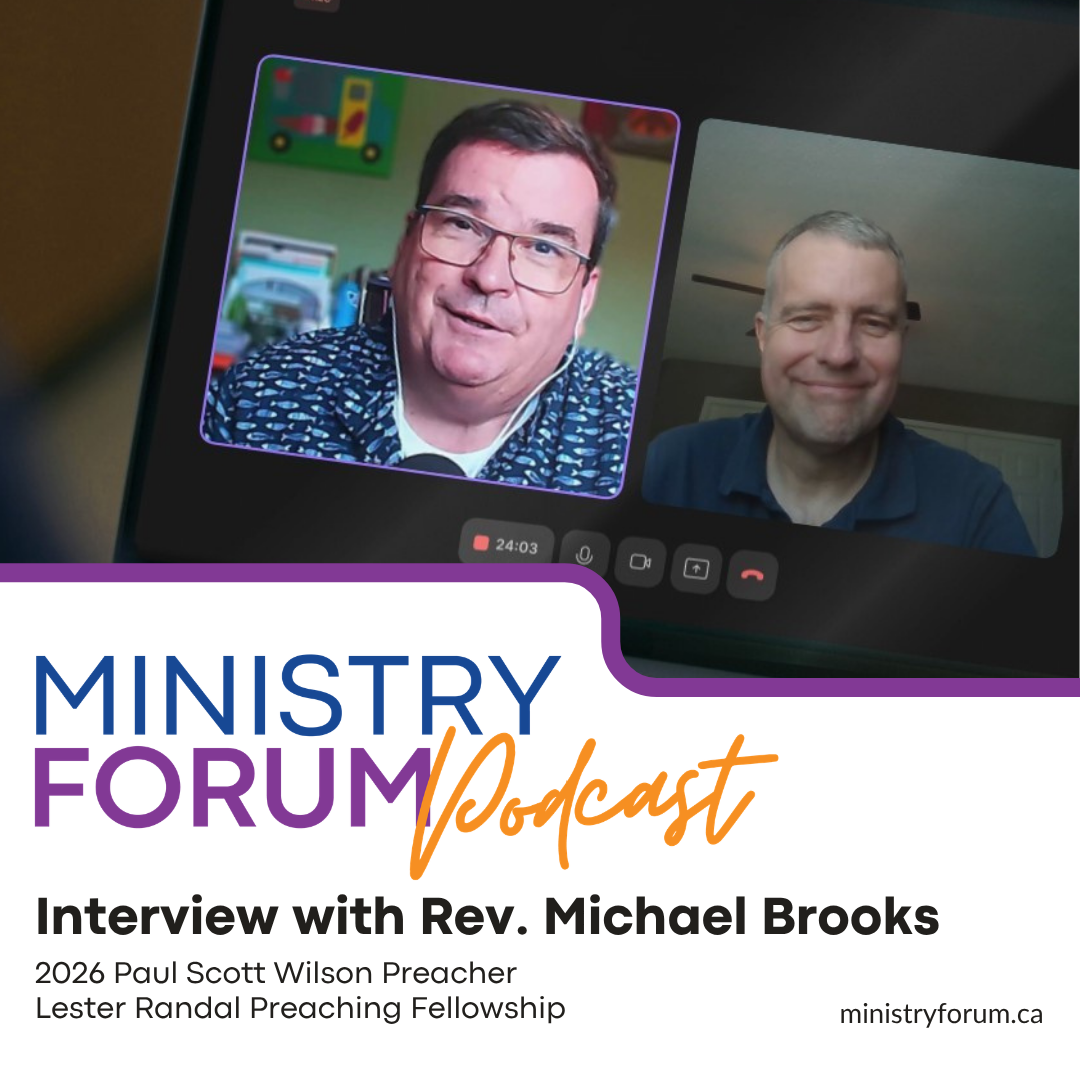
In this conversation, John sits down with the Rev. Dr. Michael Brooks, recipient of the 2026 Paul Scott Wilson Preacher Award, to talk about what sustains a lifetime of preaching. Together they explore the importance of relationships, why sermon structure still matters, how lament creates space for honesty in the life of the church, and why preaching remains one of the most deeply human acts of ministry. Our conversation is an encouraging reminder that faithfulness often happens far from the spotlight… and that the ordinary work of proclaiming the gospel still matters!
Quotables
"I've always thought that faithful preaching should never seek recognition. It should always be pointing not to the preacher but to the triune God."
"People were hungry to have grief and loss actually named and acknowledged in a sermon."
"Nothing, including TED Talks and AI, can replace the authenticity of the local preacher."
About Rev. Dr. Michael Brooks
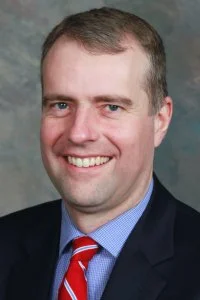
Since 2009, the Rev. Dr. Michael Brooks has served as Lead Minister of Port Nelson United Church in Burlington, Ontario where over 1,000 meals are prepared each week for community outreach, and 250 children participate in summer day camps. A graduate of Emmanuel College at the University of Toronto where he studied with Paul Scott Wilson, Michael also holds a Doctor of Ministry in Preaching from McCormick Theological Seminary in Chicago. His thesis Lament: From Preaching to Permitting garnered the top prize in his 2014 graduating class. Michael teaches in the United Church of Canada’s Licensed Lay Worship Leaders program. He is an Associate of the Royal Canadian College of Organists, and music, summer sailing and winter curling occupy his leisure time.
About The Paul Scott Wilson Preaching Award
The Lester Randall Preaching Fellowship established the Paul Scott Wilson Preacher in 2024 to honour the impact the Rev. Dr. Paul Wilson has had on a generation of preachers in Canada and beyond through his teaching, writing, mentoring as well as the wisdom and guidance he has given to the LRPF. Each year the LRPF names a Canadian preacher to serve as the Paul Scott Wilson Preacher at the upcoming LRPF where they will preach the opening sermon on the Monday morning as well as being involved in other aspects of the conference. The appointee shall be chosen as one who reflects Paul Wilson’s passion for preaching the good news of Jesus Christ, and one whose weekly pulpit offerings though unknown to many, reap great benefits for the Kingdom of God. It is a small way of offering the same encouragement that Paul Scott Wilson has offered so many. The Paul Scott Wilson preachers to date are: 2025, The Right Rev. Dr. Kimberly Heath, Wall St. United Church, Brockville, ON and 45th Moderator of the United Church of Canada 2026, The Rev. Michael Brooks, Port Nelson United Church, Burlington, ON
Show Notes
Learn More About The Lester Randal Preaching Fellowship: lesterrandall.com
Learn More About Port Nelson United Church: portnelson.ca/
Follow us on Social:
Transcript
John Borthwick
Welcome to the Ministry Forum podcast, where we believe that you are not alone in your ministry journey. I'm The Reverend John Borthwick, your host, coming to you from the Center for Lifelong Learning at Knox College. Here we connect, encourage, and resource ministry leaders all across Canada, in the joys, the struggles, and everything in between. I love that I get to do this work, and most of all, that I get to share it with each and every one of you. So thanks for giving us a listen today. Whether you're a seasoned leader or just starting out, this podcast is made with you in mind.
Today on the Ministry Forum podcast, we're talking preaching, and perhaps touching on something those of you who are called to preach know, maybe in their bones, maybe a little more, but rarely said out loud, that the vast majority of preaching that changes lives never really gets a spotlight. There's no conference plenary, no book deal, no viral clip. There's just a person, week after week after week, standing up in the same pulpit, before the same congregation, trying to say something true and faithful about Jesus Christ, and then doing it all over again seven days later. It is quietly one of the most demanding callings that there is, and it is easy to feel like the faithfulness of it all goes unnoticed. And that's exactly the kind of preaching my guest today has been honoured for. The Reverend Dr. Michael Brooks has been named the 2026 Paul Scott Wilson Preacher, a recognition given each year by the Lester Randall Preaching Fellowship to a Canadian preacher whose weekly pulpit work, though largely unknown beyond their own community, bears real fruit for the kingdom. It's an award created to honour the Reverend Dr. Paul Scott Wilson's extraordinary influence on a generation of preachers, and this year it's presented in partnership with Ministry Forum, which makes this conversation especially close to home for us.
Michael has served as lead minister of Port Nelson United Church in Burlington, Ontario, for nearly 18 years, and the shape of that ministry tells you a lot about him. More than 1000 meals prepared each week for community outreach, and 250 children through their doors each summer for a day camp. He's a graduate of Emmanuel College at the University of Toronto, where, like me, he studied preaching with Paul Scott Wilson himself, and he holds a Doctor of Ministry in preaching from McCormick Theological Seminary in Chicago, where his thesis, "Lament: From Preaching to Permitting,” took the top prize in his graduating class, he teaches in the United Church's Licensed Lay Worship Leaders Program. He's an associate of the Royal Canadian College of Organists, and when he's not preaching, you'll likely find him sailing in summer, or on a curling sheet in winter. This October, Michael will preach the opening sermon at the Lester Randall Preaching Fellowship in Toronto, and on this year's theme, preaching Jesus Christ. Michael, welcome to the Ministry Forum podcast.
Michael Brooks
Thanks very much, John. It's great to be here.
John Borthwick 03:18
Awesome, Michael. Congratulations for being named the 2026 Paul Scott Wilson Preacher by the Lester Randall Preaching Fellowship. Those are a lot of a lot of words. This is an award that deliberately celebrates faithful preaching that usually happens far from any spotlight. When you got the news, it's almost like that Nobel Peace Prize phone call that you get. When you got that news. What did it mean to you?
Michael Brooks
Yes. Well, thanks again for having me. And before I forget, I do want to thank Ministry Forum for the support of the Lester Randall and for the Paul Scott Wilson preaching event. And yes, it was several months ago when I got the call, and I think two words came to mind: humbled and honoured, and I, you know, I've always thought that faithful preaching should never seek recognition. You know, it should always be pointing not to the preacher but to the triune God. I think that's what we all strive to do. We preachers. But it was a deep honour to get the call. A surprise, I suppose. I've attended the Lester Randall preaching event for a number of years on different occasions, and have always been blessed by it. And it's going to be a real privilege and honour this year to be up front and be a participant and in a leadership role. So I was really humbled and honoured at the same time, particularly because we're honouring a person whom I deeply respect and have learned so much for learned so much from across so many years.
John Borthwick
For sure, and you and I share something. We we both had the privilege of learning under that that August man. Paul Scott Wilson. I was actually supposed to take two preaching courses at my own Knox College under a homiletician that was there, but I actually was naughty and registered for Paul's course instead, much to the chagrin of our registrar at the time. But I was just looking for some diversity in approach, and was certainly blessed by that. I think there was two things that have always stuck with me in that journey with Paul: the four-page sermon, of course, which is his thing, and also this idea of opening a sermon like a cinematographer. He always had this idea of like you start wide and then you slowly draw people into focus and paint a picture in a beautiful way by engaging the visual imagination as we use words to try and share the gospel. I'm curious whether anything of that resonates with you and how you preach today, or more broadly, just how Paul's teaching shaped you as a preacher over the years.
Michael Brooks
Yes, indeed, and and I think you were not alone. I don't think in registering for the preaching course at Emmanuel. I remember in my class there was a wide diversity of students from all the colleges at Toronto School of Theology because the word on campus was that it was the course to take with preaching. So I think that that happened throughout his time, but indeed, the four pages, as was the case with you, I'm sure, was the very first method that I ever learned, and it's still the method that I use when I'm stuck. So I go back to the model to remind me more than anything. It reminds me that solid structure is key to any good sermon, and so it's sort of like building a house. You can have, you know, the most catchy story, and you can be the most eloquent orator, and you can be, you can feel like you have the most compelling message to share. But if the structure is weak, then the sermon can fall just like a building, so I think more than anything else, I learned from Paul the importance of structure, the importance of a well-crafted sermon, and his four-page model has certainly stuck with me and has been the go-to for me as I've gone through my preaching journey. And also to think about how preaching is like making a movie that you're looking at different scenes and trying to visualize, trying to put those images in the minds of the hearers, so that they can kind of go with you on the story journey that you're trying to take them on.
The other thing that stuck with me all through has stuck with me is Paul's acronym. The tiny dog now is mine. And for those who don't know, what he's basically saying is that every sermon should be rooted in one text, one biblical text. That's the first T. One theme, the second T. Dog is for one doctrine. Every sermon should be rooted in a doctrine. One sermon should try to. Every sermon should try to meet one need. That's the N. It should use one image and it should have one mission. The tiny dog now is mine. And what I have found is that that acronym can can really be used for any model of preaching, so it's not even the Wilson four pages, but it's just good advice for any sermon, and I think that stuck with me even more than the four pages. So all of those things have been influential for me, and what I remember is at the very end of the course with Paul, he said to the class after we had worked our way through the four pages model in detail. He said to the class, "There are many ways you can preach, and you know many of you are going to go and discover different ways to preach, and I encourage you to do that. This is a model and a structure that you know is biblical. You can come back to it when you're stuck, and that's exactly what I have found.
And the last thing I'll say, I guess, is just more of a personal note that, beyond the course, I have been blessed by Paul's presence and his personhood. He was a point. He was my faculty advisor, actually. So I got to have a long meeting with him in my very first week in the Master of Divinity program, and right off the bat, I found him to be a very good listener, an empathetic person, patient and thoughtful, and certainly a person of deep faith in the Lord Jesus Christ, and that, you know, emanates from from what he does and preaches and writes and shares. And when I went off many years later to Chicago to study for my Doctorate of Ministry, when people would find out that I had done my Master Divinity work with Paul Wilson, their eyes would. Kind of light up, and he's very well respected around the continent. And I learned that I had a very good foundational education in preaching, which was not the case for all of my classmates in Chicago. So, lots of things that have stuck with me and continue to on this journey from Paul.
John Borthwick
For sure, yeah, and I love I love the way that you're reminding preachers as well to that it's something you could go back to. That sometimes having a structure allows you when you're when you are stuck or when you're maybe when you're in a bit of a funk of preaching or something, you know. Sometimes going back to that kind of structure can get you there, because I remember as a new grad being very rigid in in following a structure for a long time, and it took me a while, I was kind of basing it on that notion of kind of you know when you copy something when you copy a style that eventually you'll make it your own and so over time it was like I have to do it this way and have to do it this way, and that that was challenging over a time. But it was a discipline, and then over time, it just came naturally. And once I released myself from a bit of the structure, that was really helpful. But circling back always to, especially in Paul's model, it was always that idea of you know, where's the grace in the text or where's the judgment in the text, and then where's the grace, and where's the judgment and grace in the world, right? And so much of that was always an interesting thing because I can remember him even saying that that many sermons, as you if you just take that four-part structure. If you listen well to a sermon, sometimes you'll be like, Huh, I never heard the judgment piece from, say, the world, or I didn't hear the grace from the world, or the grace in the text. I heard a lot of judgment about the text, but I never heard the grace in the text. And so I love that balance as an approach to preaching. You know, making sure that you're doing that along the way, and I love that you remember the tiny dog. That's awesome. Maybe that comes from being an organist. I, I was trying to remember in my head, e.g. if every good boy or something does something,
Michael Brooks
deserves fudge.
John Borthwick
Yes, there you go. Was from early piano lessons. You know how those how those memory cues stick with us? That's beautiful. That's awesome. Now you've been at Port Nelson for almost two decades. That's a lot of Sundays of of returning to that same pulpit and the same people. I've been there myself. I was in a pulpit for 21 years. Got very used to that pulpit. It's really hard when I now go to other places and the pulpit isn't the right height, or there's some weird stuff in the way, and you know it's hard to get comfortable in those kind of places. But what would you what would you say you've learned about the calling to preach? About what sustains you in preaching? What it asks of you? Maybe over a long stretch. What would you, what would you say to preachers out there?
Michael Brooks
Yeah, and I think I'm probably like lots of people who've been in long-term ministers. I never plan to stay that long. It just kind of happens, and different things arise along the way. But the call to remain persists, and I'm I feel blessed to be where I am at so fabulous church, but in terms of what I've learned about preaching in my context, and you're right, you know, every Sunday for almost 18 years, I think the number one learning I've come to discover is that preaching is relational. So, and this is what I think has sustained it for me. So I see preaching as built on the relationship that I have with the congregation as a whole, but also the individuals in the congregation. And the longer I stay, the more I know them, the more I know about them. You know, I'm doing weddings now for youth that I confirmed, and it won't be too long before there'll be weddings for youth that I baptized, and lots of pastoral encounters. And so when I prepare, I would say every Sunday when I prepare a sermon, I'm bringing specific people into my preparation. So I'm imagining how this person will hear that message, or how that person will respond to that, because I know them well, and I think that's a real blessing, and it's that's what sustained my preaching over so many years, and I know that you know no one sermon is going to reach everybody on any given Sunday, but my hope is that over the course of several weeks, that you know there'll be something that would resonate with most people to help them with their own journey and their own discipleship, and so I suppose in a way, preaching the longer I have stayed, the preaching, in some ways, has gotten easier because it's just more authentic, and authenticity is something that's big in preaching.
It's interesting thinking about this Lester Randall event and other opportunities I've had for guest preaching, and I've often thought that guest preaching is a much tougher job. I, as you mentioned at the beginning, I teach in the licensed lay worship leaders program for the United Church. So we're training lay people in congregations to lead worship and to preach, which is becoming increasingly more important these days with the challenge of finding clergy. And I say to them, you know, you have my honour and respect because, in some ways, you have a tougher preaching task than I do, because you have to, as a guest, discern. You have to almost kind of take a shot at what the needs are, and you know, I've been there, and often I come away thinking, yeah, that wasn't great because the relational piece wasn't there, so I think for me that's the foundation of the long term ministry of preaching is the relationship. And when there are of course weeks when the well feels a little dry, I think all preachers have you know it gets to be Wednesday or Thursday or even Friday, and you're thinking, "Boy, come on, Holy Spirit, say something, because Sunday's around the corner. And I think at those times, that's when it's a reminder to me to spend more time with my people, to you know, do some pastoral visits, go to the hospital, go and sit at the local coffee shop and listen to what's going on around me because chances are I'm going to know somebody that comes in. So, yeah, I would say the relationships have sustained me for all these years, and even all these years later, it still feels fresh, and I feel like there's still lots that we can explore together.
John Borthwick
Yeah, I love that. The I think it's Kennon Callahan from a reference from a way ago, but he's still around. But Kenan used to say, being a good being a good pastor makes you a better preacher. So like, the more you know your people, the more they'll be open to hearing what you have to say. And I also think it. I always described it as you know not original, but the great cloud of witnesses that's in that space or that room, both those who are living and those who have passed. You know, as I would look out at that at that congregation or that sanctuary, I would have people that you know I used to preach to that are no longer in those pews, and there, there was always sort of a sense of connectedness even with them, even since they've gone. And definitely, I also saw it as kind of like scattering seed in some way. And there was always bits and pieces that would give me a tiny bit of joy if the person kind of like I had lobbed something at them, and I was like, when they would come to me and go, "Oh, I really love that part, or "That was so funny, or "I appreciated that, and I'm like, "Yes, like because I was I was hoping you would get that because of all the people in the room” kind of like you're preaching at different levels or for different folks, right?
Michael Brooks
Yeah, and that and it's interesting you mentioned Callahan because I he's in my top five along with Paul Wilson of people that I've, I count as mentors in ministry, and Callahan said, you know, fill the empty seats in your sanctuary with your mentors in faith, so that they're with you every Sunday, and you know, a good pastor, a shepherding pastor’s preaching, the congregation will hear that sermon as a nin out of ten, even if from a homiletical point of view it might only be a six or a seven, and that's what I've tried to do. And of course, you know, as we all know, I sometimes call compare preaching like baseball. You're aiming to hit a solid single most of the time, occasionally you hit a home run, and sometimes you strike out. But you, you know, you come back every week and you give it your all, and the Holy Spirit takes what you do and blesses it.
John Borthwick
Yeah, and it's always I've heard from a lot of preachers over the years, and I've had this experience myself. It's the ones that you think are this is not my best. This is not good. And then at the door, I don't know if people are just being encouraging, but somehow the Spirit made that really work in someone's life, and they're like, That was the best sermon you've ever preached. I'm like, Really? That's not what I thought. And then the one you thought was the real humdinger, and people like, that's all right. It's like, oh, that's why we can't we can't just thrive on the feedback of others, but be faithful in the in the practice of preaching for sure. And like you say, as you get to know people, one of the challenges around that sometimes I've had the people say to me, Were you preaching about me today? Was that me? And I'm like, No, actually, it wasn't at all. It just you know because you know about their lives and they know you know about their lives. It's like no, no, I was. At all, like it wasn't directed right at you, but for some reason they heard it in that moment, and maybe they needed to hear that for sure.
Talking about personal connections and relationships, I grew up in Burlington. My parents still live there, so I know a bit of the reputation that Burlington has. You know, in its and its little neighbor to the to the east, Oakville hung out around there as well. But there's a sense of like a comfortable lifestyle, a mindset that is the Burlington mindset. Maybe a bit of a poshness to it, or it thinks it is Oakville's the next level, of course. But you know, it's that kind of idea. But then, as I read your bio, I hear about your congregation preparing 1000s of meals a week and running summer camps for hundreds of kids. It seems to tell a bit of a different story of the needs that are actually there. And I'm not naive to know that there aren't needs in places that consider themselves posh. That's for sure. So, how do you preach into that sort of gap between how a community might see itself, and I'm not saying Port Nelson sees itself that way, but what's really going on under the surface or beneath the surface? How do you how do you engage in that gap?
Michael Brooks
And it's very perceptive of you to raise this because this is something that I think our congregation wrestles with, and it's something that I truly, truthfully wrestled with, even when I was discerning a call here. You know, driving into the neighborhood in which the church is situated, it's a very beautiful neighborhood. And part of me was like, my goodness, I'm not sure I fit here. And I mean, I grew up on a farm, right? And this is that this is the upper upper middle class suburbs. This is the last place I thought that God would call me to, but here we are. And what I've discovered all these years later is that obviously there is need everywhere. There's spiritual hunger everywhere. It doesn't matter what you know socio economic class you might be in there's spiritual needs and hunger and yearning, but in terms of the social outreach that you're talking about, I think Burlington. It's been described to me, and it makes sense that there's a hidden poverty, and you just have to kind of scratch the surface a bit to to find it, and although in recent years, as with many cities, the poverty has become more obvious. We have our tent communities in Burlington, believe it or not. We have people who spend their evenings sleeping on the bike path because I walk there regularly, and I meet them there. So, so it is becoming more obvious than perhaps it was before. And what I've learned that for churches like mine, that I would say are suburban settings, partnerships are key in our outreach. So our 1000 meals, we don't do a community dinner on site. It doesn't make sense to do that. We've learned that we can use our kitchen to make these meals and partner with others who can use them that are right on the cusp of the need. And the same with our summer camps. A lot of very busy families, a lot of families where the kids get lost because the parents are so busy, and so we're fulfilling a need there and offering them something of the good news of Christ in in doing that. So I think the partnerships in terms of the preaching itself. What you know, your question is to how to kind of bridge that gap. What we found is it's important to regularly tell the stories of what's actually happening, and bring them to the Word, and bring them to, you know, the vision of Christ for what the reign of God looks like. And while we're situated in a very affluent neighborhood, our congregation is becoming increasingly diverse, and there is economic diversity in our church. We have people who are sitting in our pews on Sunday morning who actually are recipients of some of the meals that are cooked Monday to Saturday, and that that's been a real eye opener for some, for much of the congregation to hear these stories and to have the people actually be you know to tell them has been really quite a step, and so I think that telling those stories, bringing the stories into the preaching as concrete examples. Of course, you know, not with respecting people's privacy, but bringing the stories in so that that the congregation understands that need is not in some far off place, and we certainly have strong outreach in that as well. But our local community outreach has really grown in the last 10 years because we've. Managed to scratch that surface beneath what sort of the veneer of the city might be, to really discover significant needs for food access, for childcare, for helping to support families that are run off their feet in this in this ever busy world. So, I guess you know it's a very well-worn phrase, but you know never judge a book by its cover. And sometimes you have to scratch a little bit into the first few pages to discover where the needs really are.
John Borthwick
For sure, for sure. And it's it is a beautiful thing when you see the connections made by the kinds of outreach a congregation might be doing, and then the ways in which that's impacting people, and the ways in which those two can come together, you know, because that that has the opportunity for relationship building, like you were talking about, not only between you as the preacher and the people in the pews, but then the people in the pews themselves, because hopefully, as people are in community together, they can not only hear the stories that might be told, but they can actually bear witness to the person whose story that might be similar to, or the encounter and the ways in which it's not just about gratitude and appreciation for the ministry that the church is doing, but that there are real people with real lives who are different from the path that maybe somebody else has been in, and that could be multi-sectional in a in various congregations of diversity of lives lived, and for somebody to experience you know one aspect of Burlington, probably some of the probably some of the richest real estate in in all of Burlington is fairly close to where you are near the lake and stuff like that, but then to encounter other people who've had a different path and a different journey, and the rich growth that can come from that, spiritual and relational, for to inspire people perhaps in other ways.
Michael Brooks
Yeah, and our food access outreach ministry meals of hope it's called with I think are actually almost 1,200 meals. There's three words that root it, and the words that have been the foundation of our our ministry ever since it started. Feed my sheep, and from the Gospel of John, feed my sheep without judgment, and that's kind of what's been the mantra of what we do and why we do it, and the other thing I'll say about our church is that it's one of the things that actually attracted me to the church almost you know when I was discerning a call, while there is this veneer I'll call it of affluence, our church has had a long history of being leaders in the community with respect to social outreach. So, Habitat for Humanity Halton started in our church. It was started by our outreach committee. We started a local center for youth mental health called the Nelson Youth Centers. And so, in a way, I see what we're doing now, and what I'm privileged to do alongside this church is we're just carrying on the long-standing pattern. It's part of the DNA of this church, to be to be very, very intentionally discerning what those needs are and trying to respond as best we can with the resources we have that God has blessed us with.
John Borthwick
Yeah, and as the preacher, perhaps the you know the God pointer in the midst, or the person who's bringing those stories to life and animating that, and consistently bringing that inspiration to keep going of feeding my sheep, and not just not just spiritually, but feeding actual tangibly in certain ways, and seeing their actual work that they're trying to do to make a difference actually having an impact on so many different levels. That's beautiful.
Michael Brooks
Yeah, and I in terms of the preaching, there's two sort of newer things we've tried with that. We have more testimonies now from. So not only do I reference stories from time to time in the sermons, but we do have from time to time testimonies from people who are involved with the ministries, actual recipients of the help. And the other thing I do is sometimes just in the middle of the sermon, I'll say, take one or two minutes, turn to your neighbor, and talk about how this really relates to what we're doing here, just to kind of get people to try to articulate making the connection between you know what we're doing on Sunday and what we're doing Monday to Saturday in the kitchen, and realizing that the two are not as far apart as you know. It's not like this is there and that's here. It's all connected and informed by the Word of God and blessed by the Holy Spirit.
John Borthwick
That's fantastic. Yeah, for sure. Let's change gears for a second. You did a doctorate. Congratulations! Well done. That's amazing. I'm always impressed with folks who go through that journey. It's quite something. I bear witness to it in a variety of people's lives in the work I get to do. It's called “Lament: from preaching to permitting.” I wonder if you could maybe unpack that for us. What were you exploring? What does it mean to move from preaching lament to permitting it, and maybe how has that work reshaped your own preaching life since then?
Michael Brooks
Yeah, well, and I got into this because a good colleague of mine kept pestering me about that. I joke, I joke with him now and say, you know, did you get a kickback from the seminary for recommending me, but anyway, he's actually involved with Lester Randall. I don't know if I should name him, but anyway, well, it's anyway. But what I discovered early is that the beauty of a Doctor of Ministry, as opposed to a Doctor of Theology or something or a PhD, the beauty of a Doctor of Ministry is that it's firmly rooted in the congregation's experience, so it's not just an academic exercise that I, as the minister or the preacher, am engaging in. You have to have a ministry context to even do that degree, and so, and that's what interested me.
So shortly after I arrived, I realized that there were two things that were colliding where I in this new congregation 18 years ago for me. One was that the congregation in the year before I had arrived, 11% of the membership had left. There had been a major conflict, and it was, you know, on the heels of my predecessor who had had a wonderful ministry, and it was just unfortunate that kind of ended that way. And so there was this major conflict. But what I, by the time I arrived, the conflict had subsided. But what was what was still there was the grief over the loss of all these people, and you know friends had lost friends who had sat with them in the pew for 30, 40 years, and then the second thing was my own grief over leaving the congregation that I had loved to come to this new church that I wasn't sure about, right? And I think that's maybe common with people, with pastors when you're leaving. There's some sense of grief and loss over what you're leaving. So these two things were colliding, and then I began the doctorate maybe a couple years later, and one of my classmates said to me, Oh, you know, just hearing you talk, you know, why don't you do something around lament? Because lament is the structure, the container that holds grief, and that's the Bible's gift to us. It's the faith's gift to us around grief.
So, I started to dig into that a bit, and the great Fred Craddock, one of the great preachers of our, of you know the, who so many of us admired and of blessed memory now. Fred Craddick said, you know, let doxologies be shared doxologically, let narratives be shared narratively, let poems be shared poetically, parables parabolically, and that stuck with me. But then I noticed he didn't mention laments, and I thought, oh, okay. So what Craddock was saying is, you know, the usual style I think for most of us in mainline churches, at least for preaching, is the narrative style. So we tend to narrate something about the scriptural witness and about our context, and it's it it reads and hears and sounds like a narrative. But what I think Craddock is suggesting is that try to actually embody the form of the genre. So you know what does that look like if you're preaching on a parable? Does your sermon sound like a parable? So I thought let's extend that to laments, and so it's not only how to treat lament texts narratively, which would be what most of us would do, sort of just as our default, but how do you actually preach a lament as a lament. So we looked into some of that. Can a sermon take the form of a lament and yet still be good news? Still proclaim the gospel. And so I got to explore this alongside the congregation and their grief over all these losses of people, and then helping myself kind of work through my own loss at the congregation that I had loved, and so that's kind of how it all came about, and it was really a blessing, and I think that the congregation learned a lot. About preaching, we learn together. I learned a ton, of course. It's the best con ed I've ever done, and above all, I would say it has caused me to be much more attentive to the voice of lament whenever it shows up, because it shows up throughout the Bible. I mean, we often think of the usual suspects, like obviously the Book of Lamentations or the Book of Job, or you know I think a third of the Psalms are lament psalms. But lament shows up almost everywhere in the Bible, including in the Gospels, where Jesus' own voice mingles with lament. And so I mean, obviously you know the most famous example with Jesus is from the cross. Why, quoting Psalm 22? Why have you forsaken me? So, looked at all that, and how does it preach? And what I learned is that, you know, it at first hearing it may sound like a real downer. Oh, why would you spend four years, you know, exploring lament? It's all about grief and loss, and didn't that kind of get down on you? I discovered the opposite. I discovered that people were hungry to have grief and loss actually named and acknowledged in a sermon, and embodied in some cases, and if we can't talk about this, and if we can't lament in church when it's the Bible's gift to us of how to express grief, where else? Where else can we talk about it?
John Borthwick
Yeah, for sure. The I hear that often, and I and I wonder at a time such as this in the church, in the mainline church, maybe more than others, but maybe in various church settings, in congregation settings, it feels like there's that that's missing in some ways. That people, what people are experiencing is grief and loss, like you say, from the decline in churches, maybe around attendance. You know the loss of what used to be. You know if your church was of a certain size and programs and things that happened. You know those kind of things. And I often hear in in the places I go and visit that they're that really what people are crying out for is a kind of lament that they would love to have a space to just sort of say and name what's been going on, and what they're feeling about that, and sometimes we don't give space for that. We immediately want to flip to, but it's going to be okay, or you know, God's in control, or it's all going to be it's all going to work out, and that's not maybe what they need in that moment. They need to sort of, you know, some healthy wallowing. It might be good for us all, right?
Michael Brooks
And that's and you've touched on you know there's two basic kinds of lament in the Bible: communal and individual. And you've touched on the communal, the need for communal lament as the church I'll call it. And but there's lots to lament communally in the world, of course. And so you know we don't need even need to you know give examples. People are seeing them on the news every day. But there's also the individual, and I did a lot around that too. That on any given Sunday, there are people sitting in in the pews that are celebrating and that and who are lamenting. And on Easter Sunday, I mean, one of the stories that I'll never forget is this this woman who told me about Easter Sunday, and her son had died in a tragic accident just two or three weeks before Easter Sunday, and she came to church Easter Sunday, and people said to her, "My goodness, why are you here? Like you know, it's you know, it's remarkable that you would even have the strength to show up. And I'll never forget her response. She said to me, I just said to them, you know, I needed to be here because I needed to stand alongside others who could sing the songs when I when I couldn't sing myself, and I thought to myself. Wow, you know, to know as a preacher that on any given Sunday, even on Easter Sunday, there's somebody out there who's had among the worst weeks of their lives, and you know, so that's why also it's important too because it it's a gift for helping to express the individual laments that that people are living in their lives and lament is a I guess the other thing I discovered is that lament is often seen as a prayer forum and certainly as a musical form. I mean, there's been lots of music that's been written, requiems and all kinds of other music. There's tons of music for Good Friday, right? And but it's not has not been viewed as a sermon form, or even as, I guess, fodder for sermons. I think we often. Overlook those texts if there are other options, and so I, you know, I would encourage people to preach lament because it's biblical.
John Borthwick
Absolutely, yeah. I may have done the low-hanging fruit during the season of COVID when we were locked down and stuff. I actually did a series on lamentations during COVID, and then one of the things I within the sermon, and every so often I've done this in my preaching, kind of like build a sermon. So you know I had some sermon stuff to do, but then I encouraged the congregation to send me their COVID laments, and so that that framed the sermon. So it was like I did some stuff, sort of bracketing it, and then the body of it was the words of the congregation, sort of little phrases, things that they were lamenting, things that they miss, things that they were sad about as a part of this collective experience, and yeah, it became a meaningful experience for the congregation to have a place to put some of that, and then keep that in the frame of preaching and online worship at the time was kind of a meaningful experience.
Michael Brooks
That's brilliant. Yeah, I like that a lot.
John Borthwick
Appreciate that. Well, so for a lot of our community who listen, lots of practitioners. We've got clergy. We've got lay leaders similar to the ones that you're teaching in the United Church, who are trying to learn how to preach and preaching in different spaces. People preaching in every kind of setting, really, from like chapels in long-term care facilities and places all over the country, for sure. From everything that you learned about lament, what would you want to put in their hands? What would you, what would you wonder? If it's about that permission to grieve? But I mean, I think you've unpacked it quite well. But I'm just wondering, is it is it more about something that preachers maybe haven't grasped? I I've always wondered if part of it is, at least in my Presbyterian world, we like to keep things decent and in good order. Maybe United Church people are not the same, but there's a sense as a preacher is what are we releasing or what kind of permitting is the phrase you use, but what kind of permission giving needs to happen as a part of an expression, or to open people up to lament, either individually or collectively.
Michael Brooks
Yeah, I think maybe just a bit more beyond what I've shared. I think bedrock is just to well, first of all, realize that lament is prevalent in our biblical witness, in our faith story. It is a gift. It is, it is our faith's gift of how to express grief. It's that container that can hold the grief, because if you take the lament psalms as a almost every lament psalm follows the same pattern, and almost all of them will end with that vow to praise. So there's that glimmer of hope. There are a couple of exceptions, but there's that vow to praise at the end, that glimmer of light amid this challenge, and so I guess fundamentally I would just say use it. It's there for us as God's gift, as the resource, and you know if you haven't preached on lament very much, or if you've not tried to embody the form, give it a try and see what the response is. I suspect that your people will respond much more positively than you might think they would, even though it's not on the surface seen as a positive topic.
John Borthwick
No, I appreciate that. Thank you. Yeah. Now you don't have to give your sermon away. I'm sure you've already written it for Lester Randall. I can imagine a man who plans ahead. You've you heard the news and you're like, yes, I will craft that immediately.
Michael Brooks
Peter Holmes wanted the title last week, so I had to.
John Borthwick
Oh goodness, Peter Holmes. Yes, he. I'm sure he did. I'm sure he did. This year's theme is preaching Jesus Christ. What excites you about that theme, and why does it feel like the right invitation for preachers to sit with right now? What would you say? What would you say to that?
Michael Brooks
So I have to. I have to admit that it was Peter that phoned me a few months ago to let me know that they were inviting me to be the Paul Scott Wilson preacher. He so, I had I said yes before he told me what the theme was. Anyway, then he said, Oh well, the theme is preaching Jesus Christ, and I thought my initial thought. I didn't say this to him, but my initial thought was that's a huge topic, and a general topic. But the more I thought about it, I guess, and I think that this is probably where many will go with the theme at the conference. But obviously, we're in an increasingly secular. Religiously pluralistic culture, and many of us, I think, as preachers, are increasingly struggling to know what do we pay attention to. You know, we might even be asking the question, and it's probably not the right question, but I know I do. You know, what does my congregation want to hear? Not necessarily what they need to hear, but you know, because there are seasons in my journey, at least, when I just I don't want to disrupt things. I just want to, you know, keep people happy. And then there are other times when I kind of realize, well, it's time to make a bit of a disturbance, if you will. But you know, I think we're maybe paying too much attention to what the latest spin on faith is, and what we can do to sell things, what we can do to make them look rosy and attractive, and every time and place, of course, has had its share of distractions. But it just seems like the number and the rate of distraction is increasing all the time, and so I think above all for me, what I'm coming to is that Jesus Christ is enough, and it sounds simplistic, but you know if we really believe in that bedrock faith that we all share, that crosses denominational lines, that is the foundation of what we're called to do, you know. As Hebrews put puts it, Jesus Christ is the same yesterday, today, and forever. This doesn't mean that our preaching never changes. Of course, it does, and every age has its wonderful homileticians like Paul Scott Wilson to show us and to guide us in terms of how to what the structure is for our time, but just like every strong sermon needs that structure, so too does all faithful preaching need to rest on the foundation of Jesus Christ. Otherwise, you know what does the church have to offer that the service club down the street can't offer, or the sports field, or any number of things that people would choose to do on a Sunday? Of course, because it's an intentional choice. I mean, you know, people who are people who are in our pews on Sunday morning now are people who are making a deliberate choice to be there, and they're the ones that are there to roll up their sleeves and to really dig into what faith means, what discipleship means in our time, and they're eager. They're eager to know that; otherwise, they wouldn't be there. I mean, the days of going to church because it had anything to do with status or being seen, and those are long gone, of course. And so, I think that what we've found, at least, in where I serve, and you know, two thirds of the people, at least probably 70% of the congregation I serve now, wasn't there when I started. So we've got a whole bunch of new people that have come in, and they're yearning for spiritual deepening. They're yearning to hear, you know, how Jesus is in their lives. What does what does Jesus say about how their how life is unfolding for them? So I guess Jesus is enough, and we don't need to we don't need to necessarily be distracted by all the latest spin that that comes our way. I I'm a bit of a junkie for listening to sermons, and you know I've got a whole library of sermon books and recordings, and it's interesting. Many years ago, at the Lester Randall event, one of our great United Church preachers, Morris Boyd, he was a presenter at the Lester Randall, and he did offer this wonderful lecture on the creative spirit. I think it was called. But in that lecture, he makes the point that when we invite other people who aren't preachers to come and do guest preaching, like you know, some other profession or professor or whatever, you can tell that often they don't quite cut it because it's not always rooted in that sort of bedrock foundation that we're that we're just it's driven into us or at least it was driven into me, and you know there are some days when I stray when I I come away thinking yeah God wasn't as present there as God should have been so part of it is acknowledging that and that's another thing I've been thinking about with this theme, is you know almost confessing the times when the sermon hasn't been rooted in in the living word of Christ like it like it should be. So I don't know where all that's going with sermon for October, but you know it's July, so we'll see.
John Borthwick
You can let it stew, let it ruminate. Yeah, it'll you'll get there. You'll get there. Yeah, and I'm there was a church I was at recently, and I've seen it in other places and spaces. Sometimes on the pulpit itself, but there was a church, a small country church I was at, where at the back of the sanctuary, written in script, we would see Jesus. So the preachers look into the back of the room. It's like we would see Jesus. It's like, ooh! And I've seen that sometimes written on the pulpit as well, like a little this thing, a taped to the pulpit. We would see Jesus. It's like, yeah, that's a good reminder because sometimes we do get lost a little bit along the way, and maybe we're seeing too much of us or too much of other things that that aren't what people, as you say, aren't what people are hungering for and looking for in and what makes the church unique. Otherwise, you're you might be a great orator, but you're doing a TED Talk, or
Michael Brooks
that's right,
John Borthwick
a speech of some kind, which is great and maybe inspiring, but we're missing the, as you say, the bedrock of all that for sure. Preaching can be a pretty lonely craft, for sure. Why do you think gatherings like Lester Randall Preaching Fellowship matter for preachers today? And what happens when preachers get into a room together. It's a fascinating. Having hung out with Lester Randall for the last few years, I will confess, I didn't know. I knew that Lester Randall existed, but I never really knew what it was. And I've been in ministry for 30 years, and for some reason, I just didn't know. And then once I took on this role at Knox College, I got connected to it, and then went to it, and I've been there every year since. I love the intimacy that is intentional about Lester Randall versus other ones. I've never been to that other one that has happened in the U.S. for years and years and years. I never got there, but I didn't know lots of colleagues who would make pilgrimages to that one in the U.S. But they always spoke about how big it was and how you know many people were there and how it was just a lot. So yeah, if you could speak to what happens when preachers get in the room together and what's the value? What's the value of that? Would you say?
Michael Brooks
Yeah, and I've valued both. Well, I've valued a number of gatherings over the years. I would, I would say, almost every year for 25 years, I've gone to at least one preaching event, sometimes more than one. And it can be a lonely craft. And that's you know, I found it less lonely once I started to do what I spoke of earlier. Once I invited my congregation alongside the journey with me, I felt much less lonely in my preaching. Once I started to envision who was there, who was going to be there, and sometimes even just calling members of the congregation as I prepare and saying, Well, what do you think about this? and I do that sometimes. In terms of the community of Lester Randall, I agree with you. There is a sense of intimacy there, and I also like the fact that it's decidedly ecumenical in its approach. All different traditions from across the world. I mean, there's been preachers from Europe and all over the United States, and of course across Canada. I believe there were people there last year because they always asked for a show of hands where people are from, and I believe there were some Australian preachers, New Zealand, so the diversity is appealing to me. Of course, congregations vary in terms of size, in terms of you know just their focus and that kind of thing. But I guess another thing that I've sensed at Lester Randall, particularly, is really relating to this year's theme. That no matter where you're coming from, how, what size your congregation is, whether it's in the city or the country, whether it's in New Zealand or in Scotland, whatever, that that we're all surrounding this Jesus Christ that we seek to proclaim, and that's what unites us, and that's to whom we point in what we're doing, and so I think Lester Randall's particularly strong in this, and also the interaction between everyone. So there, you know, we're worshiping and learning and in conversation with and eating with the presenters, the preachers. You know, at some of the other events I've been to, presenters will tend to kind of just swoop in and out for their own event, right? And you never see them. They come in. They preach their sermon, they lead their workshop, and then they're on the plane three hours later to the next one. That usually doesn't happen with Lester Randall. People are there for the whole time, and so that's really valuable, I think, for everyone to learn in this sort of collaborative environment.
John Borthwick
Yeah, I remember, I'll confess, a bit of fanboying, standing in line waiting for lunch, and looking behind myself and going, "Oh, wow, that’s that person who's written books and is considered like one of these top preachers. Wow, they're right behind. Hello, and just having a chat, and then sitting with them for lunch, and yeah, it's an amazing experience to have that level of engagement and connection with folks, and also just as you say, connecting ecumenically with people over lunch and in conversation as the day goes on, and hearing from my diversity. I think what's beautiful about it is it that it is Canadian, and it you know it allows for Canadian preachers to come to something that's Canadian based, but also connects to people to the global church in a really beautiful way as well. And you do get to see some folks that you may have been listening to for years, or some newer voices as well that you may have never heard before, and can and they also I love the way in which they meld in people from the arts community as well. R. H. Thompson I think is there maybe again this year or has been there a couple different times. Actor, it was Malcolm Guite, who was there last year, poet extraordinaire and stuff like that, and yeah, so I love how they also make that blend as well. That the art of preaching is also is an art form in itself, and John Bell will be there this October, which will be great from the Iona Community Connection. So yeah, just an amazing opportunity to be together. So, when you after you've done your sermon, you've done your thing on that Monday morning, kicked us off really well. What are you hoping? What do you hope people will carry away as they have that experience of whatever you might say, and maybe just the experience of the fellowship itself
Michael Brooks
I think above all, I would it would be the same hope that I would have for myself that I would come away with a renewed sense of the importance of preaching, the importance of the calling and the invitation and the task that we have, because I think in in our time it's never been more important, and I say that because I think that we can become increasingly discouraged with you know what else is out there. So you mentioned the TED talks. I mean, you can Google any topic and have this wonderfully refined you know eight nine minute talk on almost any topic, and not only that, you know, not only that can you find what you, you know, can you find talks on any topic? But now, of course, you can you can plunk things in, and AI will create it if it doesn't exist. But my experience is that absolutely nothing, including TED Talks and AI can replace the authenticity of the local preacher, and you know that that preaching is authentic when those pastoral concerns show up in the sermon. I mean, AI can't do that for you. TED Talks can't do that for only the local preacher. It's the unique gift of the local preacher to bring the congregation into the sermon, so that you know you have those experiences on the way out that you referred to earlier, where people say, I felt like you were speaking directly to me today, even though you didn't envision that specific person, but you know that congregation well enough, and you are living you are living the journey with them, and you are you're on the journey with them, and nothing can replace that. So I guess I would I would hope that people would come away with that sense of renewal around that, in the calling that nothing can replace you, nothing can replace the uniqueness of what you do as a local congregational pastor. Not even being a guest preacher can replace that because guest preaching is they're one-off gigs, right? You're in, you're out, you're gone. The really authentic preaching is the week by week in the 1000s of churches across our country, that that meet large and small, rural and urban, and all of them have strengths rooted in in the gospel.
John Borthwick
Beautiful, Michael. Is there anything that you were hoping I would ask that I didn't?
Michael Brooks
Not that I can think.
John Borthwick
Any final words as I as I close us out today. What would you say?
Michael Brooks
Just again, a deep word of gratitude to to you for this opportunity to Ministry Forum for sponsoring this for for making this possible, and to Paul Scott Wilson. You know, thank you for all that you have done and continue to do to inspire and mentor so many preachers, and to Lester Randall Fellowship for making this all possible. I think it's wonderful. I'm looking forward to October. Looking forward to finishing the sermon so I can enjoy the rest of the event and and connecting with friends near and far.
John Borthwick
Wonderful, yeah. It's been a gift for me to spend some time with you, Michael, and get to know you a little bit. Thank you for that.
Michael Brooks
Yeah, thanks.
John Borthwick
congratulations again for being named the 2026 Paul Scott Wilson preacher. It's a fitting honour, I think, for the kind of faithful week in and week out preaching that you've been describing, and that so many of our community give their lives to. If this conversation has stirred something within you today, here's your invitation: come and be a part of it in person. You'll get to hear Michael live, and maybe he'll even sit with you at lunch. You never know. The Lester Randall Preaching Fellowship gathers this October in Toronto around this theme of preaching Jesus Christ, and Michael will be preaching that kickoff opening sermon on Monday morning. You'll find registration details at LesterRandall.com, and you'll be in a room full of preachers who understand exactly what you carry because wherever pulpits you serve, you are not alone in it. So thank you for being with us today. Thank you, Michael.
Michael Brooks
Thanks, John.
John Borthwick
Thanks for joining us on the Ministry Forum podcast. We hope today's episode encouraged you and reminded you that you are not alone in ministry. If this episode resonated, tell someone. Please don't give us a secret, and if you can, subscribe, rate, or leave a review wherever you listen. It helps us reach more ministry leaders just like you, and honestly, it reminds us that we're not alone either. Find more resources and ways to connect at ministryforum.ca and follow us on social media at Ministry Forum. Until next time, may God's strength and courage be yours. May you be fearless, not reckless. May you be well in body, mind, and spirit, and may you be at peace.