
Being Trauma-Informed in Ministry
Understanding trauma and its far-reaching effects is important in ministry today, adopting a trauma-informed posture can transform the way you offer care and connection.
We recently hosted a webinar on this topic of Trauma-Informed Ministry, and although we aren’t able to share a recording of the session due to the proprietary material involved, we’re grateful for the insights shared and hope to continue offering opportunities like this in the future. (We’re grateful to those of you who were able to attend this session with us!)
Below we want to highlight several resources to help you take next steps in learning how trauma shapes experience, and how you can respond with grace, presence, and understanding.
TEND Academy

We were honoured to be joined by facilitators from TEND Academy in our recent webinar. Their work is grounded in the reality that supporting people with complex needs can be deeply challenging and that to care well, we must first recognize how trauma affects a person’s perception, behaviour, and ability to connect.
TEND offers online courses, in-depth training programs, and written resources specifically for helping professionals including those in ministry, education, and frontline community support. Explore their offerings at TENDacademy.ca
The Christian Trauma Healing Network Equipping people-helpers to provide Christ-centered care for sufferers of trauma.

This growing para-church ministry was born out of a Facebook group lead by mental health professionals, licensed counsellors, and trauma specialists. Now, several years later, the network exists to offer training and support to ministry leaders (lay and clergy) so they can be better equipped to offer trauma-informed support to those in their care. The network offers video resources, downloadable tool kits, and and hosts webinars throughout the year.
Trauma-Informed Ministry with Cynthia Eriksson
From Fuller Seminary
A short six-video series by Dr. Cynthia Eriksson of Fuller Theological Seminary. Dr. Eriksson offers easy to adopt insightsfor churches to consider in their efforts to engage in trauma-informed ministry. Watch the Full Playlist Here
In addition to this series, Fuller also offers a 2024 panel titled “Trauma-Informed Ministry: Empowering Christian Leaders To Serve with Humility & Wisdom,” with Cynthia Eriksson, Lisseth Rojas-Flores, and David C. Wang. The group explains trauma-informed ministry and reflect on experiences and case studies of such work in various contexts.
Trauma-Informed Spiritual Care: Interventions for Safety, Meaning, Reconnection, and Justice
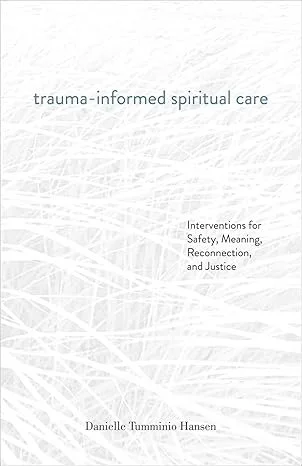
Trauma pervades every part of human existence. From birth to death, there is no moment in which a human being is completely immune, with experts estimating that a majority of people will experience at least one traumatic event in their lifetime.
Danielle Tumminio Hansen offers a dynamic exploration of how trauma affects not just the physical and psychological lives of sufferers but also their spiritual well-being. Taking a feminist and intersectional approach, she considers how trauma challenges people both individually and collectively, while looking at tools spiritual caregivers can use to respond to it. Integrating theological wisdom with cutting-edge psychology, she offers targeted interventions to help trauma survivors restore their sense of safety, construct meaning, and reconnect with their communities. She also considers how restorative justice can be a tool to help trauma survivors voice their experiences and receive accountability in community.
Tummino Hansen constructs a crucial resource, at once searingly honest and hopeful, that belongs on the bookshelf of every pastor, chaplain, and faith leader.
The Trauma Informed Church: Walking With Other Toward Flourishing
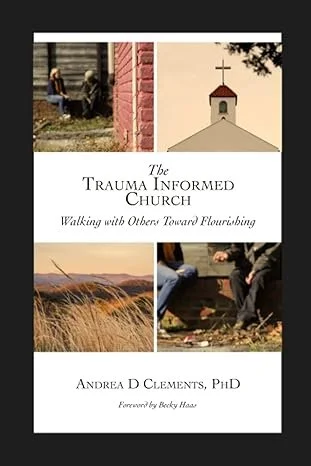
This book is a must read for followers of Jesus. The church is called to be the hands and feet of Jesus in the world, walking with people in their struggles. It will help us to walk with people if we understand them and the origin of those struggles and what may be helpful. This book is a readable, practical guide for the faith community. Readers will learn how early adversity may explain many struggles that they themselves and others have. That is not where the story ends, though. Readers will be equipped with tools that can reduce addiction and mental health struggles.
Not only is Dr. Clements is a "sold out follower of Jesus," but she is also a university researcher who studies addiction, child development, and the effects of adversity. This book combines science and scripture to equip the church. Understanding the connection between past adversity and life struggles such as addiction, anxiety, depression can help us to move ourselves and others toward flourishing.
Trauma-Informed Preaching
Trauma-Informed Preaching means we don’t assume everyone is doing “fine.” We avoid quick fixes or overly cheerful messages. Instead, we make space for honesty, lament, and difficult questions. Think about it, how can we speak resurrection without denying crucifixion?
Trauma-informed preaching asks: What might this passage sound like to someone who is grieving? What parts of this sermon could re-open old wounds? How can we name suffering while still pointing to hope?
It’s not about having all the answers. It’s about being present, careful, and compassionate.
In her book Unspeakable, Rev. Dr. Sarah Travis discusses these questions and offers tools to navigate the interplay between text and trauma, drawing from both theology and trauma theory to develop homiletical practices that comfort without coercing. Continue Reading Our Post on Trauma-Informed Preaching Here.
Preaching In the Wake of Mass Trauma, An In-Depth Interview with Kimberly Wagner
From Lewis Center for Church Leadership
How would you preach next Sunday if tomorrow your community fell victim to a mass shooting or was devastated by a natural disaster? Ann Michel of the Lewis Center staff interviews Kimberly Wagner, Assistant Professor of Preaching at Princeton Theological Seminary, about approaching this increasingly unavoidable homiletical task in ways that hold in tension loss and grief and the promise of God’s healing and redemption.
Listen to this interview, watch the interview video on YouTube, or read the transcript.