
No More Plastic
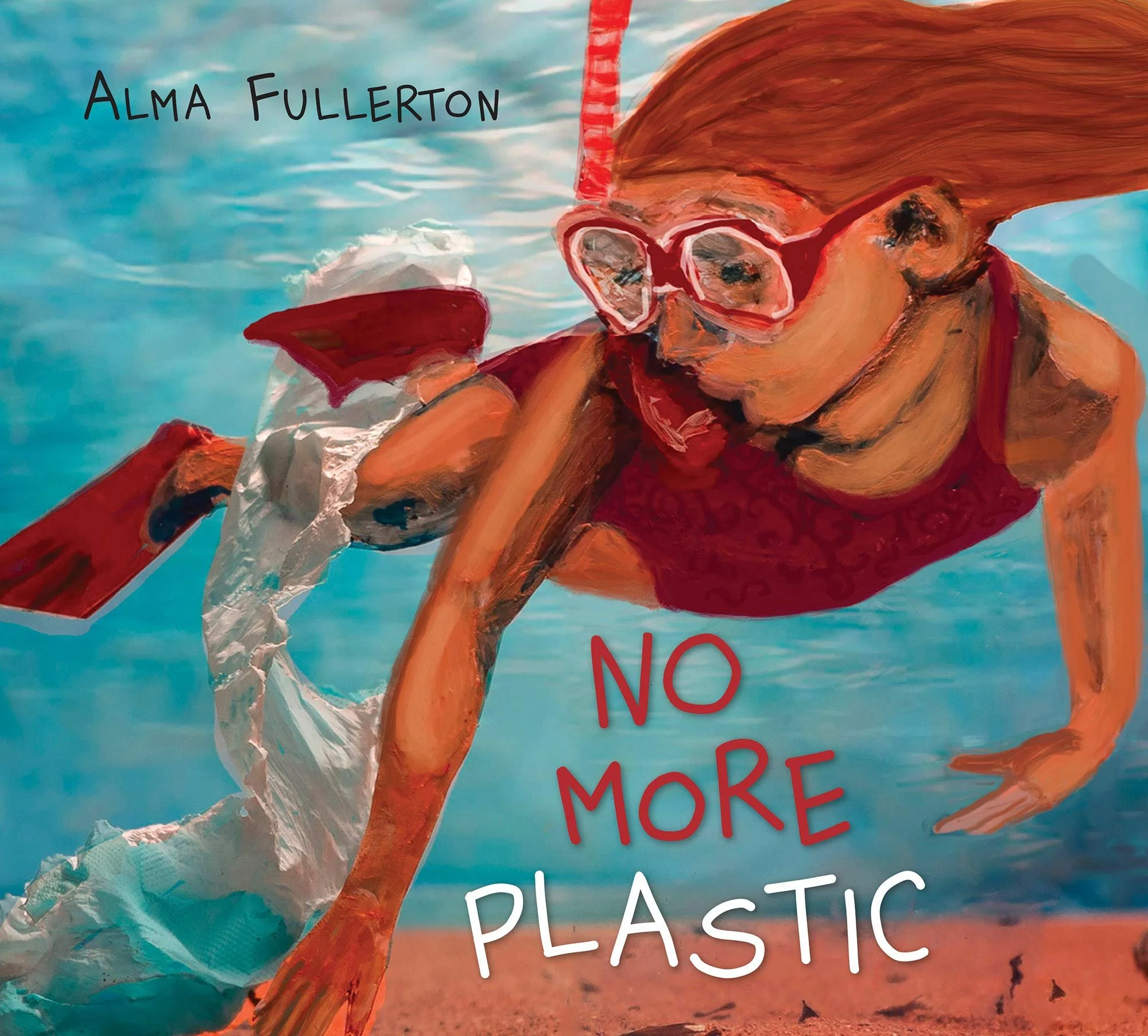
No More Plastic | by Alma Fullertons
A young girl takes action against ocean pollution in a timely story set in PEI with unique plastic-waste diorama art by award-winning author and illustrator Alma Fullerton. Isley loves the ocean and everything in it. Well, almost everything. Her heart sinks at the sight of her Atlantic Ocean shoreline covered in trash. One day, upon discovering a beached right whale that has starved to death after swallowing plastic, Isley decides enough is enough. She steers her family into adopting a zero-waste lifestyle, inspiring others to do the same. But when the adults around her give way to apathy and routine, how can Isley make sure her whale’s memory inspires lasting change?
Distinctions: Runner-up, 2022 Blue Spruce Award
Ideal for:
Take Me Outside Day October 20
Earth Month and Earth Day April 22
Canadian Environment Week June
World Environment Day June 5.
My Name is Blessing. Text © 2014 Eric Walters Illustrations © 2014 Eugenie Fernandes. Reproduced by permission of Tundra Books, an imprint of Penguin Random House Canada Young Readers, a Penguin Random House Company, Toronto.

Isley loves waking up to the sound of the beach: crashing waves, seagulls squawking. But one day the sounds are different. She hears calls for help and “the distant mournful song of a right whale pod vibrating across the sea.” She hurries to see what has happened, but it’s too late. The beached whale is already dead, starved because of a stomach full of plastic.
Isley is enraged. At first, she tries to get rid of her anger by moving her body, but that is not enough. So she decides to direct her rage toward making a change. She says no to plastic bags and straws at home and convinces her family to buy plastic-free products when they go shopping. She even writes to local politicians, asking them to support bans on single-use plastics. For a while it seems that her efforts are making a difference. But gradually, everyone forgets and slips back to their old ways “because it’s easier.”
But Isley is consistent. Her own “long obedience in the same direction” involves continuing to clean up the beach month after month. With the garbage she collects, she builds a sculpture as big as the whale. It makes everyone stop and think big thoughts. Even better, the big thoughts turn into actions: neighbours help clean up the beach, the grocery store bans plastic bags, the school starts zero-waste lunches, and the town installs filling stations for reusable water bottles.
No More Plastic is an excellent example of righteous or holy anger, an emotion with a lot of biblical resonance, but with which many Christians are ill at ease. This sort of anger is often closely connected to grief, as it is in this story. Isley is furious because she is sad; she mourns the unnecessary death of a beautiful and innocent creature. Reading this book is also a good introduction to lament—an ancient spiritual practice which is experiencing a resurgence in our own time, often in response to anxiety and grief over climate crisis and the destruction of the natural world. There are connections to be made to the creation stories in Genesis 1-3 and to the Psalms, both praise and lament.
Biblical and Theological Themes: creation care, human responsibility to look after God’s precious world which teems with life in many forms, the goodness of the natural world which sustains us and every other living thing, community, justice, grief, lament, holy anger
Making Connections:
Holy Trouble: Bayard Rustin was a Quaker, a human rights activist, and an organizer for Martin Luther King Jr. He once said, “We need in every community a group of angelic troublemakers.” He was talking about people who are willing to disrupt the status quo—rock the boat—in the name of love and justice. In this we look to the example of Jesus, who frequently entered into conflict with those who were using their power to harm others. The most dramatic example is when Jesus, furious with religious leaders for abusing their power for their own financial gain, flipped over the tables of the moneychangers in the temple in Jerusalem. Read this story from one of the gospels and talk about it. How do you feel when you think about Jesus being angry? Is it hard for you to imagine? Why or why not? When can anger be a helpful feeling? What is it not?
Let Tears Roll Down: Lament is an ancient practice of expressing deep sadness. People can lament by themselves or with others, but it always has the same purpose: to help us express grief and anger so that these hard feelings move through the body and don’t get stuck and fester. In ancient times, people lamented by tearing their clothing, wailing, rubbing ashes on their heads, and singing sad songs. We can do it in different ways. Try tearing strips or paper or woven fabric as a kind of body prayer. Or make a torn paper collage by painting or drawing a picture, then tearing it into pieces and using the pieces to create a new picture. You could also use watercolours to paint a picture of your sad feelings, then sprinkle it with salt and see how it changes (the way tears change things).
Read and Write a Psalm: Some of the Psalms were written from a place of deep sadness, anger, and despair. Reading them reminds us that we can be honest with God about our feelings, including the hard ones. When we start where we are, the Spirit can nudge us in the direction we need to go. Try reading a lament psalm (e.g., Psalms 3,5,6,13, 22, 42,69 or 88), then write your own psalm of lament.
Get Angry: Choose an issue close to home (maybe an environmental one) and make a plan to do something about it together. What could you do to be a band of angelic troublemakers where you are?
Community Cleanup: As a family or group, take part in a community cleanup of a local park or shoreline.
Send a Message: On a sunny day, use brushes to “paint” with water on the sidewalk—a form of art that is temporary, but doesn’t use a lot of resources or produce any garbage. You could also chalk pictures or environmental messages on the sidewalk for the benefit of people walking by.
Plastic Audit: Make a list of all the ways your congregation uses plastic (disposable communion cups, plastic cups or utensils at coffee hour or shared meals, craft materials for Sunday School or VBC, etc.) Are there ways you could reduce your use of plastic? What could you do instead? What other benefits might this have?