
Out Into the Big, Wide Lake
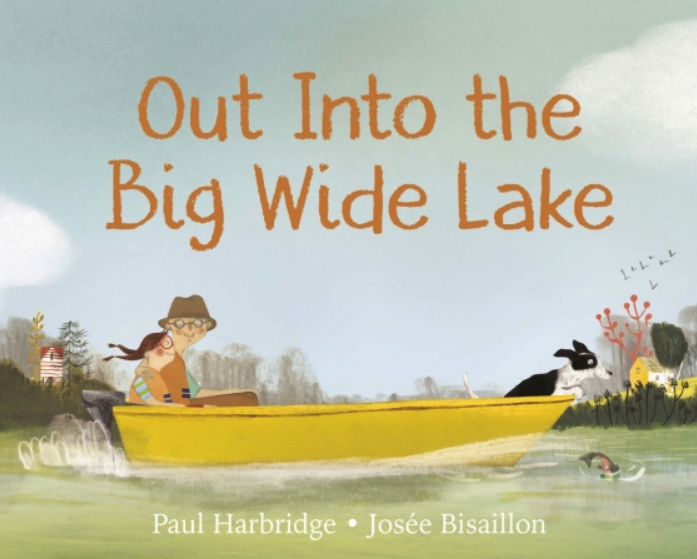
Out Into the Big, Wide Lake | by Paul Harbridge | illustrated by Josée Bisaillon
An empowering and necessary picture book about a young girl with Down Syndrome who gains confidence and independence through a visit to her grandparents.
It's Kate's first time visiting her grandparents on her own at their lakeside home. She's nervous but excited at the adventure ahead. She helps her grandfather with his grocery deliveries by boat, where she meets all the neighbors, including a very grumpy old man named Walter. And she makes best friends with her grandparents' dog, Parbuckle. Her grandmother even teaches her to pilot the boat all by herself!
When her grandfather takes ill suddenly, it's up to Kate–but can she really make all those deliveries, even to grumpy old Walter? She has to try! Based on the author's sister, Kate is a lovable, brave, smart and feisty character who will capture your heart in this gorgeous and moving story about facing fears and gaining independence.
Distinctions: Finalist, 2021 Governor General's Literary Award for young people's literature—illustrated books.
Ideal for:
World Down Syndrome Day March 21
National Down Syndrome Week Oct. 19-25, 2025 "Rock Your Socks on the Storytime Trail"
Out into the Big Wide Lake. Text © 2021 Paul Harbridge Illustrations © 2021 Josée Bisaillon. Reproduced by permission of Tundra Books, an imprint of Penguin Random House Canada Young Readers, a Penguin Random House Company, Toronto.
When we are introduced to Kate, the main character of this story, there are subtle hints that something about her is different. When she is invited to spend the summer with Grandma and Grandpa at their home on the lake, her mom seems nervous. Why? “Give her a chance,” urges Grandma. So Kate travels by train past farms and over rivers and through forests, until the reach a big blue lake. Grandpa is there along with a friendly dog called Parbuckle.
Everything is fine until it is time to sleep. Then the strangeness of a new place descends on Kate and she wants to be home, just like any other child away for the first time. But in the morning, she is ready for a new day. When Grandpa asks her to help deliver groceries in his motorboat, Kate says, “Me?” “Why not?” replies Grandpa. When Grandma takes the boat right out into the bay and asks Kate to join her, Kate says, “Me?” “Why not?” says Grandma. Step by step, their confidence in Kate becomes her own. She learns to steer, manoeuvre, and dock the boat by herself. All her Grandpa’s customers like her—except for a crabby old man called Walter who blames her for bruising his apples.
When Grandpa has chest pains one morning and has to be rushed to the doctor, Kate and Parbuckle are left alone with bags of groceries. Who is going to deliver all the food before it spoils? “Me?” wonders Kate. “Why not?” says Parbuckle. Deciding to go out in the boat alone is brave enough. Braver still is bringing groceries to Walter. Kate wants to go home, but she thinks about the old man sitting there, waiting and waiting for his food. In a moment of pure empathy and courage, Kate goes to see Walter too, setting off a surprising chain of events.
While Grandpa is laid up for two weeks, Kate's mom comes to help deliver the groceries, just like she did when she was a girl. We discover then that just as it has taken time for Kate to build courage and confidence, so her mom has had to grow in trust and confidence that the things she did as a child are also within Kate's capabilities. Based on the author’s own sister, who has Down syndrome, Kate is an outstanding example of bravery and empathy. Her story inspires readers of all ages to try new things, build confidence, and care for one another. It also illustrates what a difference it can make to have trust in someone, and to give them space and opportunity to find their own courage.
Biblical and Theological Themes: community, kindness, courage, feeding the hungry, caring for the sick, loving our neighbours, forgiveness and reconciliation
Making Connections:
Building the Bravery Muscle: Bit by bit, Kate gets to know a new place, new people, and new routines. Things don’t always go smoothly. Look for places in the story where Kate makes mistakes and has to try again, or where she bumps up against resistance from other people. What does she do in each case? Can you find examples of times when Kate has to be brave? Have you ever had to do something that scared you? What helped you be brave? Is there something you would like to do, but are too afraid? How could you build your bravery muscle a bit at a time?
The Sheep and the Goats: In a famous parable in the Gospel of Matthew (Matthew 25:31-46), Jesus tells a story about a King who has divided his people into two groups. One group (the sheep) is praised because, as the king says, “I was hungry you gave me something to eat, I was thirsty and you gave me something to drink, and I was a stranger and you invited me in, I needed clothes and you clothed me, I was sick and you looked after me, I was in prison and you came to visit me.” The other group (the goats) is in trouble because they didn’t do these things. But both groups are confused. They don’t remember the King visiting them! The King replies, “whatever you did for one of the least of my brothers and sisters, you did for me.” What do you think about this idea? Have you ever thought that when you see people in need, you are seeing Christ in them? Would that change how you treat them? Why or why not? Read the story again and look for examples of people doing these things (or not doing them) for one another. Are there any surprises?
Food Delivery: Is there someone in your congregation or community who could use a delivery? Someone who is injured and can’t drive and could use a hand getting groceries? A family with a sick child or a new baby? How could you help?
Fruits of the Spirit: In his letter to the Galatians, Paul compares a person whose life is full of the Spirit to a tree whose health and wholeness is displayed in the juicy fruit it produces. Good fruit—in the form of loving behaviour—is evidence that the Spirit is at work, helping the person to grow. The fruits of the Spirit are love, joy, peace, patience, kindness, goodness, faithfulness, gentleness, and self-control. Go through the story again and look for examples of these qualities. Where have you seen the fruits of the Spirit in the people around you? Create a picture, or sculpt some beads out of clay, to help remind you of the fruits of the Spirit. Ask the Spirit to help you grow and produce good fruit right!